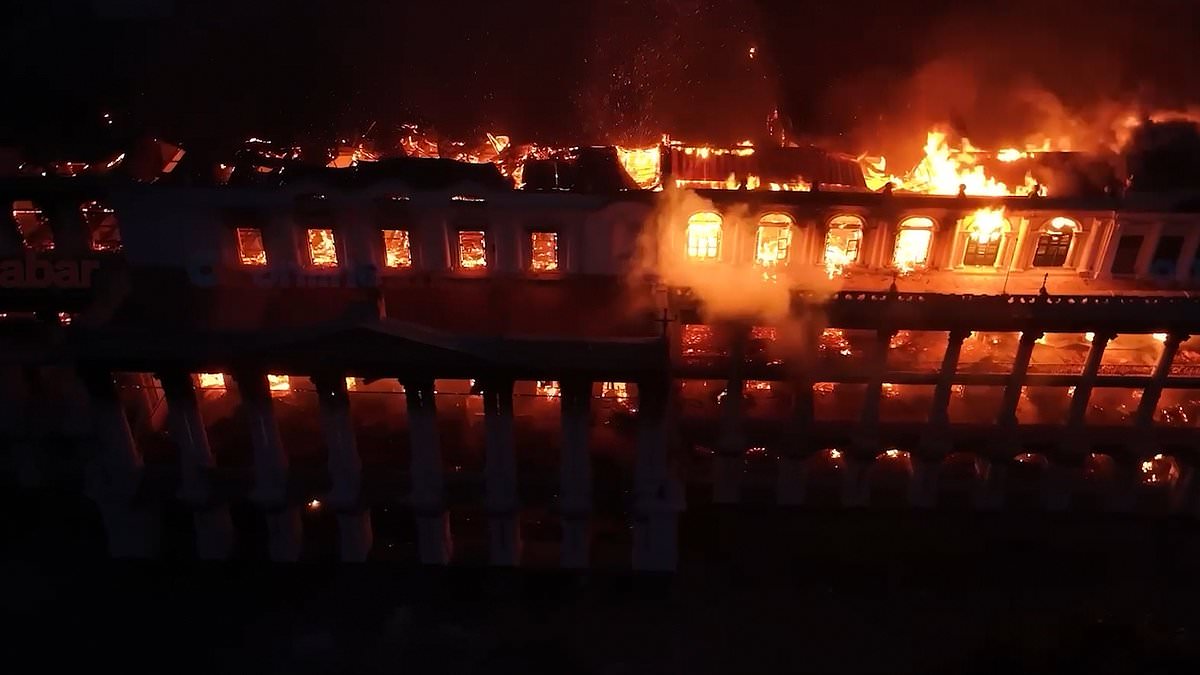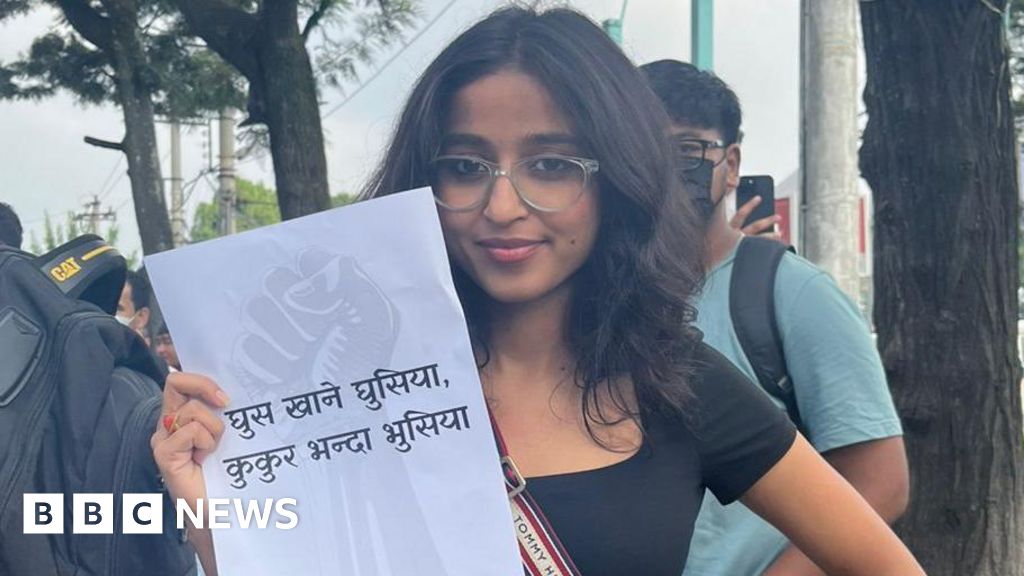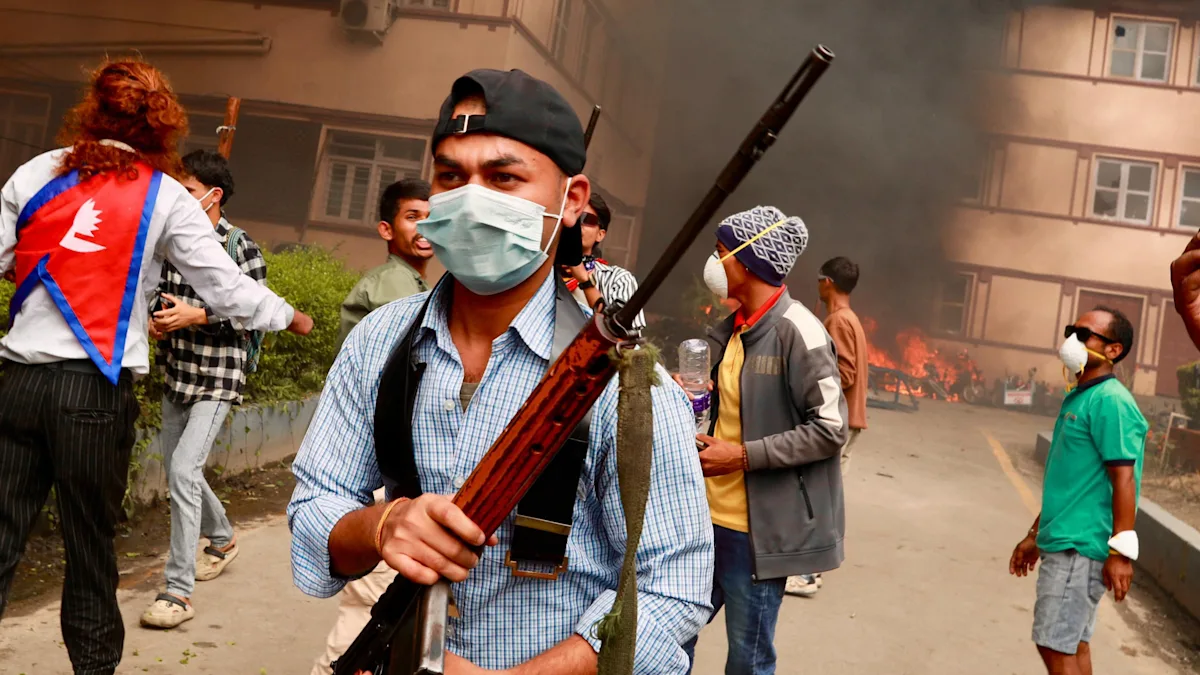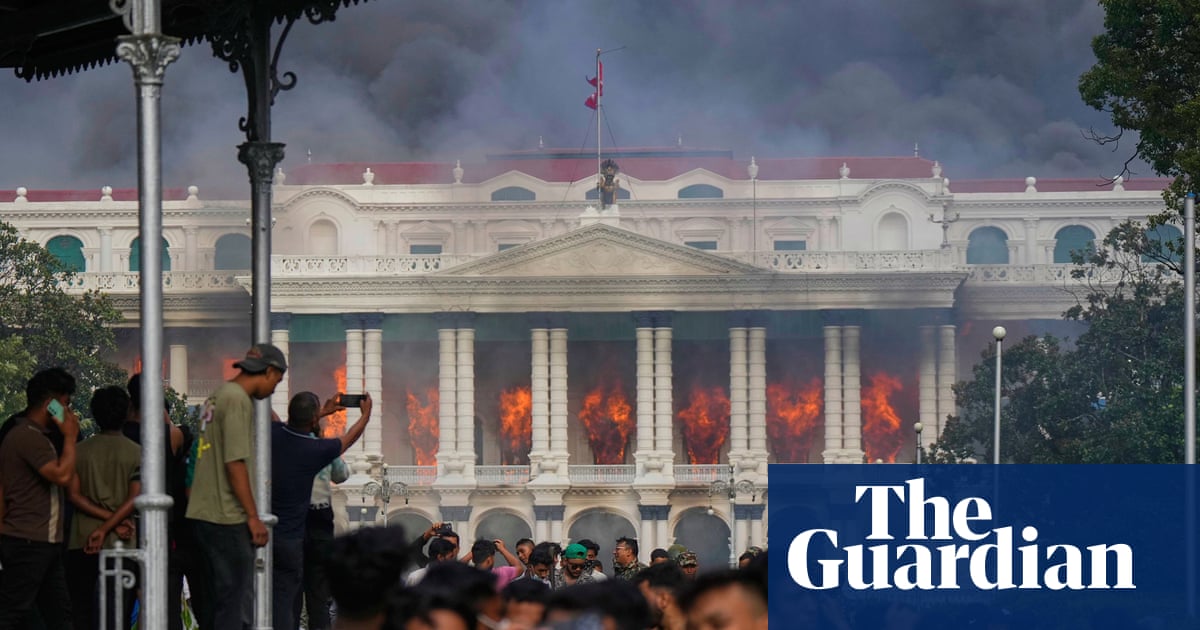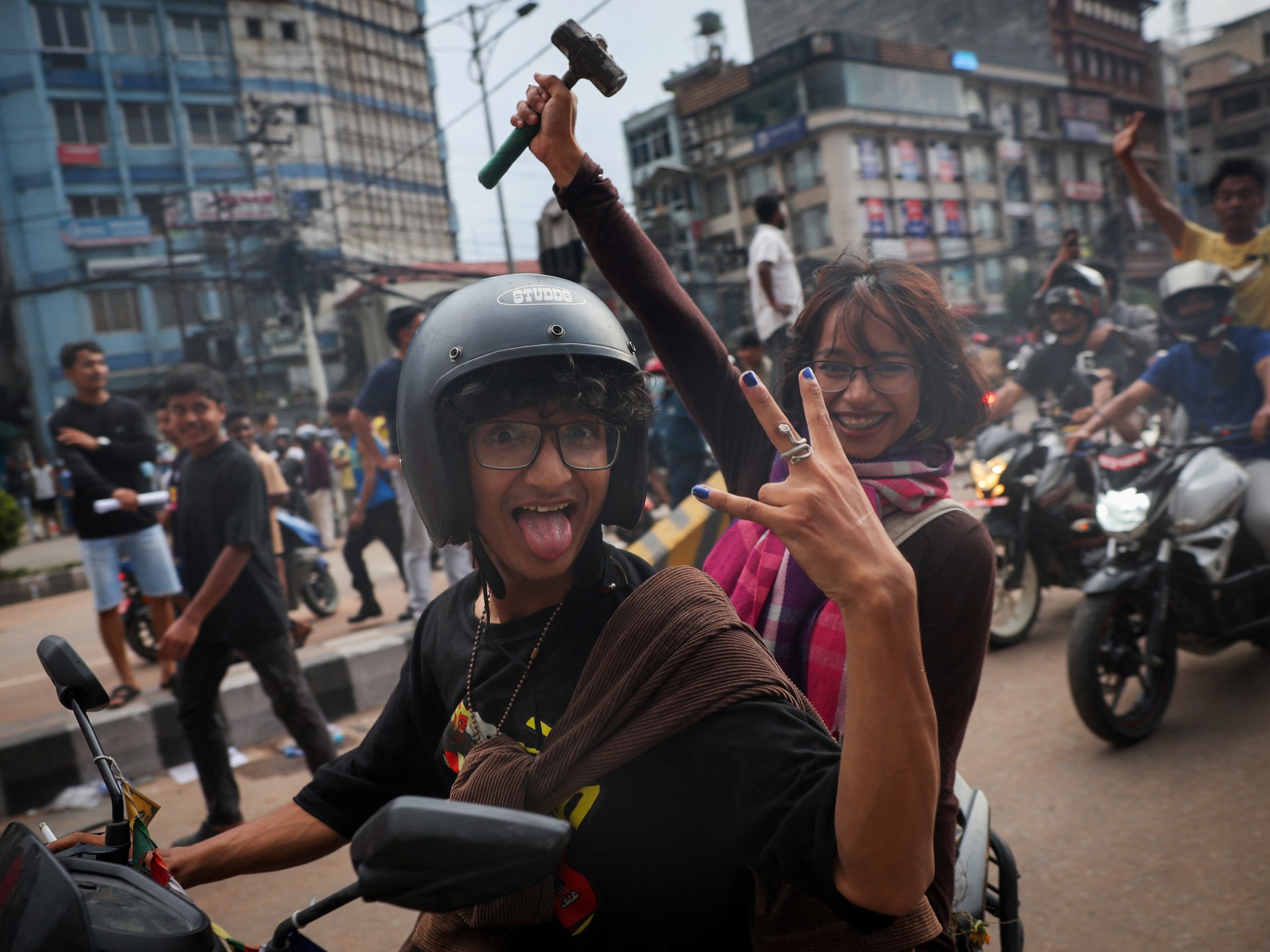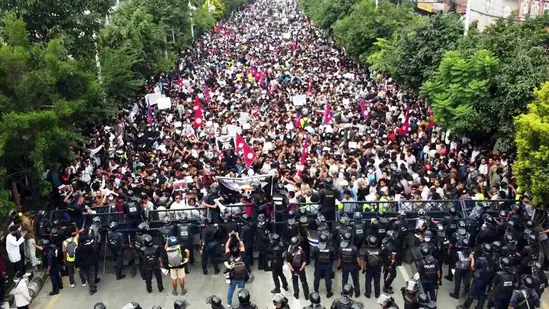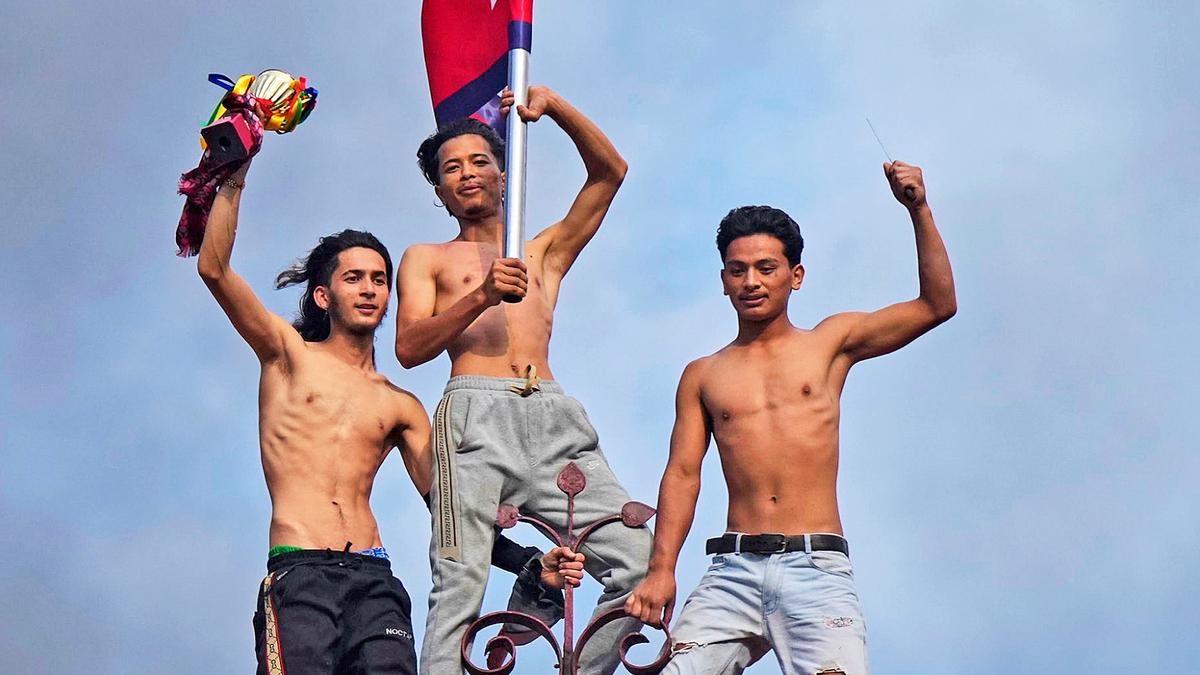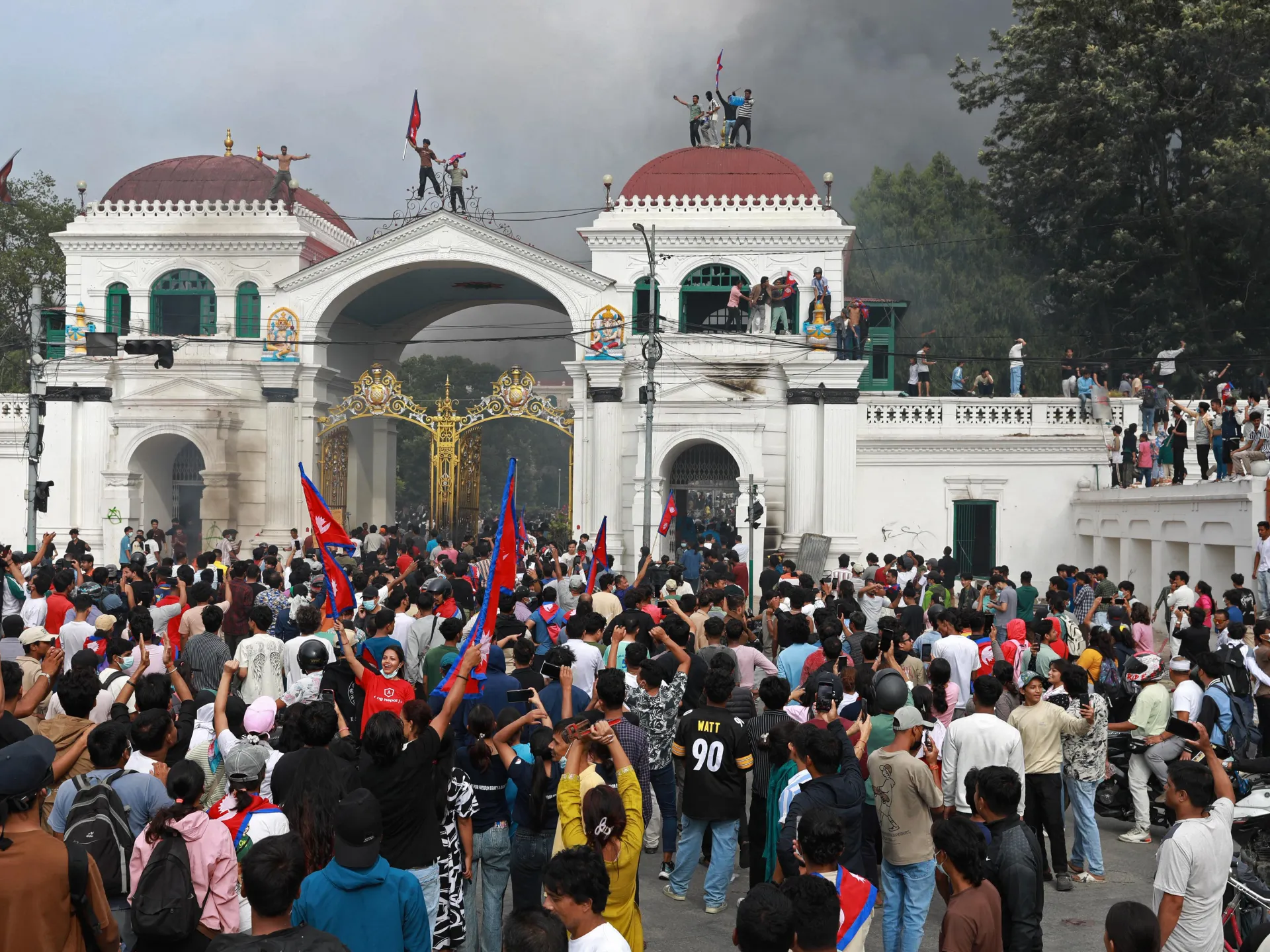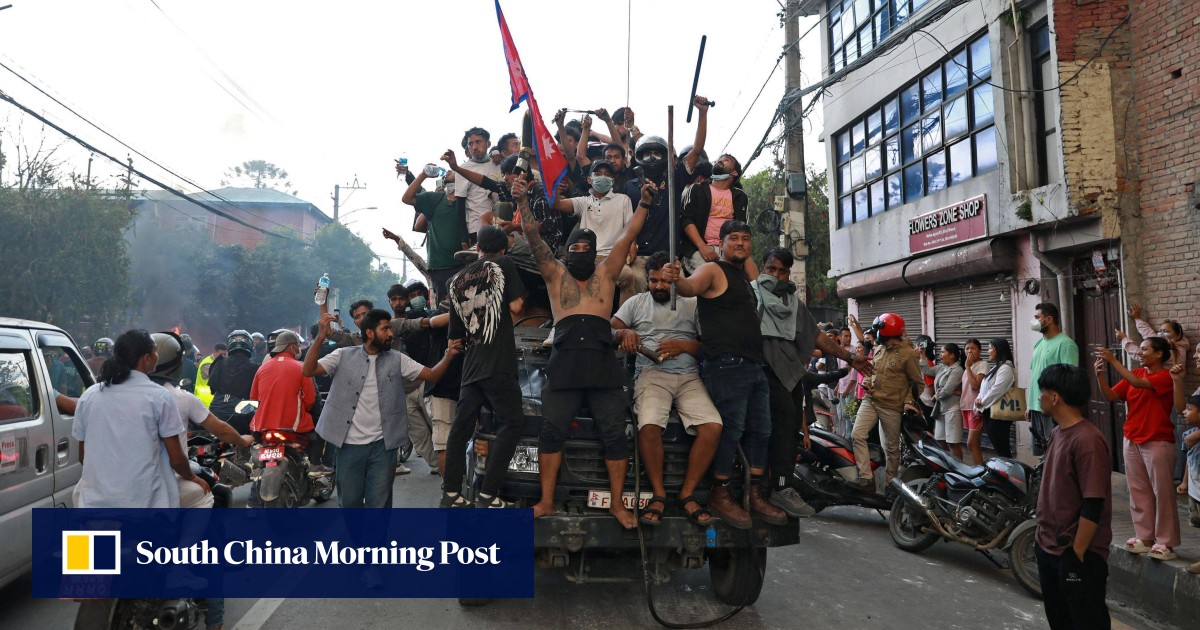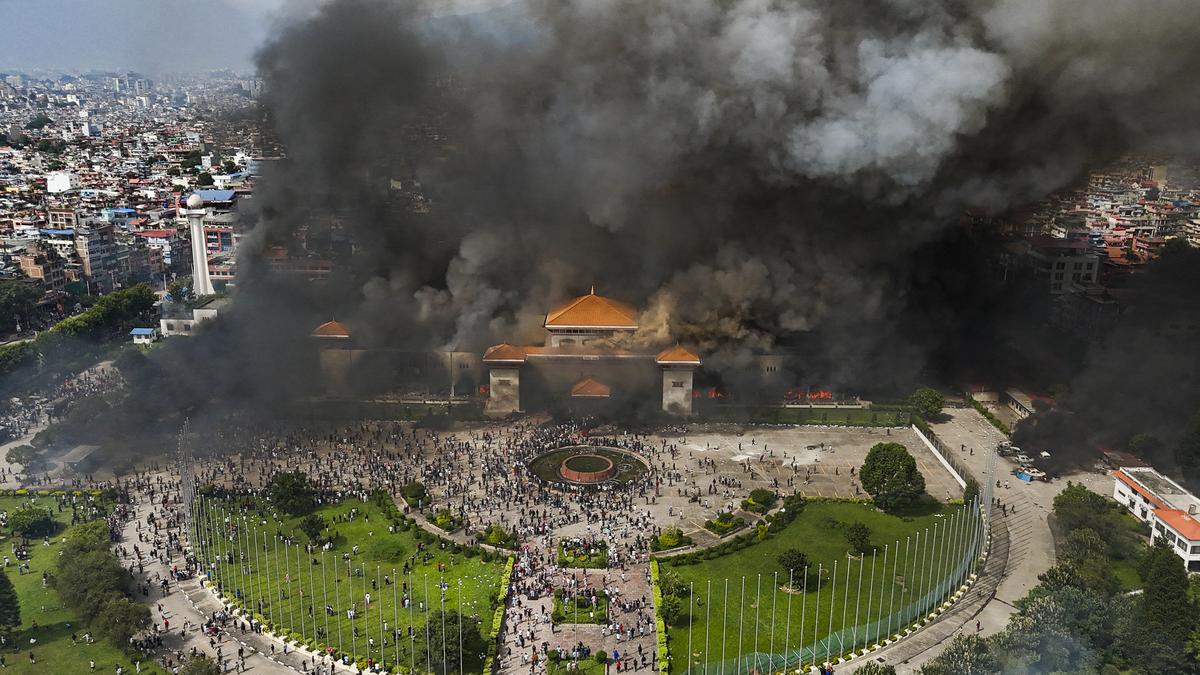
As thousands of Nepali youth — Gen Z (and the powerful extras) — captured government buildings in Kathmandu, assaulted the former prime minister and sitting foreign minister in their homes, and set ministries, court, and a media house on fire — smoke felt like a new sky, and someone wrote to me: “Gen Z’s protest felt like White Sun’s climax. While grown-ups fight, the kids carry the body to the river”.My 2016 film White Sun — Venice’s Interfilm Award winner — is a story about a mountain path, a dead father and two sons from opposite sides of our war. Adults argue whether to take the body out a window or the door, carry it with a flag that represents the King or without, as two sons beat each other; elders refuse help from “lower castes”; police and rebels aim guns; the body lies there like a country nobody wants to claim. Till the children — quietly — drag the body to the river.
Children carrying a body to the river in a still from the Nepali film ‘White Sun’ (2016).
| Photo Credit:
Courtesy Deepak Rauniyar
I set it in 2015, when Kathmandu lit candles for a new Constitution while in the southern plains, where I am from, families lit pyres. On paper, we became secular, federal, democratic; in daily life, the ghost of the old order still slept in our rooms.I should be happy now — with this Gen Z “revolution” and Nepal’s first woman prime minister. The photograph of her taking oath — one woman among men — looked like a frame from Pooja, Sir (Venice Film Festival 2024 premiere). My heart knows to celebrate; my head has questions.Living through revolutionsI was born under autocracy, saw war and “revolutions”, and watched democracy get hijacked more than once. I am Madhesi. In Kathmandu, that often makes you “Indian”: to be stopped, questioned, laughed at, refused. The bullying began before I understood what my surname or skin colour announced.