Jo He-rim
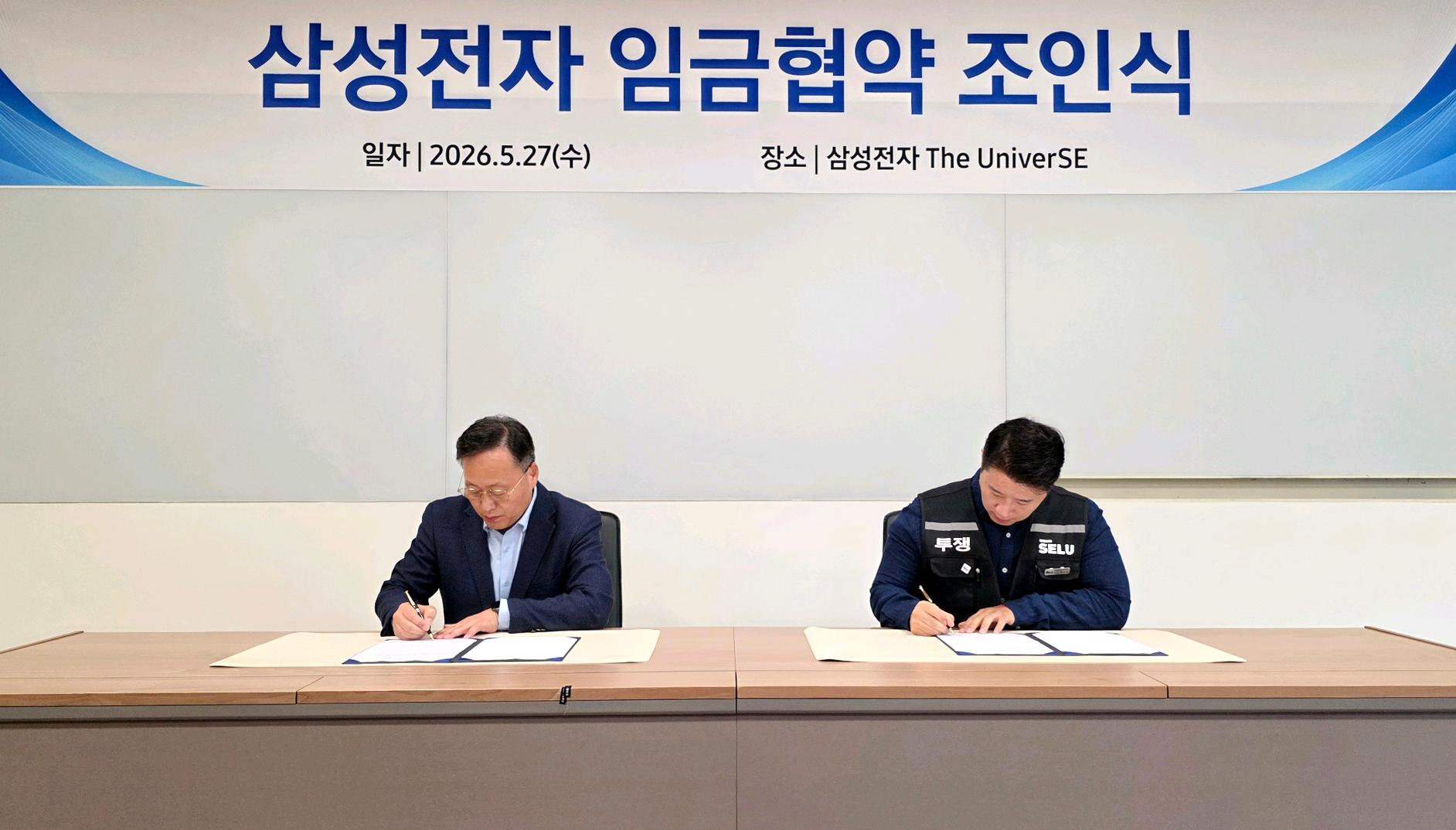
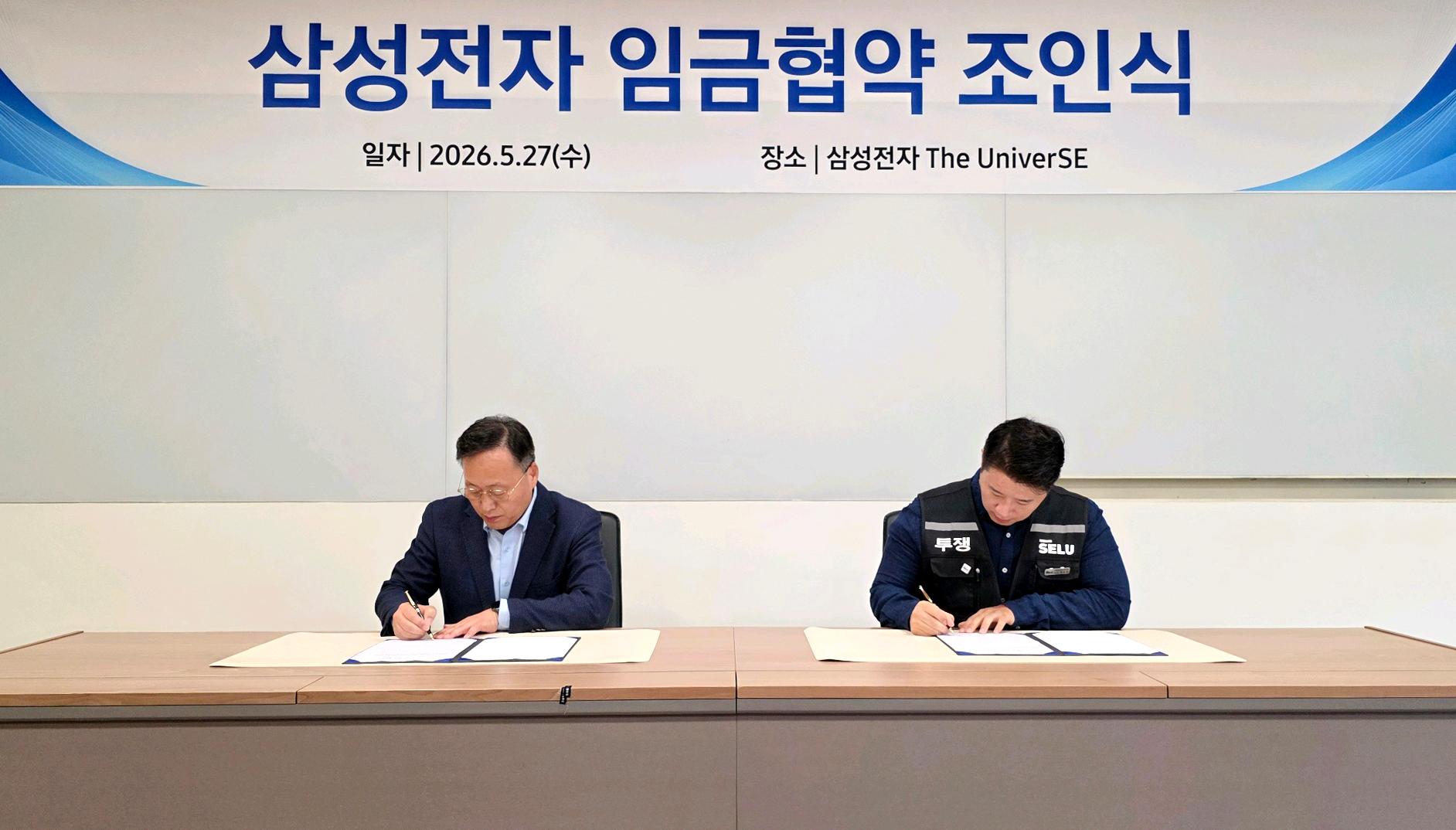
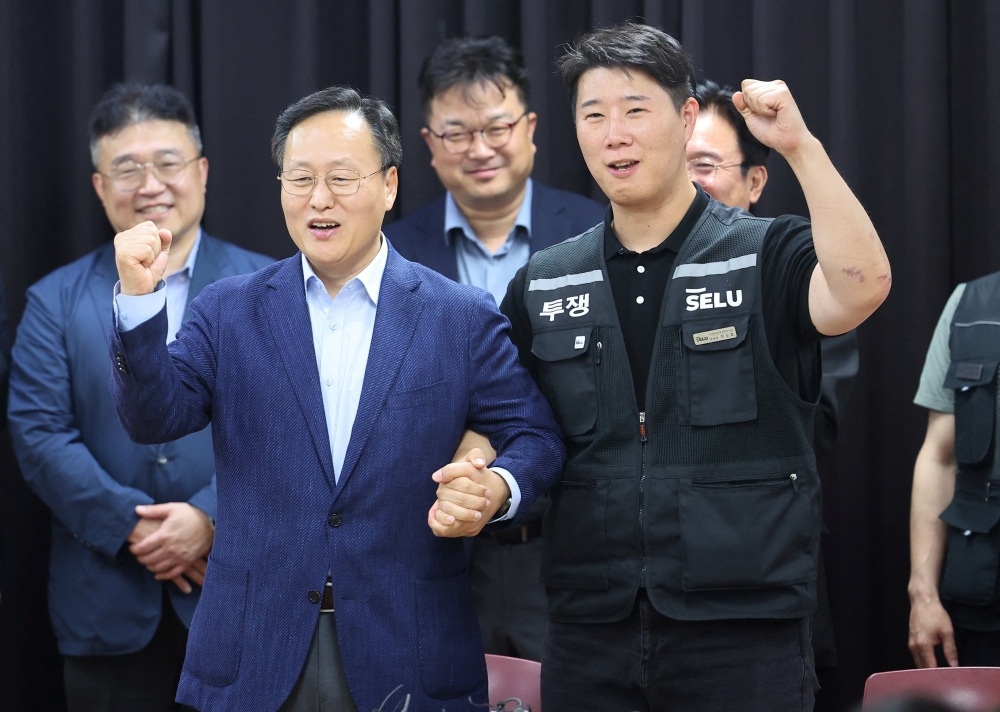
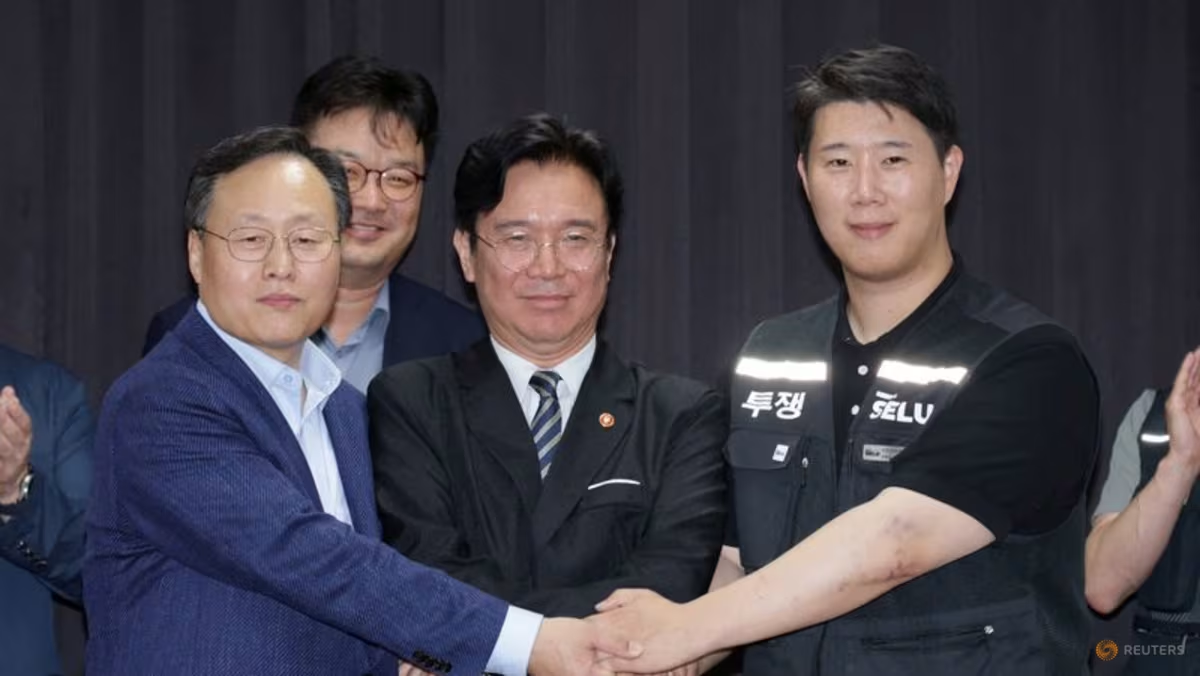
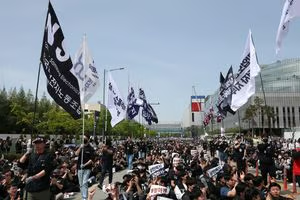
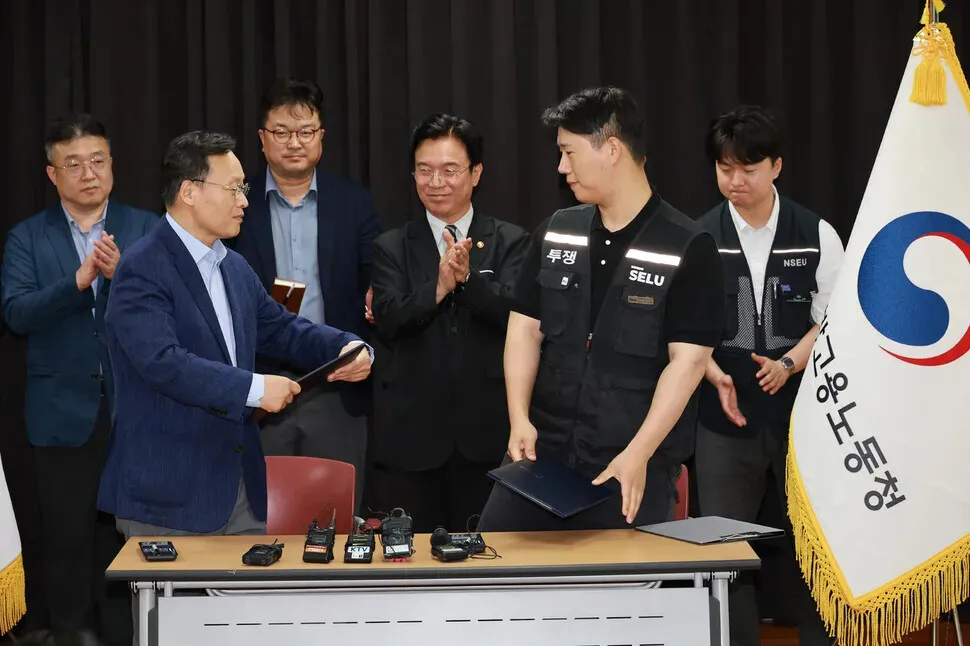
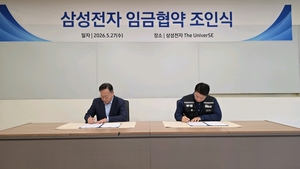
Wage pact ends strike threat as bonus gaps trigger fresh internal tensions Samsung Electronics Vice President Yeo Myeong-gu (left) and Choi Seung-ho, chair of Samsung Electronics largest union, sign the company's 2026 wage agreement at Samsung's The UniverSE training center in Giheung, Gyeonggi Province, on Wednesday. (Samsung Electronics) Samsung Electronics and its labor unions signed their 2026 wage agreement Wednesday, formally ending weeks of negotiations after union members approved a last-minute bonus deal that narrowly averted a planned strike.But the agreement is expected to fuel backlash over wide bonus gaps between chip and nonchip employees, and shareholder opposition over profit-linked payouts.The signing ceremony was held at Samsung's employee training center in Giheung, after the deal was approved by a union vote held from May 22 to Wednesday morning. The deal won 73.7 percent support among 62,616 union members who cast ballots, according to the unions. Turnout stood at 95.5 percent of the 65,593 eligible members."We will use this wage agreement as a starting point for labor and management to work together to strengthen global competitiveness," said Samsung Electronics Vice President Yeo Myeong-gu during the signing ceremony.Choi Seung-ho, chair of the largest Samsung Electronics Labor Union, said the negotiations had left "some regrets," but that the two sides reached a meaningful agreement."We will continue efforts to improve working conditions and protect the rights and interests of Samsung employees," Choi said.Samsung's top executives also issued a public apology in a joint statement after the deal was finalized, saying it had caused concern to the public, shareholders, customers and employees.Pledging to review the company's labor relations and broader management practices, they said the company will create a 5 trillion won ($3.3 billion) fund over the next five years to support shared growth, a healthier ecosystem, and future talent development."We are considering support for second- and third-tier suppliers, an industrial accident fund, inclusive finance for vulnerable groups and small merchants, AI talent programs and youth education," the executives said.Samsung said the details will be decided after discussions by its board and compliance committee, adding that employees, including union members, had agreed to take part.Under the agreement, Samsung is set to create a special management bonus for its semiconductor division, funded by 10.5 percent of the division's operating profit. The company will also revise its regular excess profit incentive, or OPI, which is capped at 50 percent of annual salary. Instead of being funded based on economic value added, the OPI pool will now be based on 10 percent of operating profit.The agreement, however, is fueling new conflict among employees over wide gaps in expected payouts.If Samsung Electronics posts around 300 trillion won in operating profit this year, employees in the memory business could receive roughly 600 million won in total compensation, including the new special bonus paid in company shares and the regular OPI, according to union estimates. Employees in the foundry and System LSI businesses are expected to receive payouts in the 200 million won range.By contrast, employees in the DX division, which oversees smartphones, home appliances and TVs, are only expected to receive several million won, exposing a stark compensation gap within the company.The backlash was visible in the union vote. Of the 7,283 voters from the National Samsung Electronics Union — the smaller union made up of employees from nonchip businesses — only 1,536 (21.1 percent) voted in favor of the bonus deal, with the rest voting against.The discontent prompted an internal message from Roh Tae-moon, Samsung Electronics president and head of the DX division, who acknowledged frustration among employees after the wage talks."I believe many of you felt alienated, deprived and disappointed with the company during the recent wage negotiations and their outcome," Roh said in a message to DX employees on Wednesday.Roh said he felt regret over and responsibility for the situation and pledged to focus more sharply on restoring the division's competitiveness and growth."I will look more directly into what needs to change in each business, where we need to focus more boldly and what is most urgent on the ground," Roh said. "We will reexamine our cost structure, business operations, product competitiveness, and execution system one by one, and build the foundation for mid-to long-term growth."A third union, the Samsung Electronics Donghaeng Labor Union, comprising mostly DX employees, said it is preparing legal action after being excluded from the vote.Donghaeng had earlier left the joint bargaining group, saying DX workers’ views were not being reflected in the talks. Its membership has since grown from about 2,600 to around 13,000, reflecting growing backlash among nonchip employees.The backlash is also extending beyond Samsung’s workforce, with shareholder opposition building.The Korea Shareholder Movement Headquarters said Wednesday the profit-linked bonus plan may violate the Commercial Act, arguing that setting aside a fixed portion of pretax operating profit for employee bonuses amounts to a disguised dividend without proper shareholder approval.The group said it plans to file a lawsuit seeking to invalidate the bonus-sharing portion of the agreement.