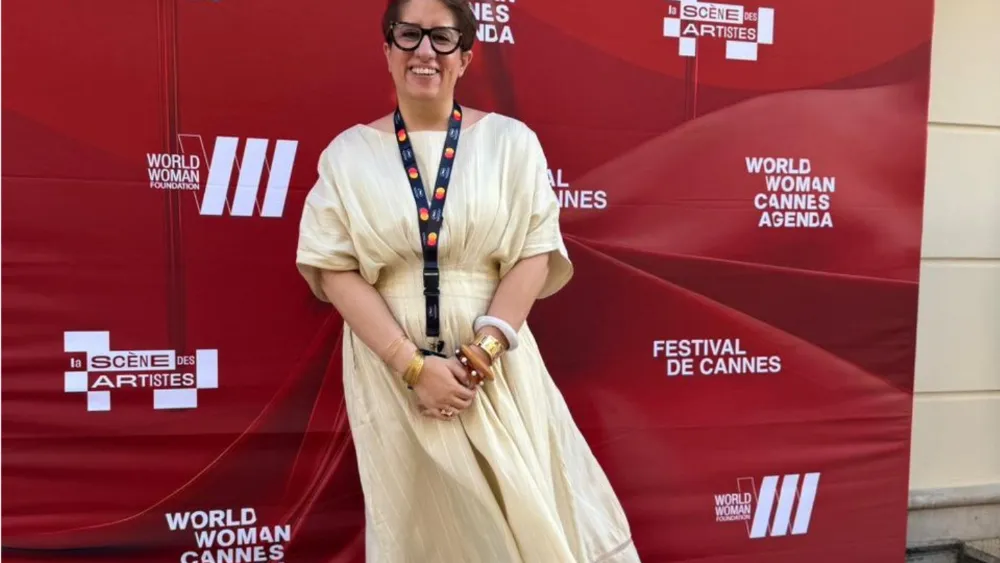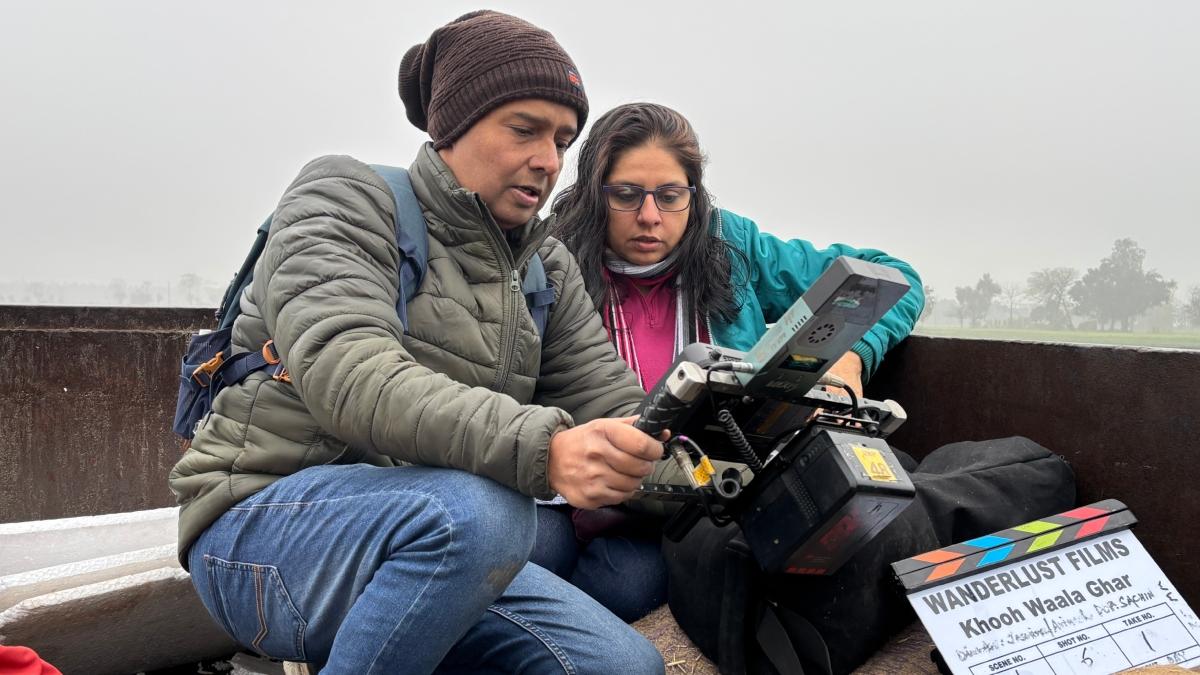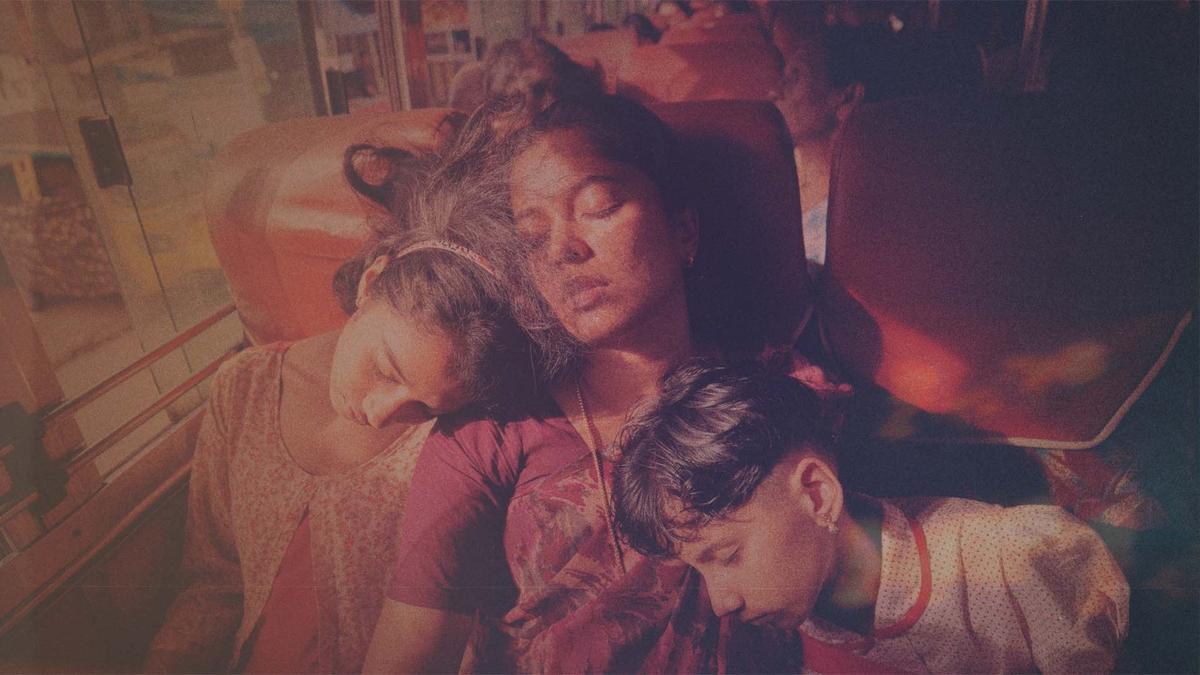
At the 79th Cannes Film Festival, filmmaker Manisha K Makwana's Gudgudi was showcased at the Short Film Corner. In a chat with HT City, the director opens up about the project and how working with Raj & DK for The Family Man and Farzi served as a learning experience:Ahsaas Channa in GudgudiGudgudi is rooted in deeply personal emotions — what was the exact moment or experience that first sparked this story for you?I think I had been carrying this experience inside me for a long time — from my days working at an amusement park. I contemplated making Gudgudi for quite a while because it isn’t an easy subject to approach, but eventually I had to trust my gut and the core emotional truth the film revolves around. The story comes from those moments of feeling unseen in a room full of people — something all of us experience in our everyday lives. At its heart, the film is also about how a shift in perspective can change the way we see ourselves and others.You’ve spent years working behind the scenes on shows like The Family Man and Farzi — how did that journey shape your transition into directing your own film?I’ve always been a curious person — someone who romances life, if I may say so. I’ve always been fascinated by discovering new aspects of work, and that curiosity has been the driving force behind everything I do. Working on shows like The Family Man and Farzi, alongside some of the best people in the industry, has been an incredible learning experience. From Raj & DK and the entire team at D2R Films to my HODs like Pankaj Kumar sir, Parichit Paralkar, and Yannick Ben — everyone has contributed to this journey in some way.I’ve been fortunate to work with people who were patient enough to answer my endless questions, welcome me into their teams, and teach me the technicalities of their respective departments. I think for a director, it’s important to wear these hats at least once — or at least understand them deeply — because it makes the transition into directing much smoother. For Gudgudi, Harsh, my producer on this film, has also been a strong support throughout the process. In his own way, he’s helped shape what the film has become today, and a lot of credit goes to him for helping bring it all together.In many ways, D2R Films and Raj & DK’s mentorship became my film school. Their guidance shaped me not just technically, but also in giving me the confidence to become a director myself.Mentorship often plays a quiet but crucial role — what’s the most valuable lesson you’ve taken from working with Raj & DK and Suman Kumar that you applied while making Gudgudi?Raj & DK sir and Suman sir have been my rock-solid support system since the very beginning of my career, and they still are. Each of them has influenced me in a very different way. Raj sir always says, Trust your gut — that’s where the true stories lie and I carried that with me throughout Gudgudi. When it came to designing shots, I would often think of DK sir because he’s a master of visual storytelling. I’d genuinely find myself wondering, “Where would he call a cut?” Suman sir played a huge role in shaping this film into what it is today. More than anything, he inspired me to write my own stories and trust my own voice as a filmmaker.All three of them have taught me so much about cinema, but if I had to choose the most valuable lesson they collectively gave me, it would be to approach every story with honesty and sincerity. And beyond filmmaking, they taught me that on a film set, you have to be the best version of yourself and truly love and respect your crew.The film deals with emotional invisibility and everyday struggles—how do you strike a balance between realism and cinematic storytelling without making it feel heavy-handed?I think the key is to stay truthful to the emotion the story is built around and then allow that emotion to breathe naturally. There’s always a very thin line between drama and melodrama, and I was constantly conscious of not crossing it. In our everyday lives, we go through difficult situations all the time, but most people survive them quietly, without over-dramatising their pain. That honesty is what I wanted to translate onto the screen. I wanted the audience to connect with the silence within the scenes — the unspoken emotions and the quieter depths of the characters — because sometimes those feelings are far more powerful than loud moments.This being your first outing at the Cannes Film Festival, what does this moment mean for you personally and how do you see it influencing your choices going forward?I am very excited and nervous at the same time. It’s a dream come true for any filmmaker to have their film at Cannes, and I am really looking forward to the entire experience — sharing it with Ahsaas, Harsh, and the team who are travelling with me, and especially seeing how audiences from different parts of the world connect with and perceive the film. Personally, I think moments like this give you a lot of belief in your voice and the kind of stories you want to tell. Going forward, I just hope it pushes me to be even more honest and fearless with my choices as a filmmaker, and to continue telling stories that come from a genuine emotional space.You’ve spoken about being drawn to “quiet, honest moments” — in an industry that often leans toward spectacle, do you think there’s a growing space for such intimate storytelling in India?India is such a diverse country, and audiences today are exposed to all kinds of storytelling. The fact that films like All That We Imagine as Light, Girls Will Be Girls, and Homebound are being seen, appreciated, and talked about shows that there is definitely a growing space for intimate and honest storytelling. I think people are increasingly connecting with stories that feel real and personal, even if they are quieter in nature. Spectacle will always have its place, but there’s also a strong and evolving audience that is open to sitting with subtle emotions and lived experiences.Beyond Gudgudi, what kind of stories or genres are you excited to explore next — are you looking to stay in this intimate space or experiment with scale and format?I have a few feature films that I’ve already written, including a romance that requires a certain scale, which is exciting for me because it pushes me into a different space. I’m also currently developing a folklore thriller that leans into elements of magical realism and drama. While I naturally gravitate towards slice-of-life, feel-good stories and intimate storytelling, I don’t want to limit myself to one space. I enjoy experimenting with different genres and formats, and I’m always open to collaborating with other writers to discover new kinds of stories.For me, it’s less about sticking to a genre and more about staying truthful to the emotion of the story, no matter what scale it exists in
‘Raj & DK’s mentorship became my film school’: Manisha K Makwana on Gudgudi’s Cannes journey
As Gudgudi gets a special screening at Cannes, director Manisha K Makwana talks about the journey
1,198 words~5 min read