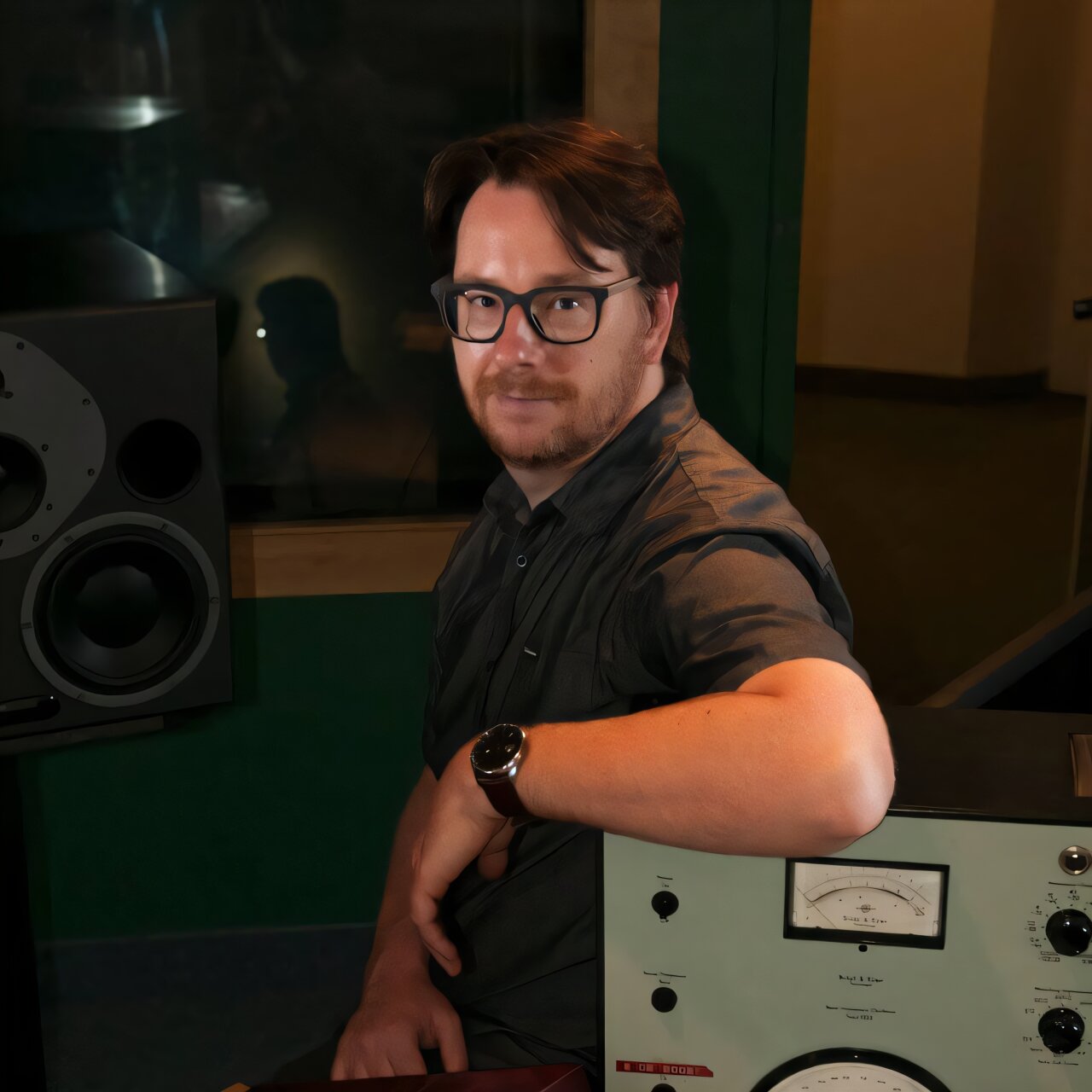
Nicolas Bernier, professor in the Faculty of Music at Université de Montréal. Credit: Amélie Philibert, Université de Montréal
How can electronic music best be scored, music that's made not from staves, clefs and notes on the page but by physical gestures like turning a dial on a console or sweeping a hand across a synthesizer? And if that music is the result of "controlled accidents," where the musician intentionally triggers sonic surprises, can the unpredictability somehow be written down?
Not the traditional way, that's for sure. Classic music notation is unsuited for electronic music because it lacks the tools to capture that music's unstable textures, irregular loops and real-time transformations.
To get around that, electronic music composers have embraced a different way of rendering their scores: graphic notation. And now, a team led by Université de Montréal music professor Nicolas Bernier has made it easier to do so.
They've come up with a digital tool called SIGN/e, set to make its international debut later this month at the International Conference on Technologies for Music Notation and Representation (TENOR), in Vienna.