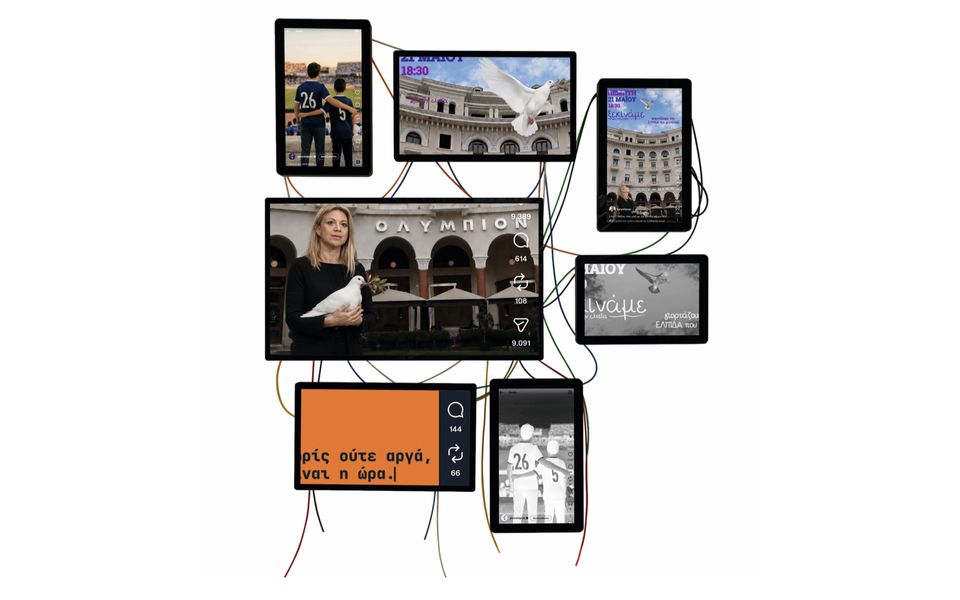
Maria Karystianou releases a white dove in Thessaloniki; two boys with their backs turned to the camera watch a football match, with numbers on their jerseys. Both are political campaign spots and both are products of artificial intelligence.
The video depicts Maria Karystianou, mother of one of the victims of the deadly rail disaster at Tempe, and leader of the new Hope for Democracy party, dressed in black in front of the Olympion cinema in Thessaloniki. In her hands she holds a large white dove. Karystianou releases it and it flies high.
The scene in former prime minister Alexis Tsipras’ spot is completely different. We are in a football stadium. Two boys, their backs turned on us, are hugging in the stands. Their jerseys, blue with white details, have the numbers 26 and 5, that is, May 26, the day Tsipras plans to announce his new party. The aesthetics and the messages they attempt to convey differ, but the two videos have something in common: they are both products of artificial intelligence.
Tight budgets
All the experts who speak to Kathimerini about how AI is changing political communication initially note that it facilitates it. “It’s much cheaper. It would cost money to have a real pigeon, to close the stadium, to direct the spot. It’s also much faster. The production time is minimal,” says strategy and communications consultant Eftychis Vardoulakis.