SÉVERIN MILLET
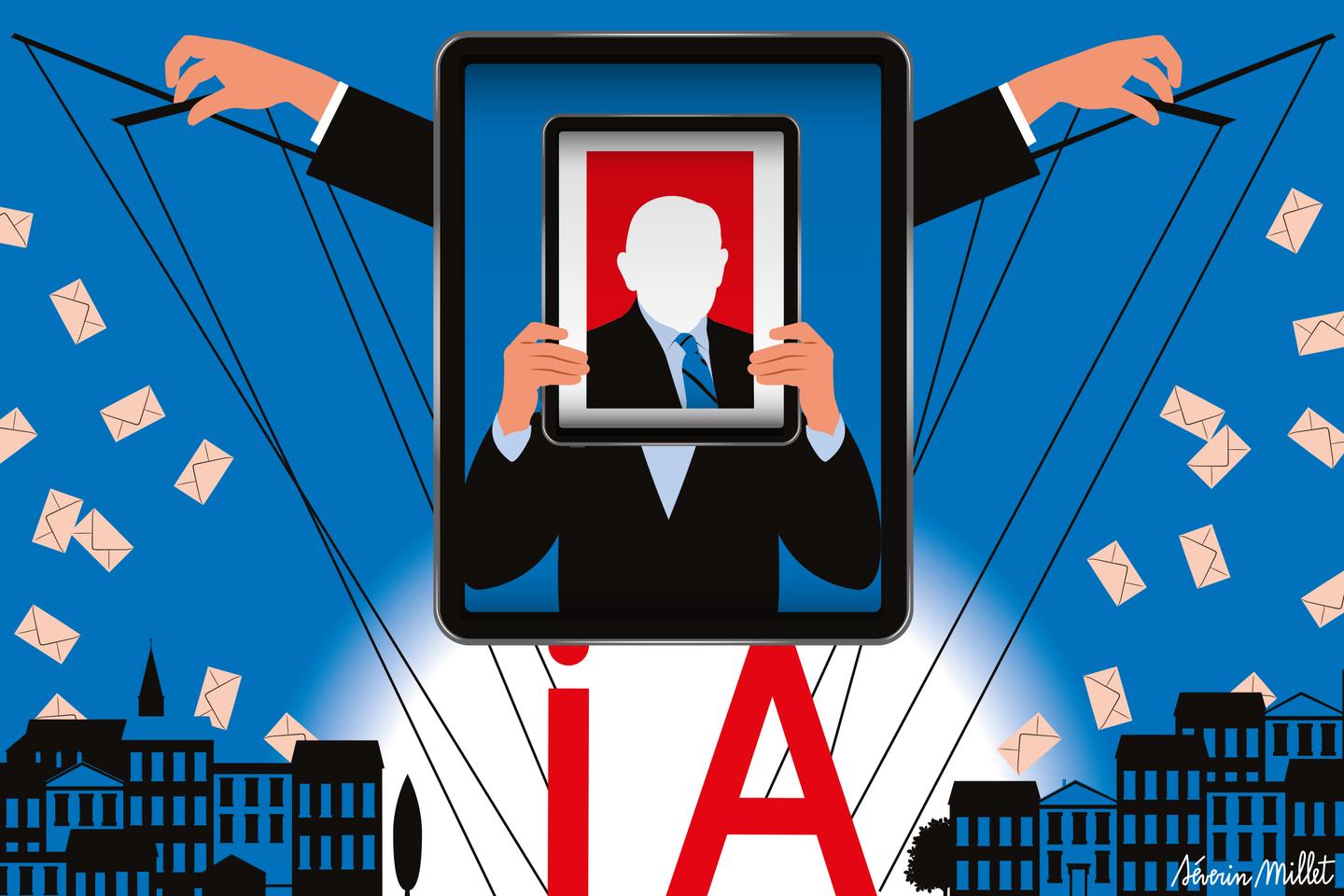
"Everyone has artificial intelligence in their pocket. Why not use it to campaign?" As head of Electoral Lab, a political communications agency, Paul Brounais is working with municipal election candidates in 60 towns and cities, he said, with populations ranging from 250 to 220,000. "This is the first campaign with AI," said the young entrepreneur, who also serves as a municipal councillor in a small western French town. "It's accessible to everyone, and everyone is taking it up." Christophe Bouillon, president of the French Association of Small Towns (APVF), shared Brounais' view: "You see lots of very well-produced documents on social media platforms, notably in very small towns. Even if you can't write, AI does it for you," said Bouillon, who also serves as the left-wing independent mayor of Barentin, Normandy.
The upcoming municipal elections on March 15 and 22 are proving fertile ground for the rise of AI-enhanced election campaigns. From Paris, where far-right candidate Sarah Knafo has generated sensationalist videos that have not gone unnoticed, to the country's smallest towns, AI tools have established themselves as remarkably effective allies. "It is a low-cost, fast technique. The parties, which want to win elections amid a hyper-competitive context, cannot afford not to jump on the opportunity," said Antoine Marie, a political science and psychology researcher at Sciences Po Paris.