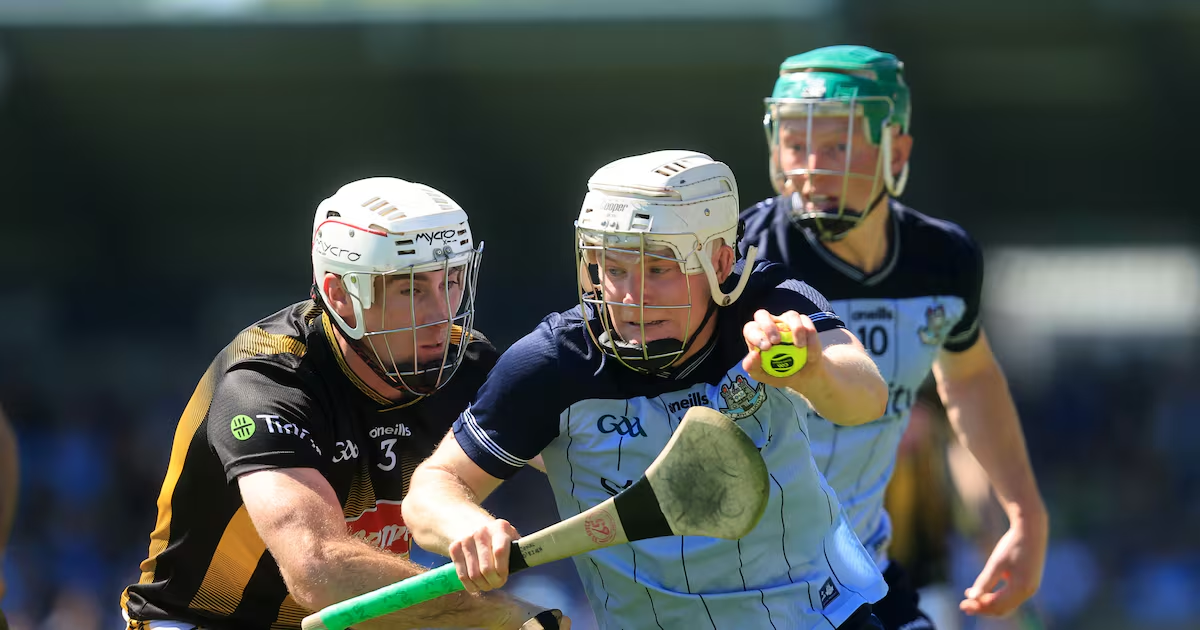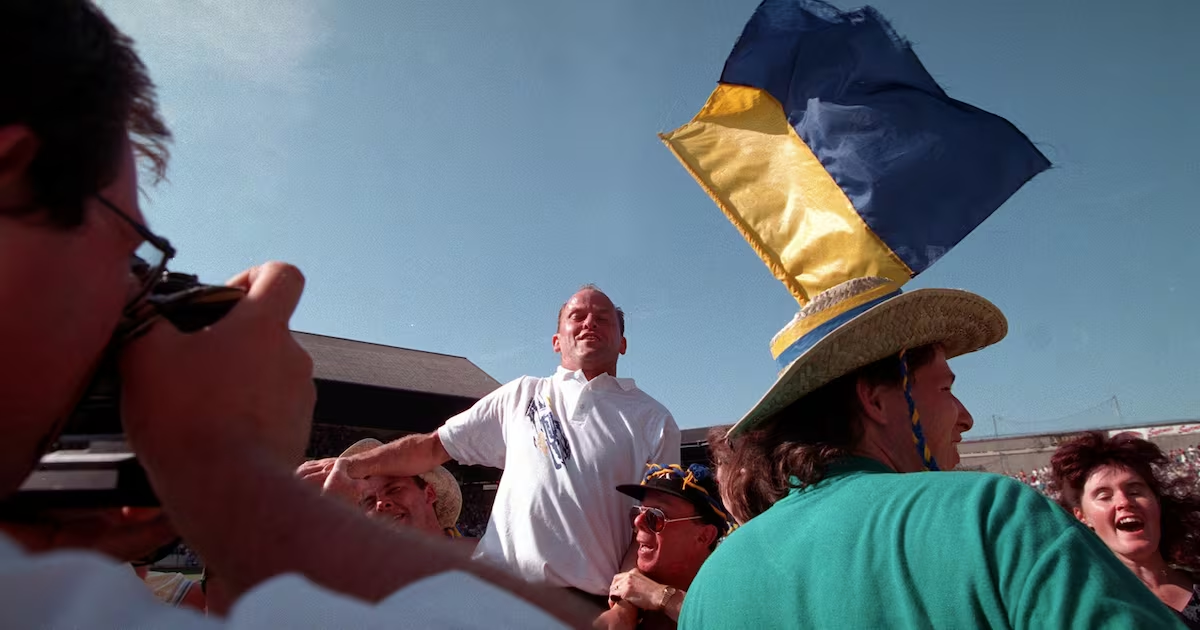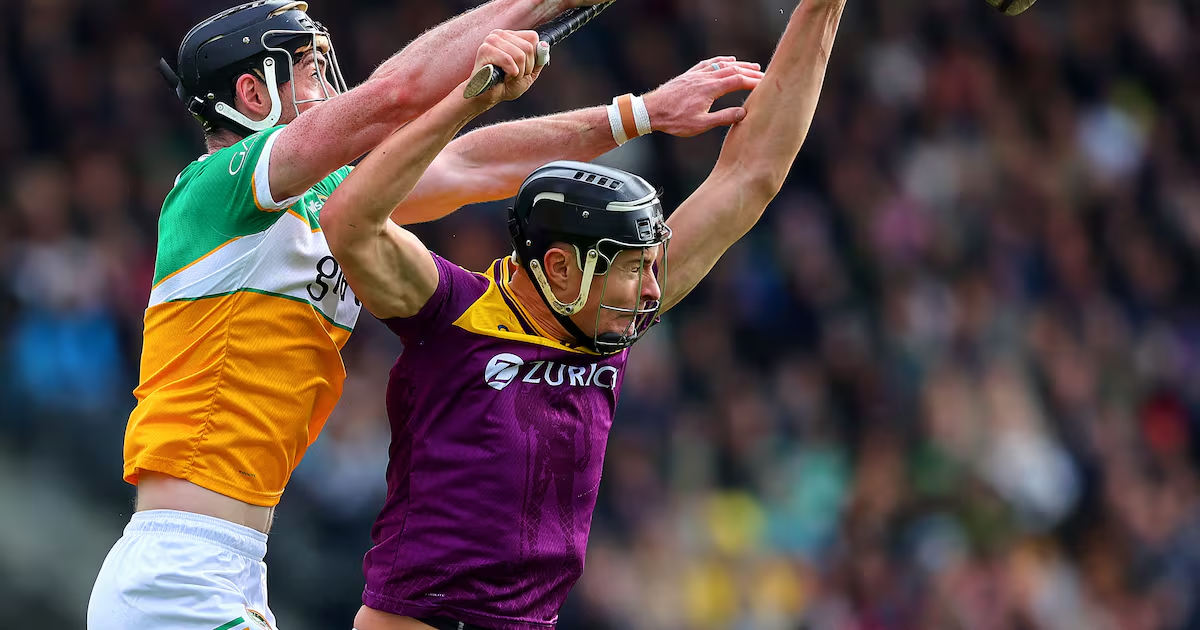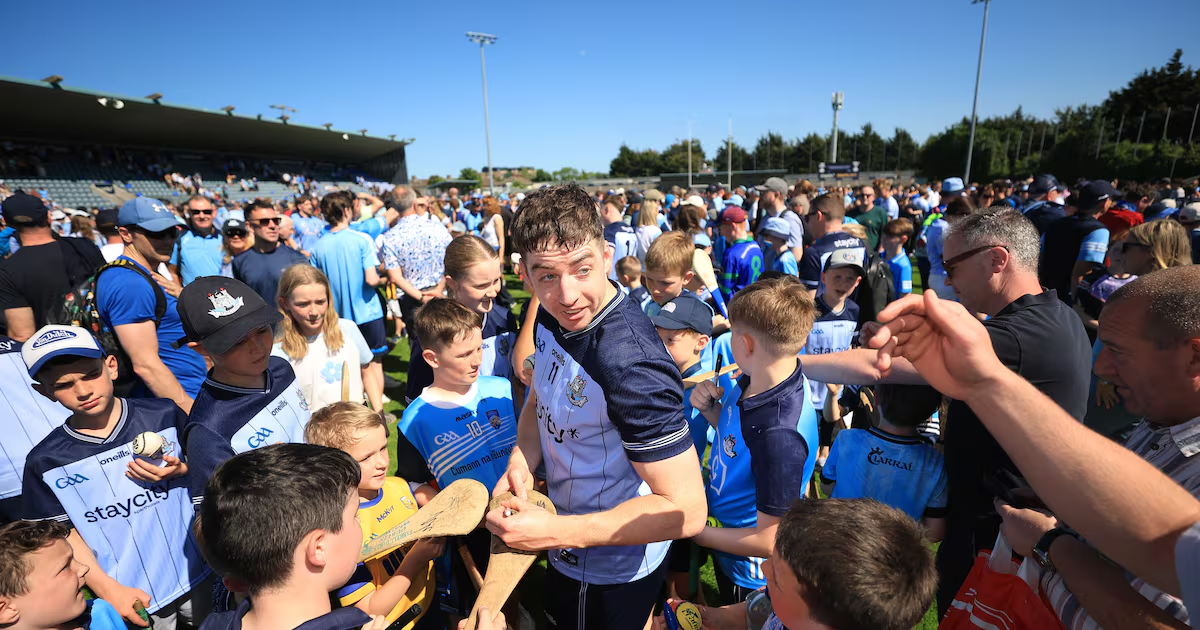
The June bank holiday weekend marks 30 years since Wexford beat Kilkenny in a Leinster quarter-final. It was a big deal for Wexford at the time, as they hadn’t beaten their old rivals in eight years. Few enough would have seen it as a springboard to the All-Ireland and just 18,571 turned up – but that’s what happened three months later.Michael Phelan of Kilkenny (standing) sends the sliotar beyond Wexford's Rod Guiney during the 1996 Leinster Senior Hurling Championship quarter-final at Croke Park. Photograph: Lorraine O'Sullivan/Inpho At the time, Liam Griffin was almost pleading for recognition. “We didn’t bottle it today and we won’t,” he said afterwards. “Give those young men a chance. Be fair.”Last Sunday, Dublin’s Niall Ó Ceallacháin became the first manager since Griffin to oversee the black-swan event of eliminating Kilkenny at the provincial stage of the championship.He pointed out that of his panel, only the injured Liam Rushe had experienced beating them in senior championship hurling. Ó Ceallacháin would have been within his rights to make the same plea for his players as Griffin did.The drama and high-summer conditions of a full Parnell Park lent a perfect atmosphere to the match but, in truth, much of the drama came from home pessimists wondering if Dublin would somehow let it slip through their fingers. That may have added to the team’s burden but they made light of it.Unlike when the county previously won the fixture in 2013, Kilkenny are not All-Ireland champions and as Ó Ceallacháin emphasised, the team still has to beat Galway – again – and win Leinster. But it represents two good wins on the bounce, and they had just beaten the provincial champions of the previous six years.Dublin hurling manager Niall Ó Ceallacháin guided his team to a famous victory against Kilkenny at Parnell Park last Sunday. Photograph: Bryan Keane/Inpho The Dublin manager was also asked about the frequently-withering comparisons between the two provincial championships.“The Munster championship is a brilliant competition,” he said. “But I also think maybe a bit too much is read into that too with regards to the days and the crowds and all that kind of thing.“Ourselves, the likes of Kilkenny, the likes of Galway, the likes of Wexford, Offaly, we all stand on our own two feet. Also, if it’s not us in the middle of July, I certainly hope it’s Galway or Offaly who are driving it forward.”Leinster has had sporadic outbreaks of self-esteem since the round-robin system was introduced. There have been no MacCarthy Cups in that time and few see that changing this year, but the province has registered significant change.It is a tribute to Kilkenny’s enduring status that last Sunday’s failure has been treated as a milestone rather than the natural consequence of a team in transition. Maybe it’s both, but it now means that only Limerick are unscathed by seven years of round-robin competition.In those 30 years since 1996, Kilkenny have won 22 provincial championships and reached 26 finals.Form and function have always been entwined in the hurling championship. Round-robins need competition and Munster has been blessed by the ferocity of its contests, even if Limerick won six straight titles (2019-2024) amidst the full houses and heavyweight bouts.Wexford's Cian Molloy keeps hold of possession as Galway's John Fleming closes in during last Sunday's Leinster Senior Hurling Championship round-five match at Chadwicks Wexford Park. Photograph: Martin Kennedy/Inpho Leinster gave us the most perfect final day of the round-robin in 2019, with the television split-screens keeping track of Dublin-Galway and Wexford-Kilkenny. When the music stopped, Galway had lost their seat and in Wexford Park, players stood around bewildered at the final whistle, uncertain what the effect of their draw had been.Wexford and Kilkenny both made the final, with Wexford going on to win their most recent title.One of the running repairs made to the structure was to expand Leinster to six teams for the post-Covid resumption in 2022. It meant the winners of the Joe McDonagh Cup would no longer be isolated and fixtures were scheduled so that the fifth and sixth seeds would play on the last day of the round-robin.This year, Offaly have been a disruptor. The county was promoted for 2025 and survived 12 months ago by defeating Antrim, who lost MacCarthy Cup status. This year, Offaly have moved up the gears, losing just once and reaching an All-Ireland quarter-final for the first time in 23 years.It also meant Kildare were becalmed at the bottom of the round robin, their opening-day defeat by Wexford turning out to be the effective relegation play-off.There has been sympathy for Kildare, who are a developing presence in hurling. They were competitive for at least phases of matches throughout the campaign. Calls for enlargement of the Leinster championship, however, miss the point. The province already has the responsibility of running a partially developmental competition.Kildare's Conan Boran and Eoghan Cahill of Offaly lock hurls at St Conleth's Park, Newbridge, Co Kildare, last Sunday. Photograph: Laszlo Geczo/Inpho The competitive edge would be further blunted by expanding to include an increasing number of McDonagh Cup counties and ultimately to no constructive effect.Since the addition of a sixth county, there have been hard-luck stories. Three years ago, Westmeath beat Wexford, which required the latter to beat Kilkenny to stay in the MacCarthy Cup.Westmeath ended up dropping after defeat by Antrim. Two years ago, Carlow took a point off Kilkenny – an extraordinary result – but lost out to Antrim, who in turn were consigned to the McDonagh by Offaly a year later.Since relegation in 2018, Offaly have been through very hard times, including a stint in the third-tier Christy Ring Cup, but careful nurturing of a talented underage cohort was rewarded with an under-20 All-Ireland and a minor final. Now, they are progressing at senior, having worked their way back and earned advancement.The concern for Leinster must be that Wexford can rebuild without undergoing such a harrowing process. Thirty years after the All-Ireland, they can still command support unavailable to any other county in the province.All meaningful change has to be in the context of a meritocracy and Leinster is changing.sean.moran@irishtimes.com
Seán Moran: In the shadow of Munster, Leinster hurling is undergoing historic change
Dublin weren’t the only team to take a giant leap on a weekend that saw Offaly reach the All-Ireland quarter-finals
1,020 words~5 min read