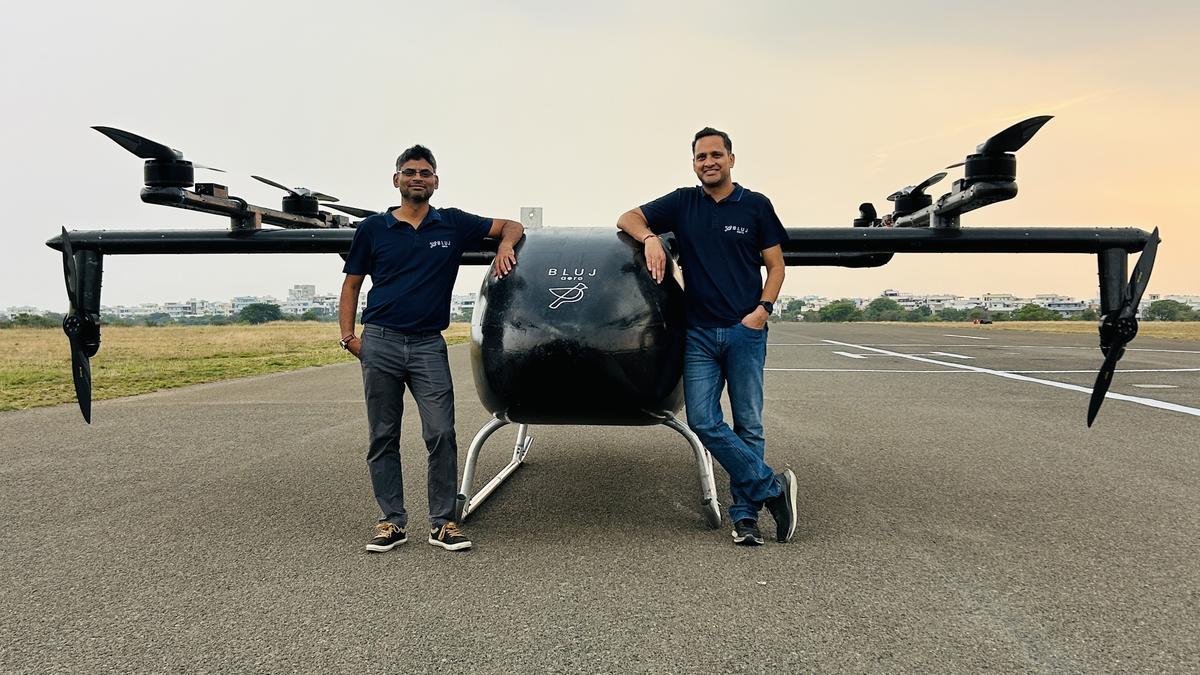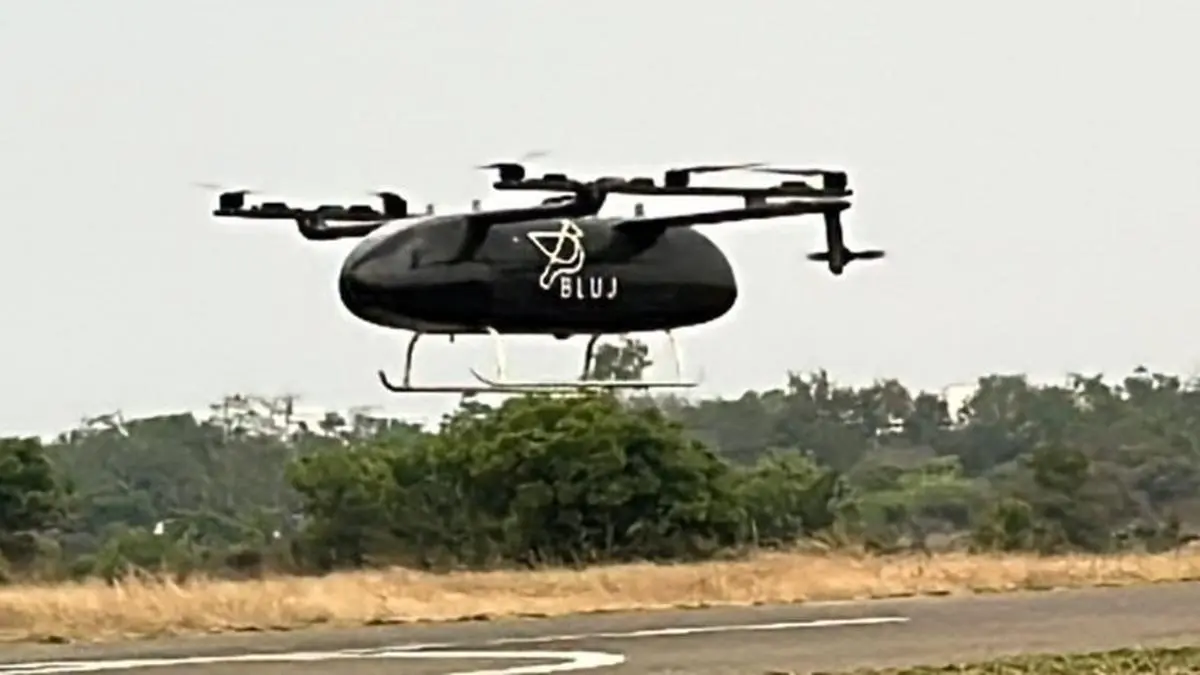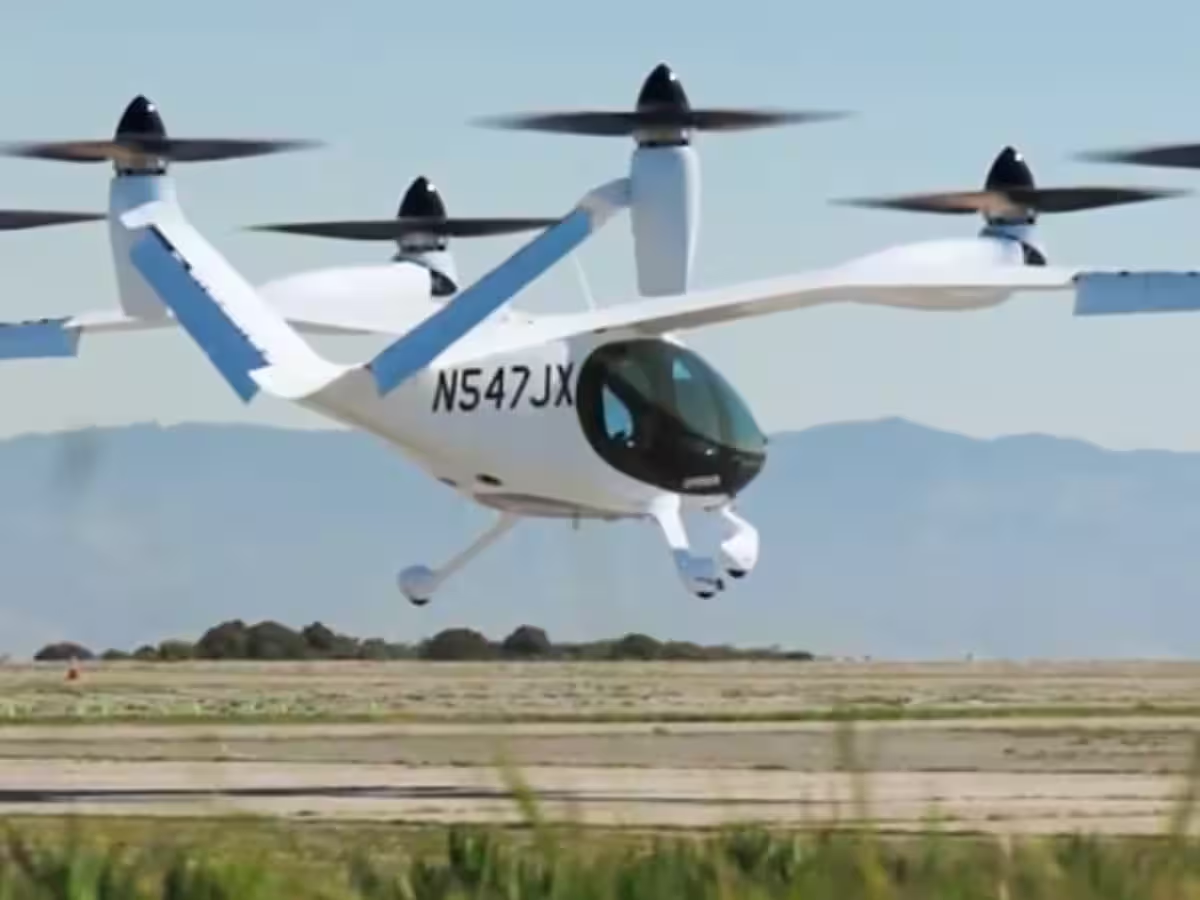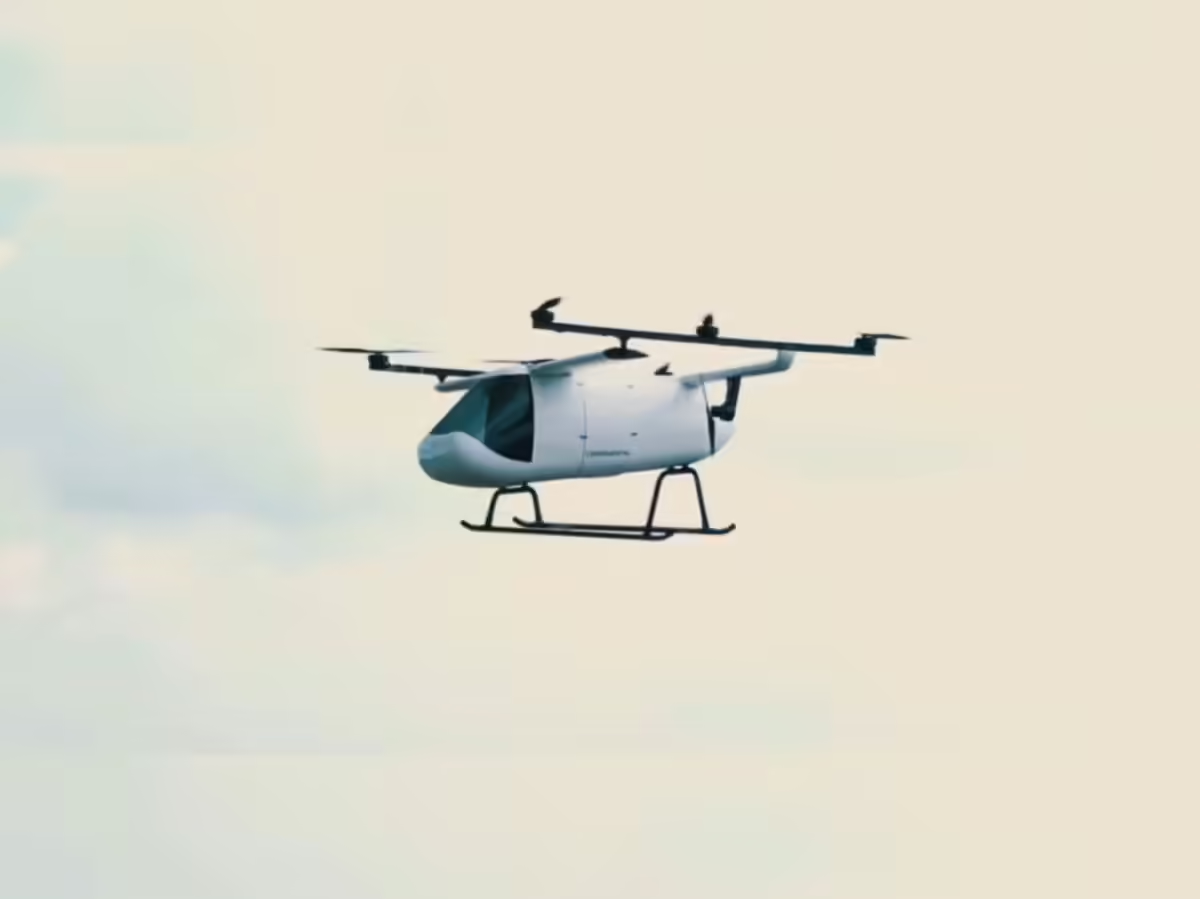
Deep-tech aviation startup BluJ Aerospace on Tuesday unveiled the second-generation prototype of its heavy-payload electric vertical take-off and landing (eVTOL) aircraft. The Hyderabad-based company aims to develop cargo and industrial logistics use-cases ahead of commercial deployment targeted for 2027.Founded in 2022 by former Skyroot Aerospace founding team member Amar Sri Vatsavaya and Utham Kumar Dharmapuri, the company is focusing on sectors such as power transmission, mining, infrastructure and defence logistics, where transporting equipment and supplies to remote terrain remains expensive and time-consuming.The company said the newly unveiled “Gen-2” aircraft is designed to move closer to certification standards and commercial testing.Earlier this year, BluJ had demonstrated a flight of a 500-kg-class eVTOL aircraft, the first Indian entity to have publicly done so. The latest version is being developed to carry payloads of up to 200 kg.The company is the only Indian startup to have publicly demonstrated a flight of a 500-kg-class eVTOL aircraft.Dharmapuri said the Gen-2 prototype is currently undergoing “transition flight” testing, a key stage in eVTOL development where the aircraft transitions from vertical take-off into forward flight like a conventional aircraft.Their modular “VANTIS” architecture is intended to support multiple aircraft variants, from short-range logistics to future regional passenger mobility, rather than a single aircraft programme, Dharmapuri said.While the first-generation aircraft mainly demonstrated VTOL capability, BluJ said the Gen-2 version includes upgrades aimed at commercial deployment and certification, including a roughly 40% reduction in aircraft weight, a higher-voltage battery system for improved efficiency and thermal management, and greater autonomous operation with limited pilot intervention.Between now and its targeted commercial deployment timeline of 2027, the company said it plans to focus on increasing payload capacity, extending range and endurance, completing transition flight testing, and progressing through certification processes.The startup said it has conducted pilot projects with a government undertaking and is in discussions with industrial and defence-linked entities, though it declined to name customers citing confidentiality agreements.While the current aircraft is battery-powered, BluJ is also developing hydrogen propulsion systems for longer-range aircraft. The company has signed an agreement with BPCL and Cochin International Airport to test hydrogen refuelling infrastructure and operational standards for hydrogen-powered aircraft.According to the company, roughly 50% of its platform is developed in-house, including airframes and battery packs, with plans to increase localisation to over 75%.The startup has raised $2.25 million in seed funding so far and is currently in talks for a larger funding round. The founders did not disclose the size of the raise.Globally, the eVTOL sector has attracted billions of dollars in funding, with companies such as Joby Aviation, Archer Aviation and Beta Technologies developing electric aircraft for passenger and cargo transport. However, the sector continues to face challenges around certification timelines, infrastructure requirements and commercial viability.BluJ said its immediate focus is on cargo movement rather than passenger transport, which remains part of its longer-term plans.“We will commercialise cargo first before we put a person in it,” Vatsavaya told ET.
Hyderabad’s BluJ rolls out e-aircraft prototype - The Economic Times
Founded in 2022 by former Skyroot Aerospace founding team member Amar Sri Vatsavaya and Utham Kumar Dharmapuri, the company is focusing on sectors such as power transmission, mining, infrastructure and defence logistics, where transporting equipment and supplies to remote terrain remains expensive and time-consuming.
485 words~2 min read