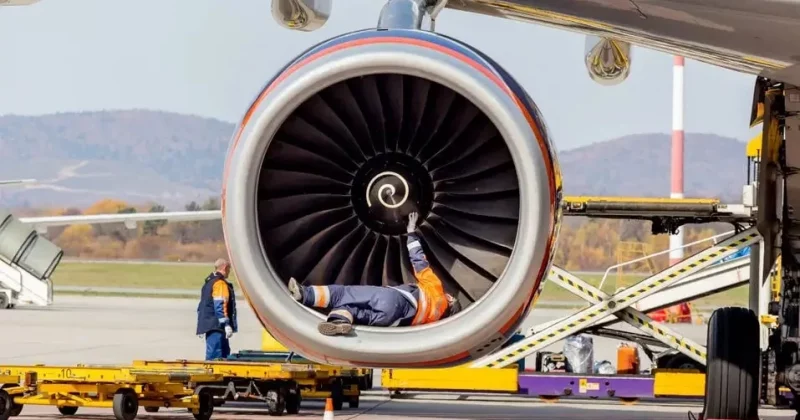
A company called Marine Equipments Centre Pvt. Ltd., based in Kochi, India, purchased two aircraft engines from a Luxembourg firm for roughly $17 million. Two months later, those same engines landed with Rossiya Airlines JSC for around $24 million. The contract explicitly prohibited re-export to Russia. MEC did it anyway.
The engines in question were CFM56-5B units, the workhorse powerplant designed for the Airbus A320 family. The seller was Vallair Asset Solutions, a Luxembourg-based aviation asset manager. The intermediary facilitating the deal on the ground was Aman Aviation & Aerospace Solutions Pvt. Ltd. The markup: roughly $7 million, or about 41%, for what amounted to a two-month holding period.
The sanctions pipeline that won’t shut off
As of April 30, 2026, Russian airlines were operating 460 Airbus and Boeing jets. That figure is remarkably close to pre-sanctions fleet levels from 2021. Instead of grounding, a sprawling network of intermediaries across India, Turkey, the UAE, and Kazakhstan stepped in to keep them airborne.
Trade data identified at least 30 exporters, including multiple Indian firms, that continued funneling aviation parts to Russia. Many of them applied substantial markups before shipping components eastward.