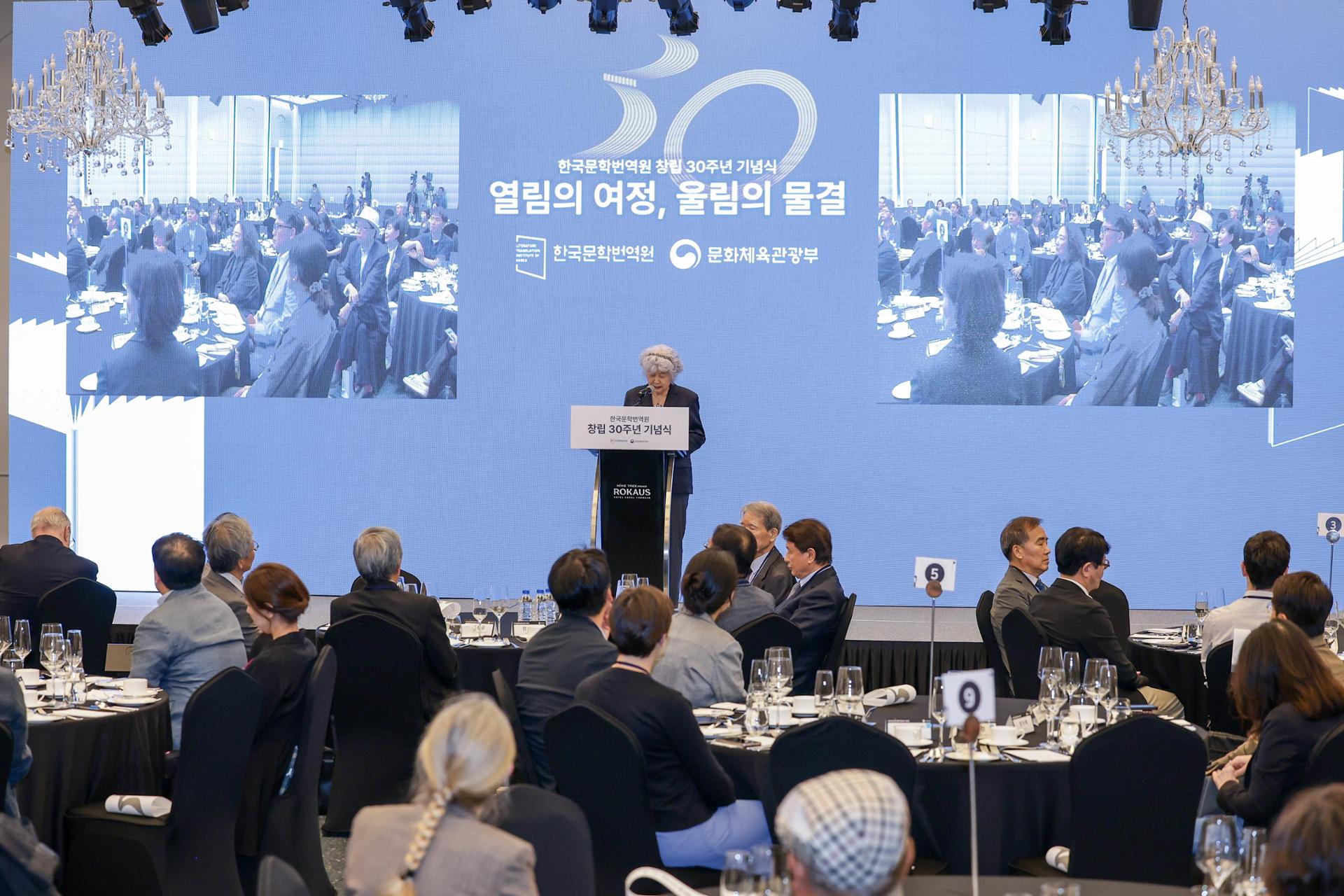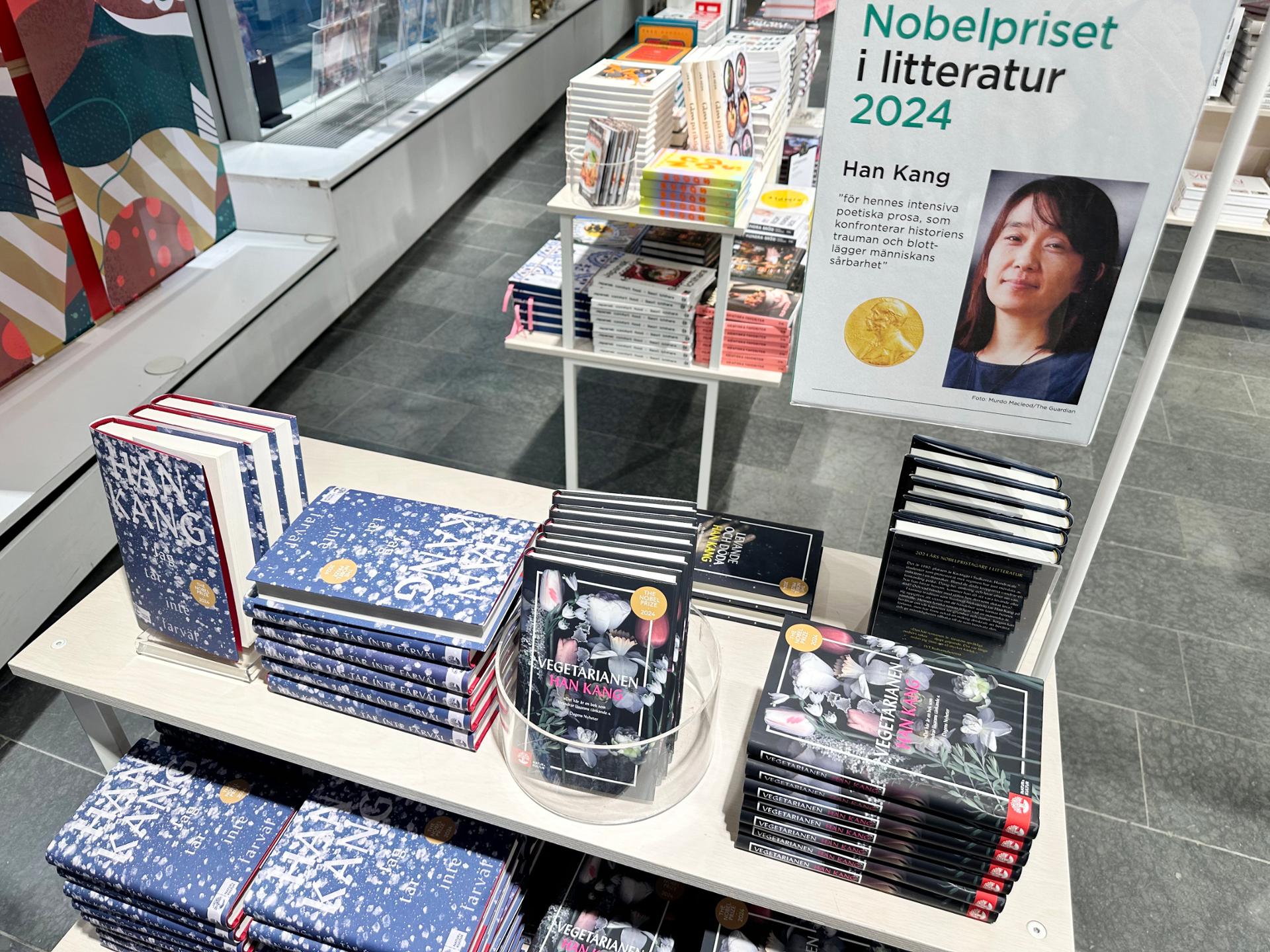
KIM SEONG-KON Recently, the Literature Translation Institute of Korea celebrated its 30th anniversary. As LTI Korea President Chon Soo-young mentioned in her welcome speech, LTI Korea has recently achieved two memorable accomplishments: the first Nobel Prize in literature awarded to a Korean novelist, Han Kang in 2025, and the establishment of the Graduate School of Translation, scheduled to open in 2027. This year, LTI Korea has also launched an ambitious project to publish 100 volumes of Korean classical literature.The importance of translation cannot be overstated. As many great writers have noted, without translation, a writer cannot cross the borders of his or her country and become a global writer or an international celebrity. Therefore, it is imperative for a writer to have an excellent translator. All Nobel laureates have acknowledged the important role of their translators. The same is true of Han Kang and her translator, Deborah Smith.Sometimes translators are prone to making mistakes because of cultural differences. For example, when Western translators read Kim Sowol’s poem “Azaleas,” they might assume that it depicts a man’s sorrow over losing his girlfriend, rather than that of a woman.In Western culture, it is often a man who brings flowers to his girlfriend and scatters them in her path, if necessary. How, then, could Western translators fully understand the unique sentiment of Korean women in Kim Sowol’s time? Fortunately, we have a superb translator, David McCann, whose translation of the poem is impeccable thanks to his profound understanding of Korean culture.As a translator myself, I have always been interested in mistranslations and liberal translations. While reading Korean translations of foreign books, I have found many cases of incorrect translation caused by the translators’ lack of cultural understanding. For example, “Lewis and Clark” has been translated into Korean as “Superman and his girlfriend.” But Superman’s girlfriend is Lois, not Lewis. Lewis and Clark were two US Army officers assigned by President Thomas Jefferson to survey the American West.I also found that “Mason and Dixon” was translated as “outlaws of the American West.” “Bonnie and Clyde” and “Butch Cassidy and the Sundance Kid” were outlaws in the West, but not Mason and Dixon. In fact, Mason and Dixon were British surveyors who drew the boundary line between the North and the South in Britain’s American colonies.In fact, there is a plethora of mistranslations. For example, “fall guy” means “a scapegoat,” yet it is frequently translated as “autumn man.” “Churchyard” refers to a cemetery in the yard of a church, but it is often translated as “the church’s backyard.” “Knock on wood” means “wish for good luck,” but it is sometimes translated literally as “tap on wood.” The same mistake occurs with “keep one’s fingers crossed,” which also means “wish for good luck,” and “by the book,” which means “according to the rules and regulations.” Unaware of these connotations, some Korean translators have translated them word-for-word.Likewise, the post of “minister” in Korea is equivalent to that of “secretary” in the US government, but some Korean translators translate it as “biseo,” meaning “personal secretary.” Others have translated “Quantico” and “Langley” as if they were people’s names. In fact, they refer respectively to the headquarters of the FBI and the CIA. “Security detail” has also been mistranslated by Korean translators as “details on security protocol.” In fact, it means “a dedicated team of bodyguards assigned to protect important people.”Some people think that AI will soon take over translation. But not yet. For example, AI translates the Korean title of Pak Kyongni’s novel “Toji” as “Land” in English correctly. However, when it translates the English title of Pak’s novel “Land” into Korean, it translates it as “Tang,” rather than preserving the original Korean title.Sometimes liberal translations sound better than the original. For example, the title of the famous Hollywood film “Dead Poets Society” was translated into Korean as “The Society Where Poets Are All Dead.” Although it is not a correct translation, the Korean title sounds more appealing because we now live in such a society.The title of a Hollywood Western, “Man Without a Star,” might refer to “a man who no longer has a guiding star” or “a man without a sheriff’s badge.” However, the Korean translation is “Man Who Resembles a Shooting Star,” which sounds more intriguing.The same applies to the titles of literary works. Emily Bronte’s novel “Wuthering Heights” is the name of a mansion. However, its Korean title translates roughly as “Hill of Windstorms,” which sounds far more poetic and charming.Another example is Charles Dickens’s novel “Great Expectations.” In 19th-century England, “great expectations” referred to the prospect of receiving a large inheritance. Yet the Korean translation is “The Great Legacy,” which sounds more elegant and suitable considering the novel’s theme.Therefore, we do not need to translate everything word for word. Instead, we should embrace liberal translations and adaptations that better suit the target language and its readers.- - -Kim Seong-konKim Seong-kon is a professor emeritus of English at Seoul National University and a visiting scholar at Dartmouth College. The views expressed here are the writer's own. — Ed.
[Kim Seong-kon] Mistranslations and liberal translations
Recently, the Literature Translation Institute of Korea celebrated its 30th anniversary. As LTI Korea President Chon Soo-young mentioned in her welcome speech,
844 words~4 min read