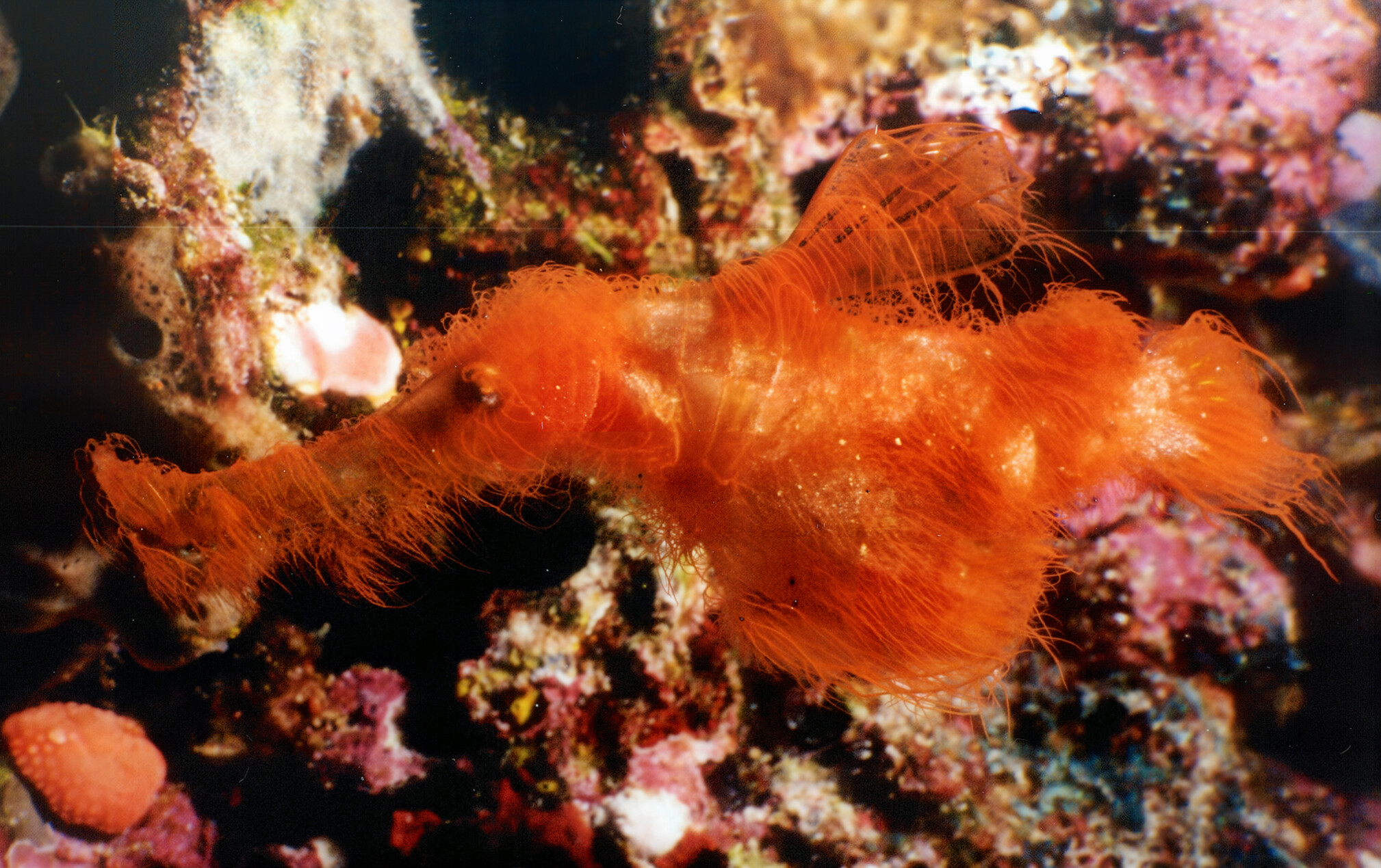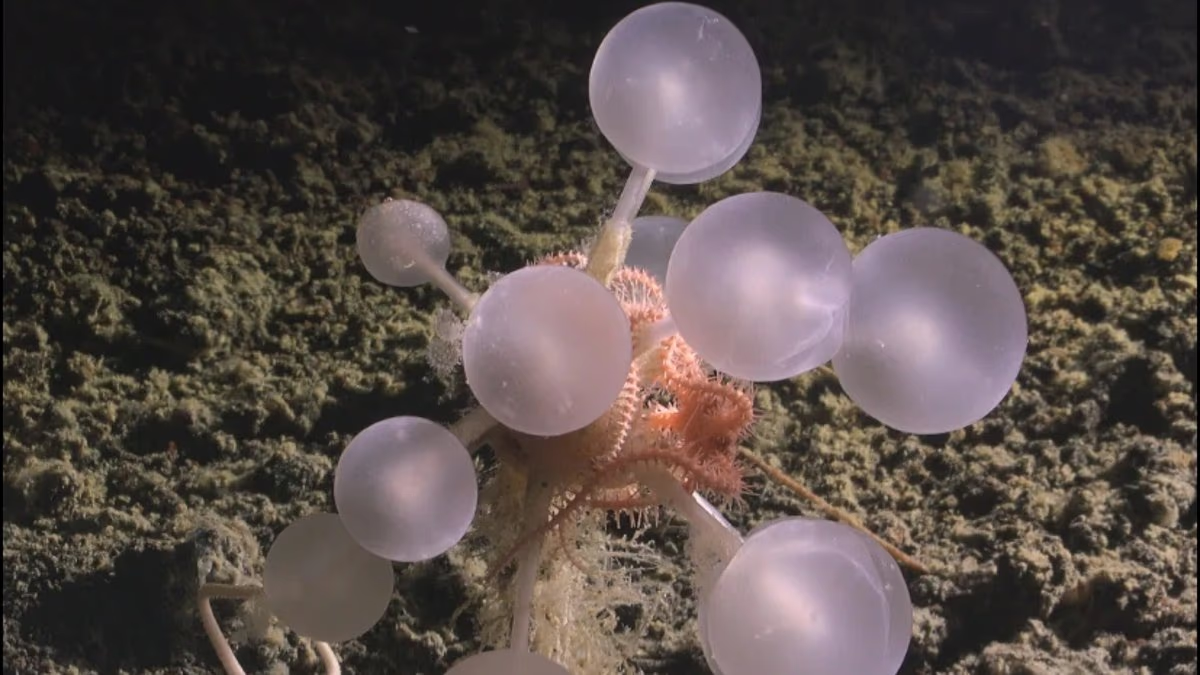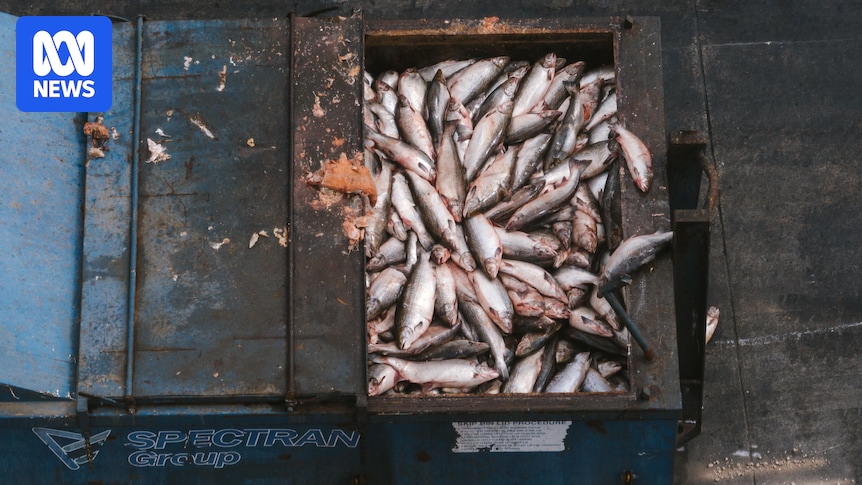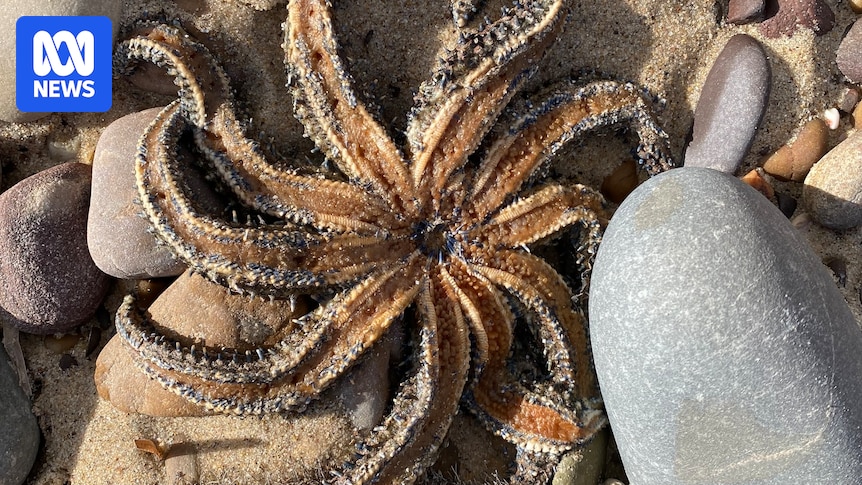
The Tasmanian scallop season is just around the corner, but this year they could be in short supply.Commercial fishers are competing with a hungry starfish that has decimated scallop beds throughout Bass Strait.Over the past few weeks they have been conducting biomass surveys to determine where to trawl for scallops in July.But in many instances the catch has been filled with the eleven-armed seastar.It is a native species and one of the largest seastars found in southern Australia.Stuart Richey says the fishing community is "very concerned" about the seastars' incursion. (ABC News: Luke Bowden)Tasmanian fisherman Stuart Richey said numbers across parts of Bass Strait had exploded in the past few years."Just looks like an atomic bomb's gone off, actually, because everything's dead," he said."[There's] just destruction behind them. It's just dead scallops, dead cockles, dead angasi oysters. They just kill everything in front of them."We are very concerned as to what will be left after these starfish move through, and then how long it takes to recover."Tasmanian commercial scallop fishermen are worried about low stocks to harvest when the season opens in July. (ABC Rural: Laurissa Smith)Getting to the bottom of the problemThe industry has secured funding from the Fisheries Research and Development Corporation (FRDC) to survey Bass Strait this week to assess the damage.Commercial fishermen John Cull is on board, hoping to learn more about where populations have built up.John Cull says the seastars have "gone through all of Bass Strait in one year". (ABC Rural: Laurissa Smith)"Last year we did the biomass survey and there were 40,000 tonnes of harvestable scallops," he said."By the time the season opened there were none."For some reason we get [eleven-armed seastars] in some areas, but not others, and we have had them destroy areas of scallops before."What's unusual is they've gone through all of Bass Strait in one year."So why is this happening?Neville Barrett, an associate professor in ecology and biodiversity at the Institute of Marine and Antarctic Studies, admitted that scientists do not know exactly what influences the seastar's population cycles.But it was normal to see numbers explode and decline.Marine researcher Neville Barrett says the invasive seastars were initially mistaken for a non-native species. (ABC News: Selina Bryan)"There'll be a really good recruitment event, and if they just happen to coincide with ideal conditions you'll just get much higher levels of survival than normal," Dr Barrett said."And then over the next year or two you'll have this great big population burst that eventually trickles out because they can't find enough food, or they get eaten by other things."The seastars are reliably found where food is, be it cockles, clams, oysters, or scallops."So, not surprisingly, if the scallop fishermen have found some really nice new scallop beds they're not the only ones out there that know about them," Dr Barrett said."[Seastars have] got lots of suckers on … tube feet, on their arms, and they can hold on really tight to the animal of interest. "They literally manage to squeeze their stomach into the animal."It is hoped that an industry can be developed to make use of the eleven-armed seastar. (Supplied: Mosshead / iNaturalist)Market for starfish developingIn colder corners of the world there is a burgeoning market for starfish which can be used to create antifreeze and cosmetics.Last year Mr Richey hosted South Korean processors who were eager to convert protein from the eleven-armed seastar for de-icers and use the remains to make fertiliser."They were very excited when we showed them pictures of the size of these things," he said."But I also made it very clear that just about everything in Tasmania is illegal, and until we actually get permission to land them that we'd be wasting our time."For us as an industry we just want to remove these pests. But there is a market for them."Dr Barrett said even though the seastar was native, if managed sustainably there was no reason not to harvest them, just like the long-spined sea urchin."There's always a little bit of red tape. You're effectively developing a new fishery," he said."[But] I think there's a pathway for doing it. It's not like it's a new thing with new hurdles."Mystery surrounds scallop breedingAdding to the headache, scallop spawning events are not leading to new juvenile beds, according to Tasmanian Scallop Fishermen's Association president John Hammond."You wouldn't have thought that amount of fish in stock, like up to 100,000 tonnes, that you'd have a failure in your biocycle and getting some brood stock back on the bottom again. But it's happened," he said.While the reason remains a mystery he suspected the volatile tides surrounding King Island could be carrying the young deep into the ocean where there was no food."It's a pretty sad situation, actually. Everyone's very nervous about it," he said."What we're looking at now is the worst I've seen since the late 70s, early 80s. A very unhealthy environment for the fishing industry."Tasmania's Department of Natural Resources and Environment has been contacted for comment.
Hungry eleven-armed seastars making a meal of Tasmanian scallops
The fast spread of pest eleven-armed seastars has fishers, along with researchers, concerned.
828 words~4 min read