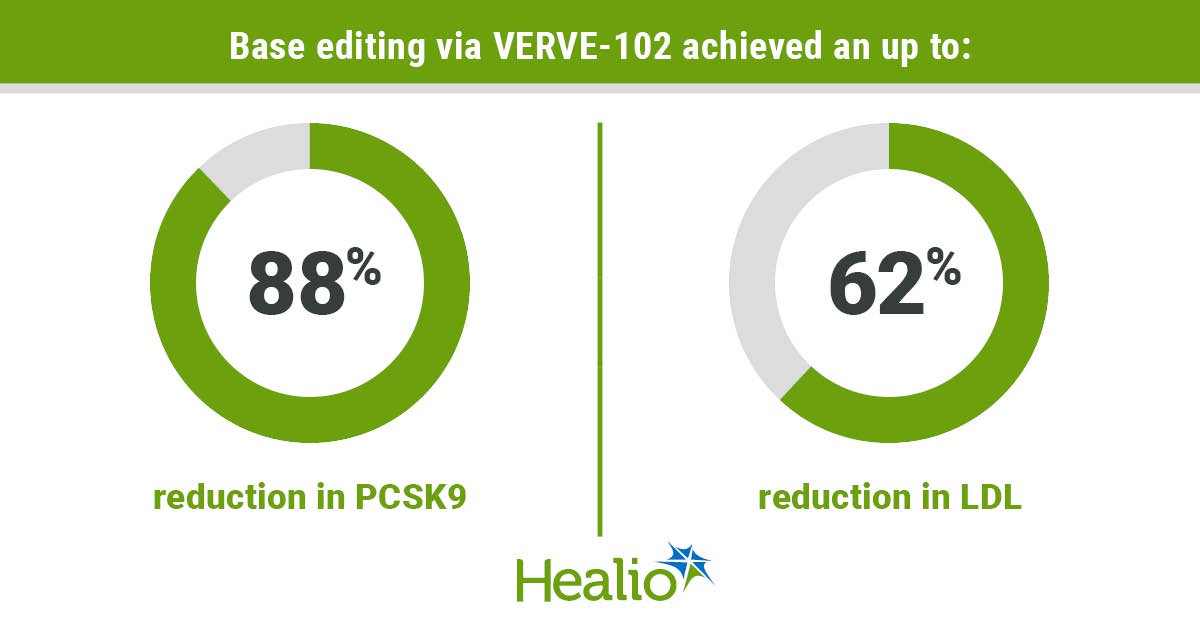
Older readers with bulging medicine cabinets, or parents eyeing their children’s distant futures, are not encouraged to read the New England Journal of Medicine – despite its prestige. A paper just published there, however, matters to them and to me. ‘In Vivo Base Editing of PCSK9 with VERVE-102 for Hypercholesterolemia’ is not a catchy title, but what it describes is going to catch on.
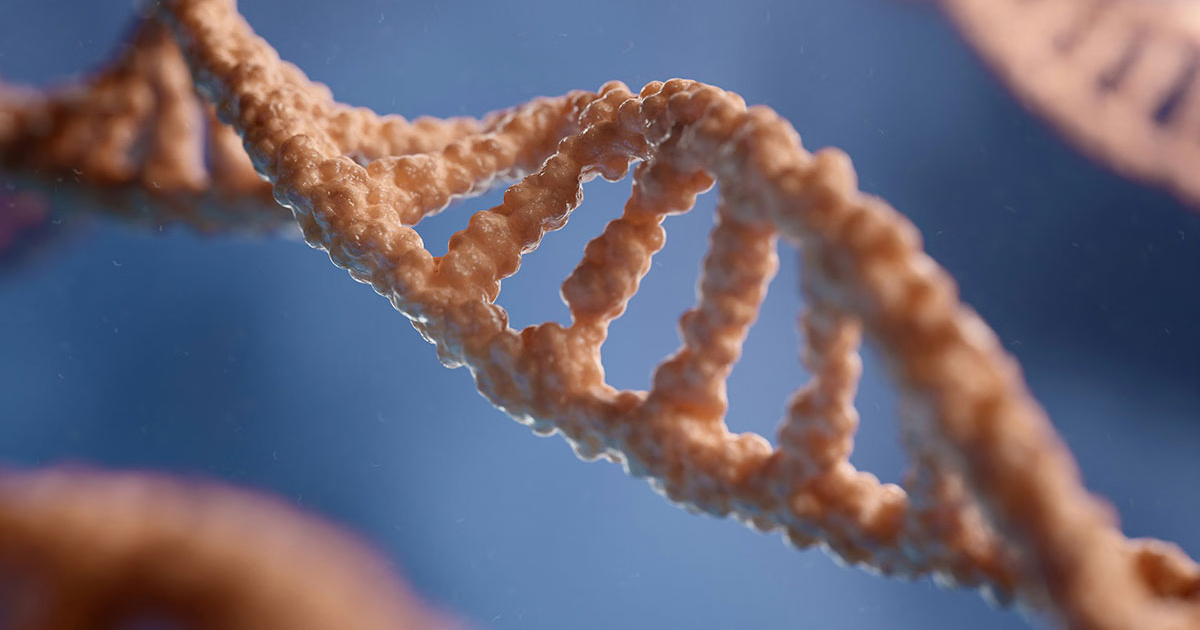
VERVE-102 is a combination drug designed to edit the bases of a gene – PCSK9 – using a development of CRISPR technology, all packaged so the edit reaches the cells that matter in the liver. Some of those born with superior versions of the PCSK9 gene have their lifetime risk of coronary heart disease – the world’s biggest killer – halved. For others it is all but abolished. The drug aims to bring the same benefits to those born without those genetic blessings.
Drugs can achieve the same benefit, but to a smaller extent, partly because nobody takes them from birth. LDL cholesterol can be lowered by a sensible diet, and lowered further by pills – statins are the best known – and these approaches are complementary, not mutually exclusive. Some years ago a new agent was developed, inclisiran, which also lowered this form of cholesterol. Once more, the impact was cumulative with diet and with statins. Inclisiran temporarily blocked production of PCSK9. Rather than taking a pill every day, you needed this drug only twice a year.