Story audio is generated using AI
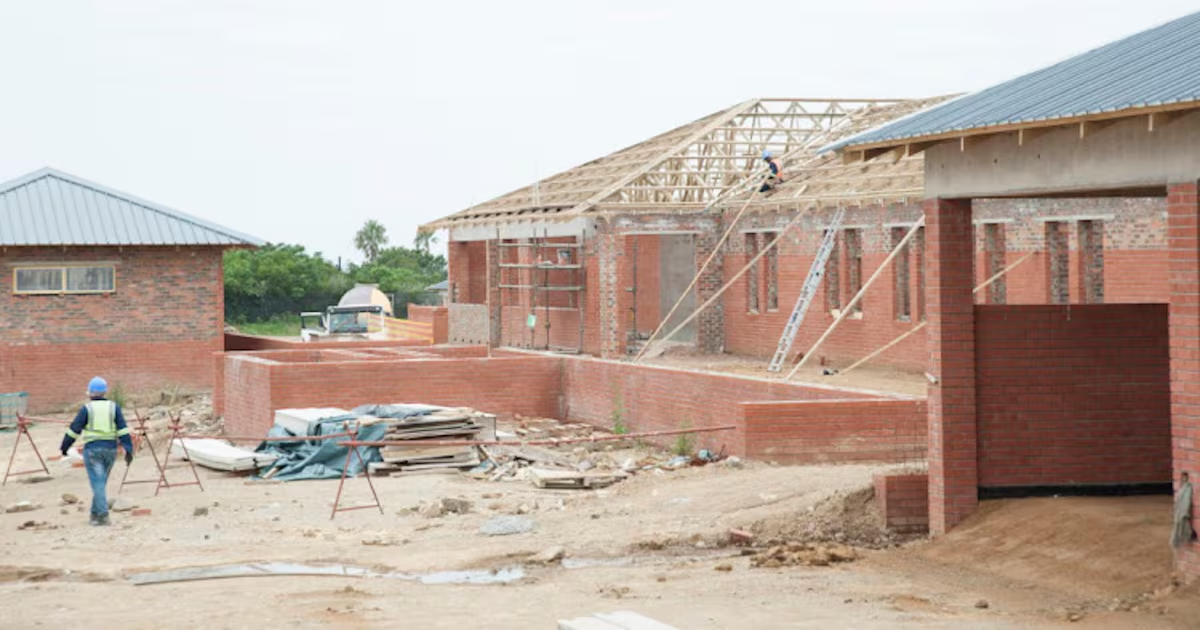
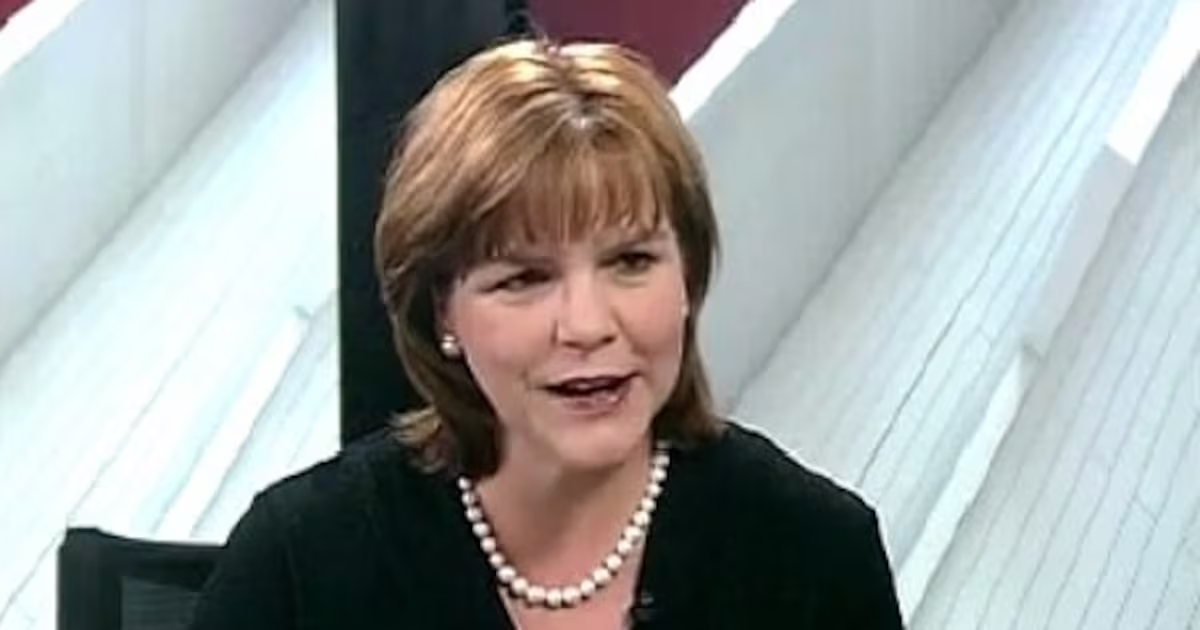
The South African Reserve Bank’s composite leading business cycle indicator rose 7.5% year on year and 2.4% month on month in March, as increases in six of the seven available components outweighed the decrease in the composite leading business cycle indicator for key trading partners.The largest positive contributors were an acceleration in the six-month smoothed growth rate in the M1 measure of money supply — which represents the most liquid forms of money, including coins and paper money in circulation — and a widening of the interest rate spread between 10-year government bonds and 91-day treasury bills.The indicator was also lifted by the dollar-based commodity price index for South Africa’s main export commodities and the number of building plans approved, including flats, townhouses and houses larger than 80m². (Karen Moolman) Also up was the six-month smoothed growth rate in the number of new passenger vehicles sold, as well as job advertisements in the Sunday Times and Pnet.The leading indicator is one of three composite business cycle indicators analysed by the central bank to establish whether a reference turning point has occurred in the business cycle. The leading indicator aims to predict economic activity several months ahead, while the coincident indicator reflects present activity and the lagging indicator confirms past changes.“The Reserve Bank’s leading business cycle indicator ... indicates an expansion in economic activity over Q4.26, given the six-month lead, rising by 1.9% quarter on quarter, indicative of a jump over Q3.26,“ Investec economist Annabel Bishop said.The Bank report showed the coincident business cycle indicator dipped 0.1% in February due to decreases in the utilisation of production capacity in the manufacturing sector and the industrial production index, while the lagging indicator was down 0.6% in the same month.