Story audio is generated using AI
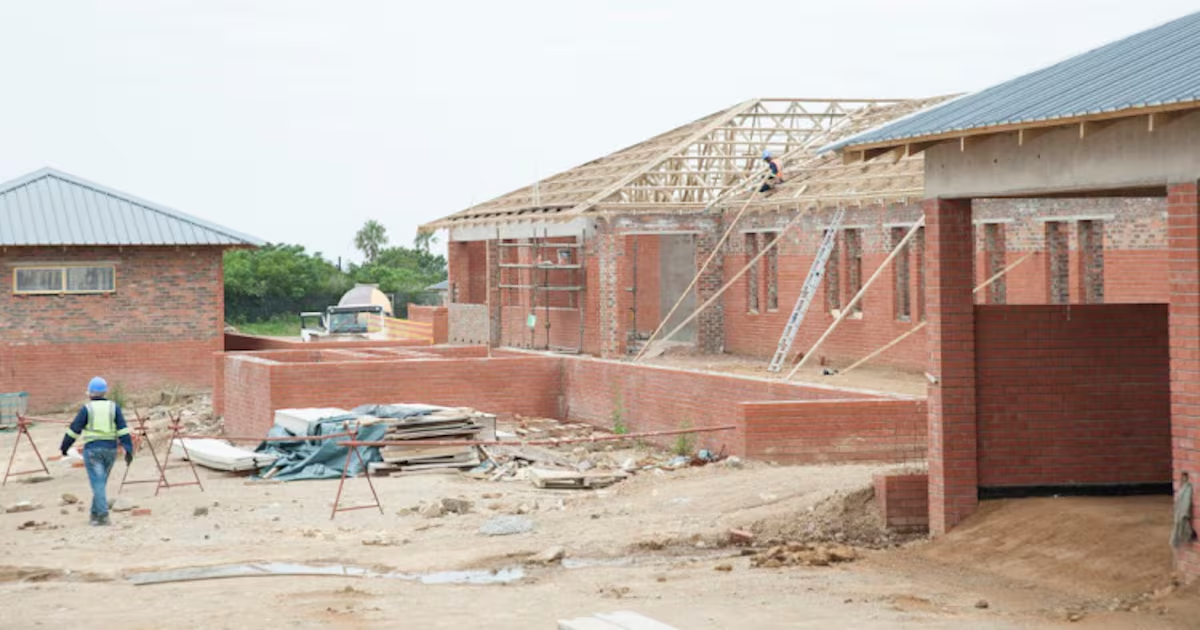
The South African Reserve Bank’s leading business cycle indicator rose 4.2% year on year but decreased further by 0.3% month on month in May, with declines in five of the 10 available component time series outweighing advances in the other half.The largest negative contributors were a deterioration in the Bureau for Economic Research (BER)/Rand Merchant Bank (RMB) business confidence index and a decrease in the number of residential building plans approved, the Bank said. A report last month showed the BER/RMB confidence index fell eight points to 39 in the second quarter of 2026 as the operating environment deteriorated due to the US-Iran war, which has kept global oil prices, and by extension domestic fuel prices, elevated.Four of the five sectors that make up the index recorded lower confidence, the largest decline being recorded among new vehicle dealers, wholesalers, retailers and building contractor confidence. Manufacturing was the only sector to record an improvement — though even there the level was low and consistent with ongoing demand weakness.(Karen Moolman) Tuesday’s leading indicator readings “remain impacted by the volatile Middle East war and consequent negative impact on South Africa’s economic activity”, Investec economist Annabel Bishop said.“Some industries held back on production on demand concerns for later in the year due to the oil price shock,” Bishop added.The other three negative contributors to the leading indicator were the US dollar-based commodity price index for South Africa’s main export commodities, the BER index on average hours worked per factory worker in manufacturing and the interest rate spread between 10-year government bonds and 91-day Treasury bills.The positive contributors included accelerations in the six-month smoothed growth rates in money supply, the number of new passenger vehicles sold, the volume of domestic orders in manufacturing, job advertisements and the composite leading business cycle indicator for South Africa’s major trading-partner countries.The leading indicator is one of three composite business cycle indicators analysed by the Reserve Bank to establish whether a reference turning point has occurred in the business cycle. It predicts economic activity several months ahead, while the coincident indicator reflects present activity and the lagging indicator confirms past changes.The composite coincident business cycle indicator decreased 0.4% between March and April due to decreases in the real value of wholesale, retail and motor trade sales and the industrial production index. It was down 0.9% over the same period last year.The lagging business cycle indicator increased 0.1% month on month in April but eased 2.1% from its level in 2025.