As a backend developer comfortable with Python, databases, and standard web servers, jumping into Web3 felt like entering an entirely different universe. I recently joined the MLH 100 Days of Solana challenge, and after finishing my first week, one massive realization completely rewrote how I think about software: Identity on a blockchain is fundamentally different from anything we build in Web2.
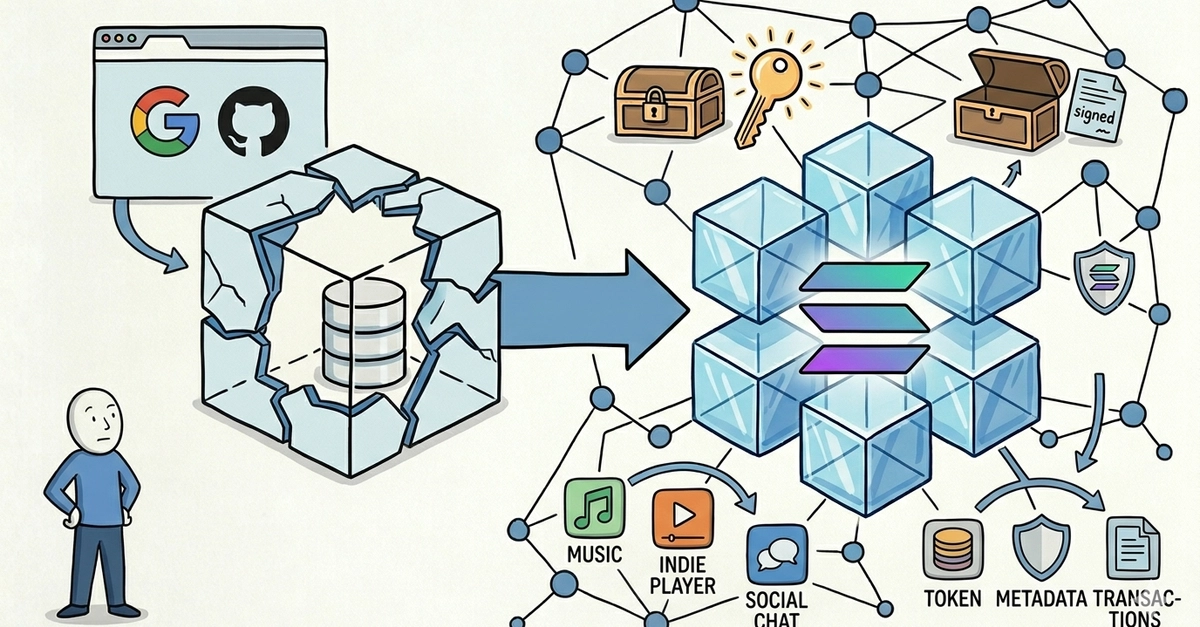
In a traditional application, user identity is scattered across disconnected silos. A user has a row in a PostgreSQL users table on my server, a profile inside GitHub's database, and a distinct account with their bank. They don't talk to each other unless someone manually builds a complex OAuth integration.
On Solana, identity starts with a single, elegant mathematical concept: The Cryptographic Keypair.
The SSH Analogy: How Identity is Born
If you are a developer who has ever deployed code to a Linux server, you already understand how a Solana wallet works. You generate an SSH key pair on your local machine. You leave the Public Key on the remote server, and you keep the Private Key deeply hidden on your local laptop. When you connect via terminal, your local private key mathematically proves who you are.