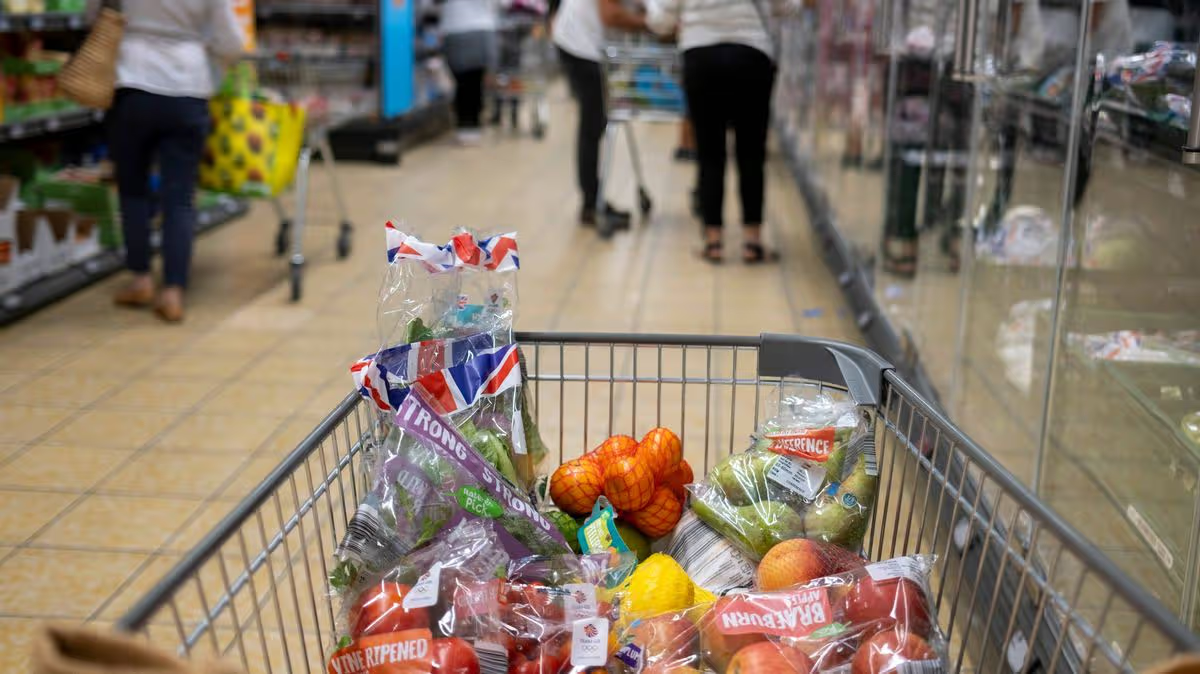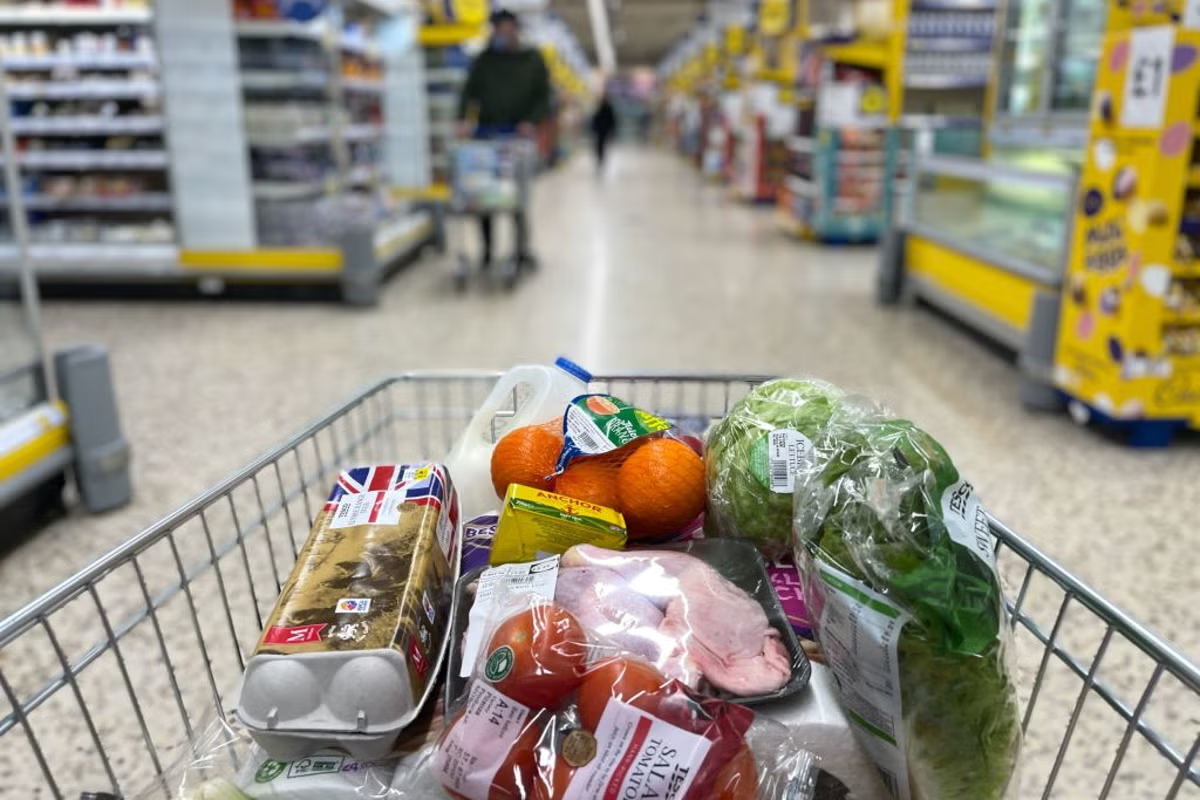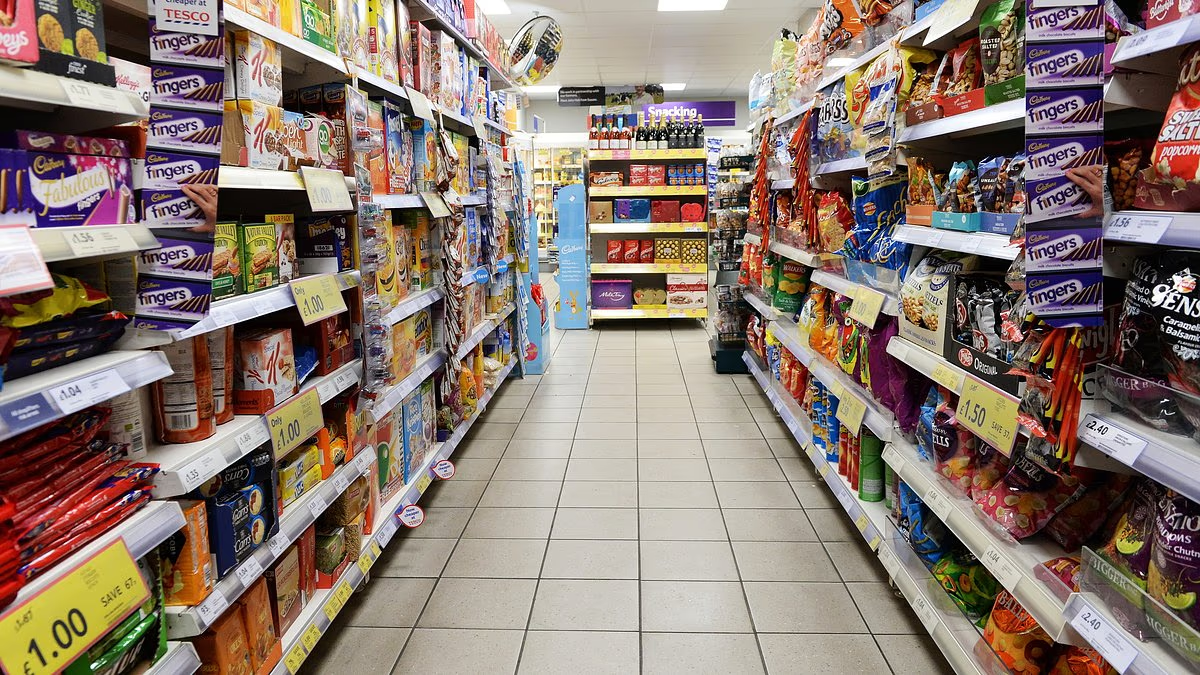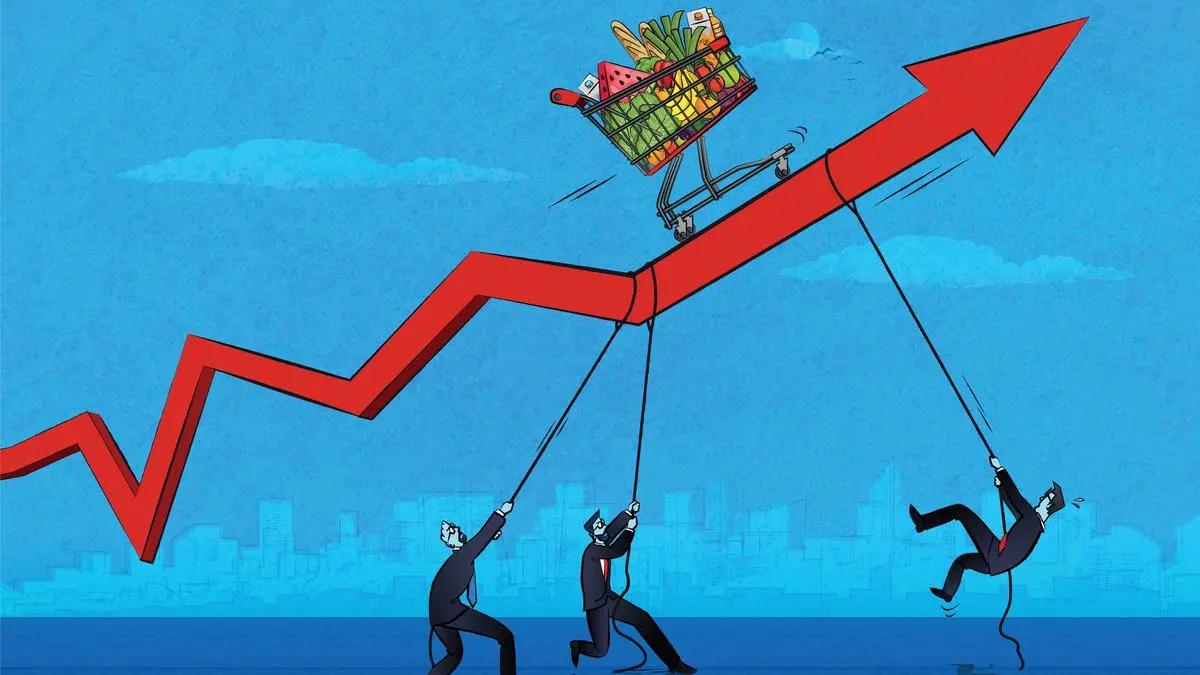
The cost of household staples such as bread and pasta will "barely come back down" due to the combined effect of the US-Iran war and warmer winds from El Nino, a report has found.Food prices rise sharply after “major shocks” but only fall slowly and partially afterwards, leaving homes with higher grocery bills, according to analysis from the Energy and Climate Intelligence Unit (ECIU).Shelf prices fall by just 1 per cent of the original rise after six months, 5 per cent after a year and 7 per cent after two years, the report, based on 30 years of UK data, has found. In wage-adjusted terms, only around a third (35 per cent) of the affordability shock had unwound after two years.This effect, where food prices “shoot up like rockets but drift down like feathers”, also explains why food prices did not go back to pre-pandemic levels even after the shocks that caused them to rise had eased. "Once prices go up, in nominal terms they barely come back down. In effect, each shock permanently resets list prices higher for households," the report said.Though the study used British data, the effects are likely to be similar across Europe. In Europe - though it’s hard to be definitive - many of the drivers and food systems are similar to those of the UK, so we would expect to see a similar story, with prices rising more quickly than they fall," ECIU food and farming analyst Chris Jaccarini told The National.He urged for a renewed focus on net zero targets to shield households from the combined effects of war and extreme weather. “War and extreme weather are increasingly pushing up the cost of the weekly shop. The only way to stop the growing risk of floods and droughts is to reach net zero and bring the climate back into balance," he said.“That means cutting our reliance on oil and gas, which would also help shield food prices from the volatile global markets that have helped drive the cost-of-living crisis. As the data shows, once prices are up, they're up – prevention is the only cure.”Further analysis by JP Morgan shows that impacts on farming and food supply chains will be global.Farmers adaptIran's blockade of the Strait of Hormuz has had a huge impact on the global supply of energy and fertiliser. Over 36 per cent of global urea, the natural gas needed to make nitrogen-rich fertiliser, comes from the Arabian Gulf. The production of these materials has slowed since the start of the crisis.Meanwhile, a "super" El Nino event with causing Pacific Ocean temperatures to rise up to 2 degrees Celsius this year is expected to affect cocoa, food oils, rice and sugar, with wider risks for other products linked to the tropics, such as bananas, tea, coffee, chocolate and soy-fed meat.It could take between one and four years for the fertiliser supply chain to recover fully, according to a report by JP Morgan. Some damaged natural gas facilities could take up to five. Farmers will have the option to raise their costs, reduce the use of fertiliser or change crop.“Even if the conflict ends today, there will be lasting residual impacts if shocks cascade. Seasonal climate predictions become important in this case as one of the potential shocks,” the report said.A rice farm in Thailand after 2023's El Nino caused lower rainfall. Getty ImagesInfoThe farmers most affected by the combined effects will be in Brazil and in India, who are major importers of Gulf nitrogen, as evidenced by the last El Nino event in 2023 and 2024, which followed the Russian invasion of Ukraine.Brazil produces 10 per cent of the world's corn, while India produces 14 per cent of wheat and almost a third (28 per cent) of rice.The effects of El Nino on crop price will begin to develop in the summer, but will show their “peak impacts” by the following winter, the JP Morgan report said. It will also largely depend on the farmer’s ability to switch to drought resistant corps.“If delays in fertilizer delivery collide with an El Niño–driven yield shock and are mistimed to planting seasons, an energy-market shock could translate into a longer-horizon disruption in soft commodities,” the report said.Accelerating inflationEuropean governments are scrambling to make the rising costs more manageable to populations already suffering cost of living crises brought on by the 2020 pandemic.Price rises that previously took 20 years are now happening in just five years, with food prices expected to rise up to 50 per cent since 2021, a previous report by the ECIU said. British families with children in the lowest fifth of earners must now spend around 70 per cent of their disposable income to maintain a healthy diet.The European Commission has said it would help farmers hit by the price hike in fertilisers, first by disbursing around 200 million euros ($232 million) left in its agriculture crisis reserve. Spain has deployed a €5 billion to shield households and businesses from the Iran war's economic effects, while France rolled out €710 million to support households and businesses for the rising cost of fuel.In the UK on Wednesday, households will find out how much energy bills are set to increase by from July, when the price cap is updated by the regulator Ofgem. Current forecasts point to a rise of more than £200, according to analysts Cornwall Insight. Import tariffs have been temporarily removed from 100 food and drink items in Britain as prices continue to soar, in a cost of living support package announced by the UK Chancellor Rachel Reeves last week.But the twin crises has ultimately forced a debate about reducing energy use or switching to renewables.Henry Dimbleby, former lead of the British government's National Food Strategy, said the roots causes of food inflation needed to be addressed. “That's because our food system is tightly tied to energy, fertiliser and transport costs – and we've built too little resilience into supply chains and production. As climate change and energy volatility worsen, shocks are likely to become more frequent and more severe.
Middle East war and El Nino compound rising food prices | The National
Groceries likely to remain more expensive even after two crises end
1,010 words~5 min read