This first appeared in Lit Hub’s Literary History newsletter—sign up here.
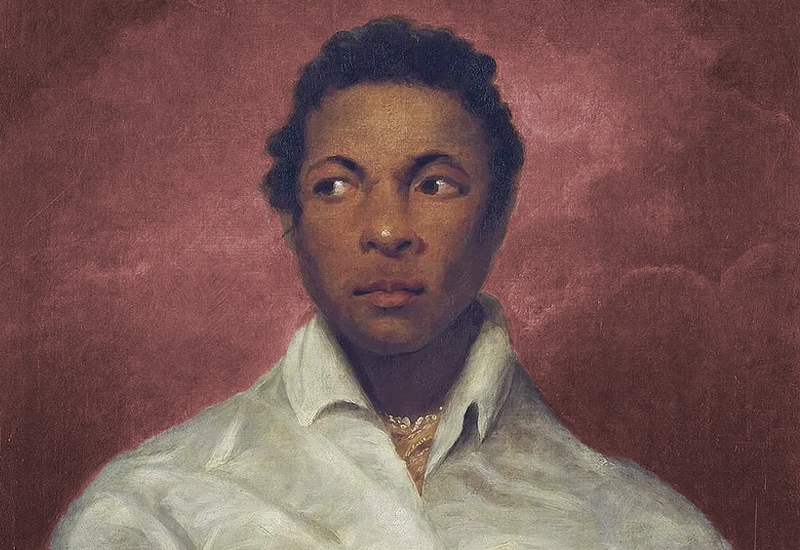
When Ira Aldridge was a teenager, he fell in love with the theatre. But he was a Black kid born in Manhattan in 1807, which meant that his options were limited. He began his career as part of the African Grove Theatre, the country’s first all-Black theatre company, but its productions were, predictably, mocked, harassed, and attacked by angry white detractors. Aldridge himself wound up in fistfights in the streets.
Happily, Aldridge found an alternative: he made his way to England, and in May 1825, when he was just 17 years old, he debuted as Othello in at the Royalty Theatre, “a low-profile establishment in the East End,” making him one of the first professional Black actors to play a Shakespeare character on a London stage. Reviews were mixed, writes Alex Ross. “A critic chided this ‘Gentleman of Colour lately arrived from America’ for his unreliable delivery of the text, but concluded that ‘his death was certainly one of the finest physical representations of bodily anguish we ever witnessed.’”
That fall, Aldridge performed at the Royal Coburg Theatre—a step up—as Oroonoko in an adaptation of Aphra Behn’s novel. After that, Aldridge began appearing regularly, using his difference to fuel his fame—he took on the name “The African Tragedian” and claimed to be descended from Senegalese royalty—but frequently undermining the racist expectations of his audiences, who “left with a chastened appreciation of black virtuosity,” as the scholar Bernth Lindfors put it.