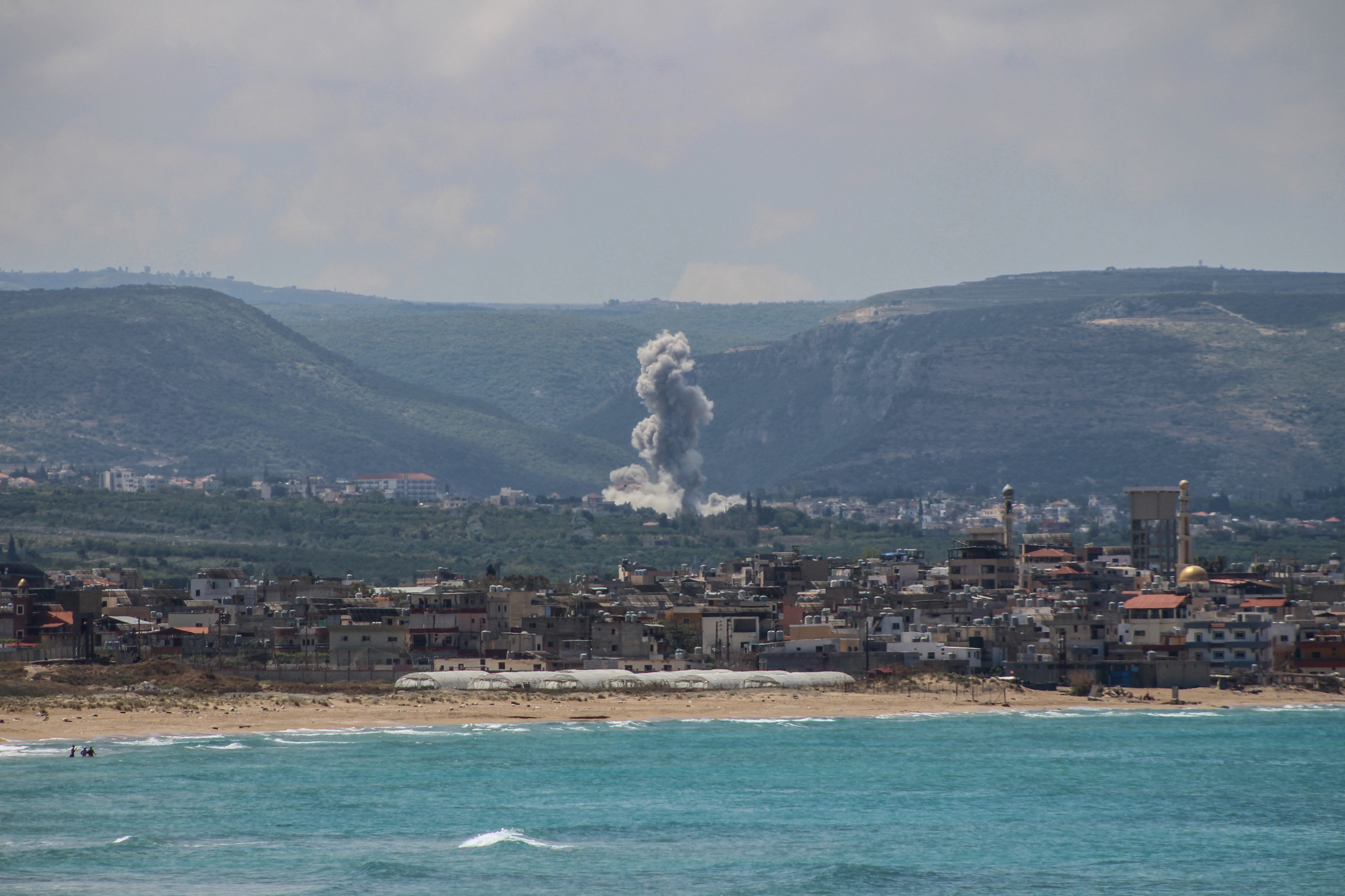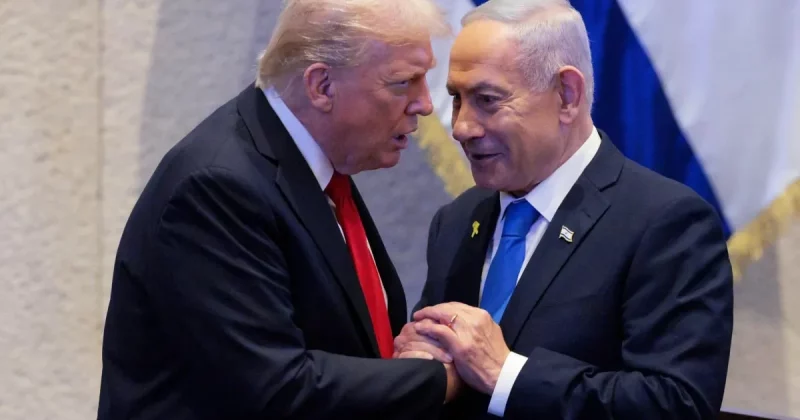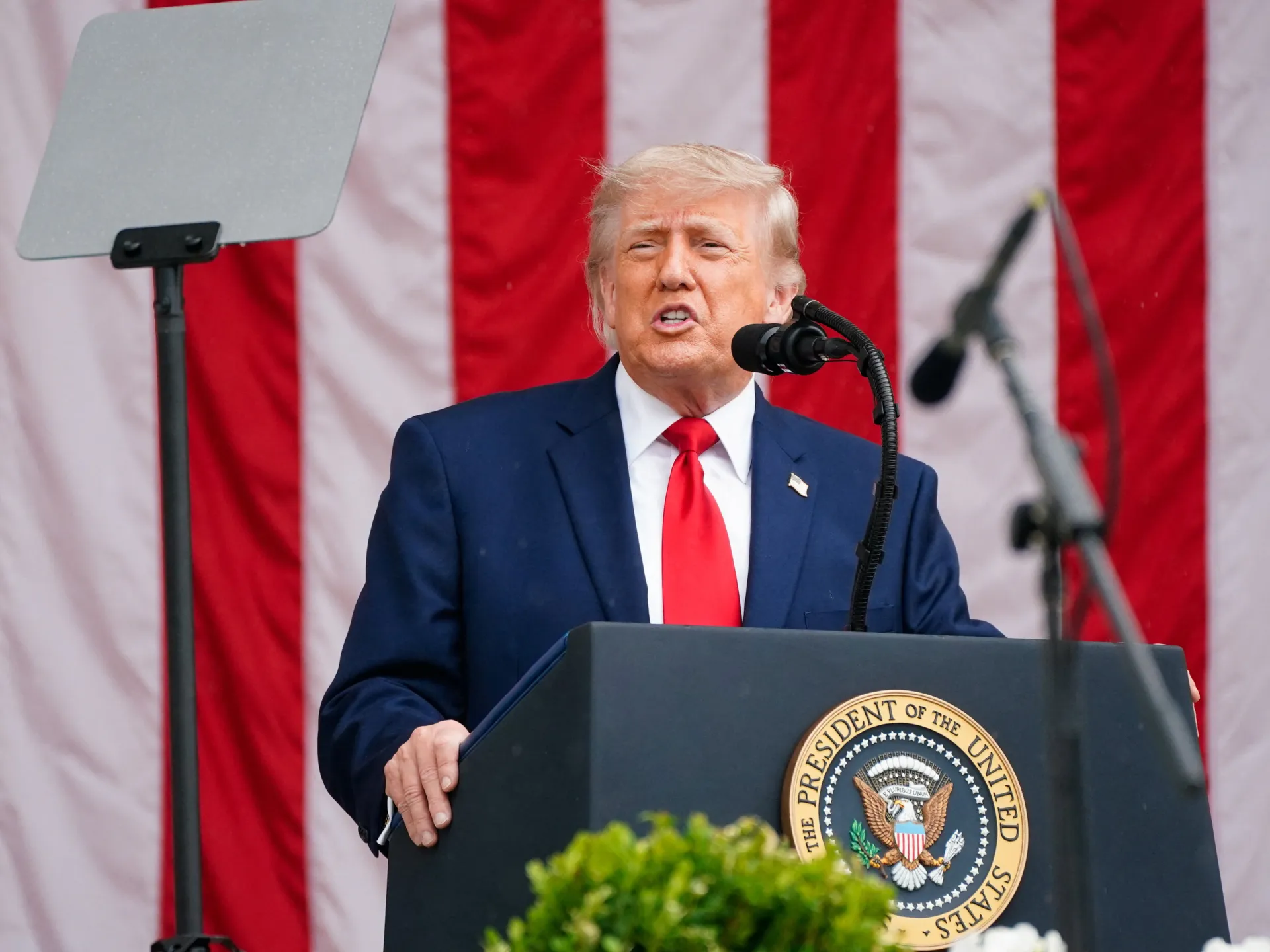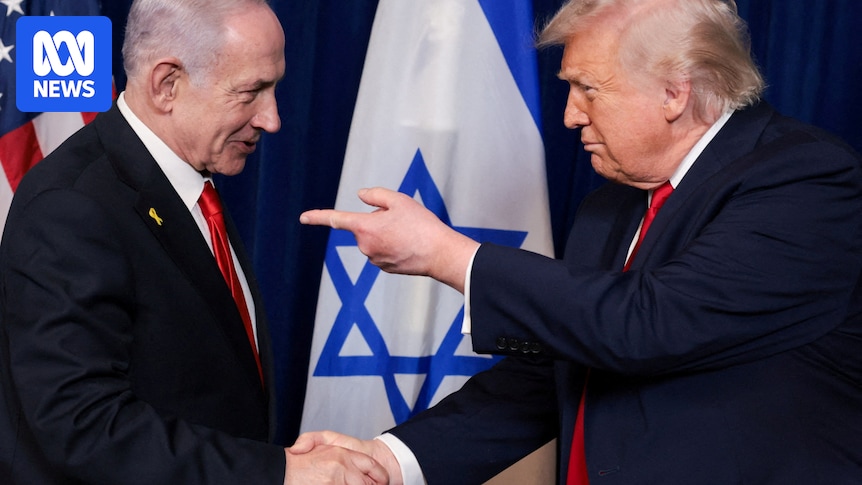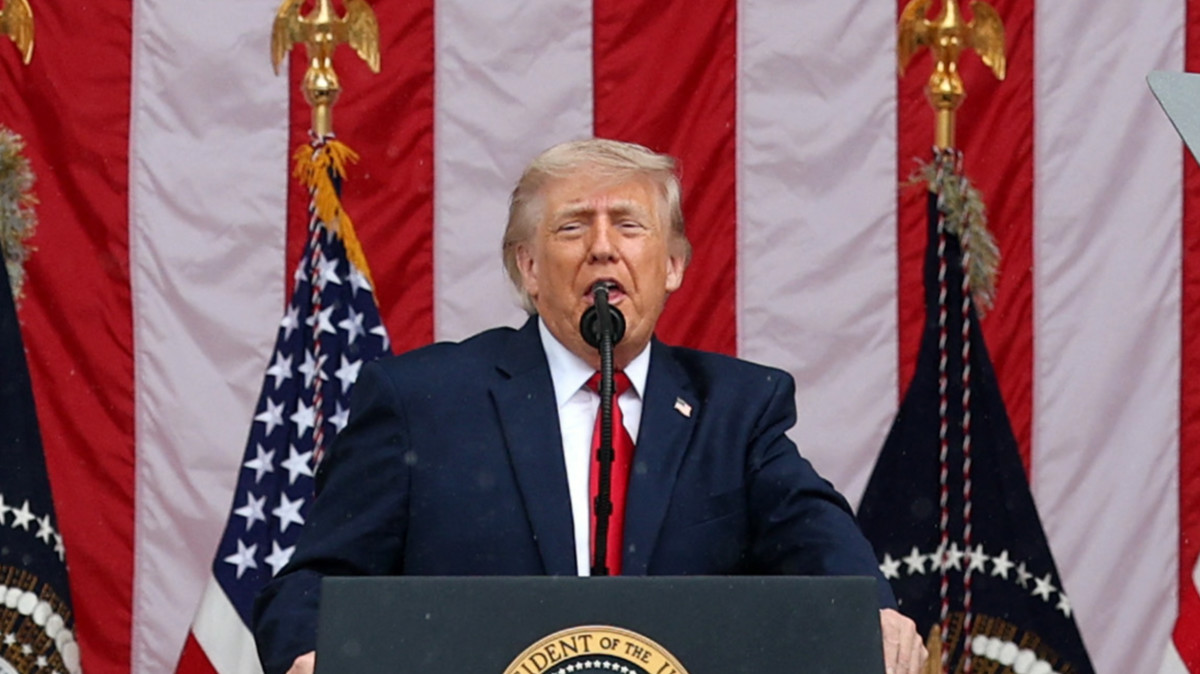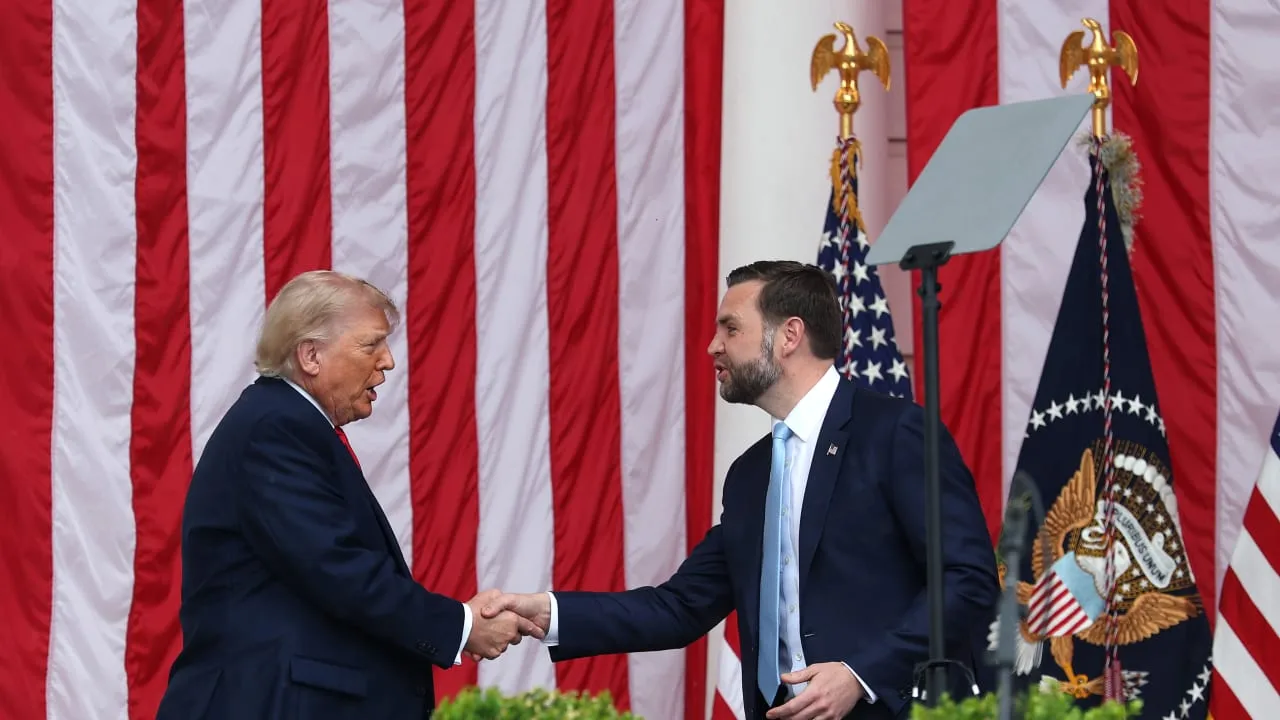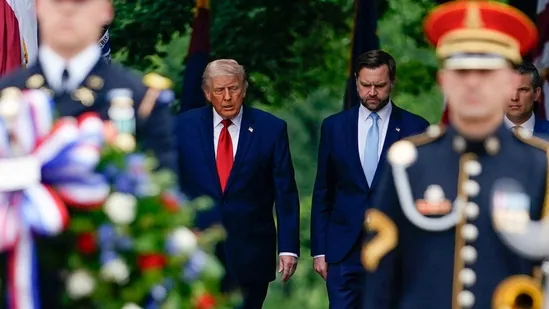
WASHINGTON—President Trump expanded the scope of his diplomatic ambition over the holiday weekend, seeking not only an end-of-war agreement with Iran but also a pact to normalize relations between Israel and the broader Middle East.U.S. President Donald Trump, U.S. Vice President JD Vance and U.S. Secretary of Defense Pete Hegseth participate in a wreath-laying ceremony at the Tomb of the Unknown Soldier as part of a Memorial Day event at Arlington National Cemetery, Arlington, Virginia, U.S., May 25, (REUTERS)The normalization push could give Trump a way to cast any limited cease-fire and shipping pact as a larger regional success story instead of a climbdown, after defense hawks in his own party warned that a bad deal could tarnish his legacy. Trump also threatened to restart major hostilities.“Negotiations with the Islamic Republic of Iran are proceeding nicely! It will only be a Great Deal for all or, no Deal at all—Back to the Battlefront and shooting, but bigger and stronger than ever before—And nobody wants that!” Trump posted on social media on Monday.Negotiations with Iran have yet to produce a final deal despite White House claims of major progress, while Middle Eastern partners such as Saudi Arabia and Qatar are privately pushing back against Trump’s insistence that they join the Abraham Accords and establish diplomatic relations with Israel.Tensions rose on Monday as the U.S. sunk two Islamic Revolutionary Guard Corps ships attempting to lay mines in the Strait of Hormuz. Iran responded by launching surface-to-air missiles at U.S. planes, prompting American attacks on missile launchers near Bandar Abbas, a U.S. official said.“U.S. Central Command continues to defend our forces while using restraint during the ongoing ceasefire,” said Col. Tim Hawkins, spokesman for the command.The Trump administration is working toward a potential agreement with Iran that would fully reopen the Strait of Hormuz in exchange for the U.S. easing or ending its blockade on Iranian shipping, potentially ending one of the most significant disruptions to global energy supplies in recent history. The talks, however, leave unresolved thornier questions, including whether Iran would agree to major limits or dismantlement of its nuclear program—a longstanding Trump demand—and whether Tehran would receive broader economic incentives as part of any cease-fire arrangement.In a social-media post Monday afternoon, Trump wrote, “The Enriched Uranium (Nuclear Dust!) will either be immediately turned over to the United States to be brought home and destroyed or, preferably, in conjunction and coordination with the Islamic Republic of Iran, destroyed in place or, at another acceptable location, with the Atomic Energy Commission, or its equivalent, being witness to this process and event.”Traveling in New Delhi, Secretary of State Marco Rubio on Monday described the emerging framework as an initial bargain to reopen Hormuz that could lead to a separate nuclear negotiation. There is “a pretty solid thing on the table in terms of their ability to open up the strait [and] enter into a very real, significant, time-limited negotiation on the nuclear matter,” Rubio said, “and hopefully we can pull it off.”The Trump administration is working toward a potential agreement with Iran that would fully reopen the Strait of Hormuz in exchange for the U.S. easing or ending its blockade on Iranian shipping, potentially ending one of the most significant disruptions to global energy supplies in recent history. The talks, however, leave unresolved thornier questions, including whether Iran would agree to major limits or dismantlement of its nuclear program—a longstanding Trump demand—and whether Tehran would receive broader economic incentives as part of any cease-fire arrangement.In a social-media post Monday afternoon, Trump wrote, “The Enriched Uranium (Nuclear Dust!) will either be immediately turned over to the United States to be brought home and destroyed or, preferably, in conjunction and coordination with the Islamic Republic of Iran, destroyed in place or, at another acceptable location, with the Atomic Energy Commission, or its equivalent, being witness to this process and event.”Traveling in New Delhi, Secretary of State Marco Rubio on Monday described the emerging framework as an initial bargain to reopen Hormuz that could lead to a separate nuclear negotiation. There is “a pretty solid thing on the table in terms of their ability to open up the strait [and] enter into a very real, significant, time-limited negotiation on the nuclear matter,” Rubio said, “and hopefully we can pull it off.”A senior administration official Sunday detailed a three-part framework in which Iran reopens the Strait of Hormuz and disposes of its enriched uranium while the U.S. unwinds its blockade in Iranian ports. Then Washington and Tehran would define terms of further talks to end the war before driving toward the permanent end of Iran’s nuclear program.Trump has appeared stuck between seeking a diplomatic end to an unpopular war that has now stretched nearly three months or striking Iran—an option backed by the hawkish wing of the GOP—to further weaken the regime and pressure it to relinquish its highly enriched uranium stockpile.Some hawkish Republicans, including Sen. Ted Cruz (R., Texas), slammed the contours of the deal that emerged over the weekend as a potential mistake that would empower Tehran and too closely resemble the nuclear agreement reached by former President Barack Obama, which Trump terminated during his first term.There were signs that Trump might be taking some of the criticism to heart and searching for ways to improve the terms of any deal. On Truth Social, he said he wanted Saudi Arabia, Qatar, Pakistan, Turkey, Egypt and Jordan to sign on to the Abraham Accords, establishing or expanding diplomatic relations with Israel. He suggested Iran could join as well once Tehran signed a peace deal.“This will be the most important Deal that any of these Great, but always in Conflict Countries, will ever sign,” Trump said on social media. “Nothing in the past, or in the future, will surpass it.”Trump’s public call for Gulf allies to normalize relations with Israel, which is highly unlikely to be heeded, came after some Republican lawmakers and officials who served in his first administration slammed the emerging deal over the past few days.“The rumored 60-day cease-fire—with the belief that Iran will ever engage in good faith—would be a disaster. Everything accomplished by Operation Epic Fury would be for naught!” said Sen. Roger Wicker (R., Miss.) on X.Wicker, who chairs the Senate Armed Services Committee, was joined by other Republican hawks, including Cruz, Sen. Lindsey Graham (R., S.C.), Trump’s former Secretary of State Mike Pompeo and former national security adviser John Bolton in criticizing the potential deal with Iran. Cruz said he was deeply concerned and called it a “disastrous mistake.” Pompeo posted on X: “Not remotely America First.” Graham warned: “If it is perceived in the region that a deal with Iran allows the regime to survive and become more powerful over time, we will have poured gasoline on the conflicts in Lebanon and Iraq.”Rubio hit back at critics, arguing that Trump’s commitment to preventing Iran from obtaining a nuclear weapon “shouldn’t be questioned by anybody.”“The idea that somehow this president, given everything he’s already proven he’s willing to do, is going to somehow agree to a deal that ultimately winds up putting Iran in a stronger position when it comes to nuclear ambitions is absurd,” he told reporters on Sunday. “That’s just not going to happen.”By Monday, Graham praised Trump’s latest proposal requiring expansion of the Abraham Accords, calling it “simply brilliant” on social media, and predicting it “would result in the most significant change in the Middle East in thousands of years. “Graham said he expects America’s Arab allies to embrace the proposal, as well as Israel.But the countries Trump wants to sign on to the Abraham Accords—Saudi Arabia in particular—are unlikely to do so. Riyadh has long said it would only agree to the pact if there were a clear pathway toward a Palestinian state. The region’s relations with Israel have worsened since it flattened Gaza following the Hamas-led attacks on Oct. 7, 2023, and participated in two wars with Iran that led Tehran to retaliate against Middle Eastern countries.Qatar officials also said Doha had no plans currently to join the Abraham Accords. Any Qatari engagement with Israel would focus on the resolution of the Palestinian issue, one of them said.“It’s a hope tethered to a galaxy far, far away instead of the new realities in the gulf,” said Aaron David Miller, a Middle East negotiator in Republican and Democratic administrations now at the Carnegie Endowment for International Peace. Gulf countries that move closer to Israel after its actions in the West Bank, Gaza and Lebanon would invite public backlash, he said.Write to Lindsay Wise at lindsay.wise@wsj.com, Meridith McGraw at Meridith.McGraw@WSJ.com and Alexander Ward at alex.ward@wsj.com
Trump Thinks Bigger on Mideast as Iran Framework Brings Criticism
The president seeks an agreement to end the fighting with Tehran and a deal to normalize relations between Israel and its Middle East neighbors. | World News
1,438 words~7 min read