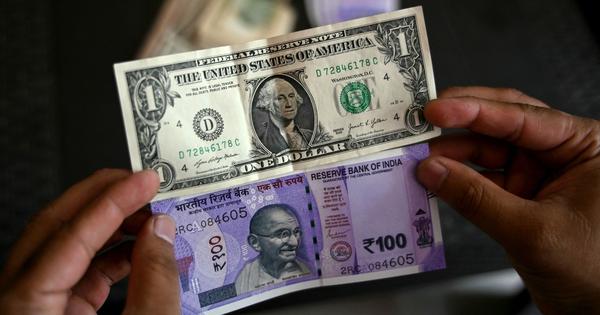
The graph of the Indian rupee has been snaking sharply downward. The rupee-to-dollar exchange rate, or the rupees needed to purchase a U.S. dollar, crossed 96 in May this year. That rate was around 85 a year ago, indicating the rupee’s decline in value since then.Exchange rate is the price that a currency, such as the rupee, commands in the market, relative to the dollar or other currencies. Just as the market price of onions is determined by demand and supply, so is the price of a currency.What is the impact of trade deficits on the rupee’s value?The demand for the rupee rises with India’s exports and falls with imports. When firms in Ludhiana export garments, the dollars or euros they receive from foreign buyers are exchanged for rupees to pay workers and suppliers, thereby increasing demand for the rupee. On the other hand, Indian companies import oil by exchanging rupees for dollars, thereby reducing the demand for the rupee. Rupee demand also declines when we travel abroad and exchange rupees at the airport for the currency of our destination country.Overall, if India’s imports exceed exports, the foreign currency payments it must make to the rest of the world exceed the foreign currency payments it receives. That implies more rupees are exchanged for dollars than dollars are exchanged for rupees, leading to declines in the demand for, and the value of the rupee (requiring more rupees to purchase one dollar).Thus, a currency’s exchange rate is closely tied to the country’s balance of (foreign currency) payments (to and from the rest of the world). India has consistently run a merchandise trade deficit, with imports of goods (especially oil) exceeding exports. The deficit in its merchandise trade account is partially offset by a surplus in India’s invisibles. That is mainly thanks to foreign currency inflows from the export of services, particularly software, and to the large remittance inflows from migrant workers, especially in West Asian countries. Overall, India’s current account, which is the sum of merchandise trade and the invisibles accounts, has been in deficit (Table 1).
Why is the Indian rupee falling?
How does a falling rupee affect India’s economy? How does a currency’s exchange rate shape its balance of payments? To what extent does Foreign Portfolio Investment influence demand for the rupee? What strategic role does the Reserve Bank of India play in preventing the rupee’s depreciation?
1,018 words~5 min read