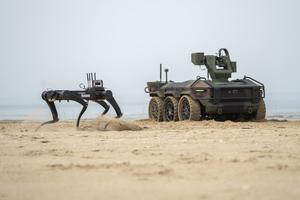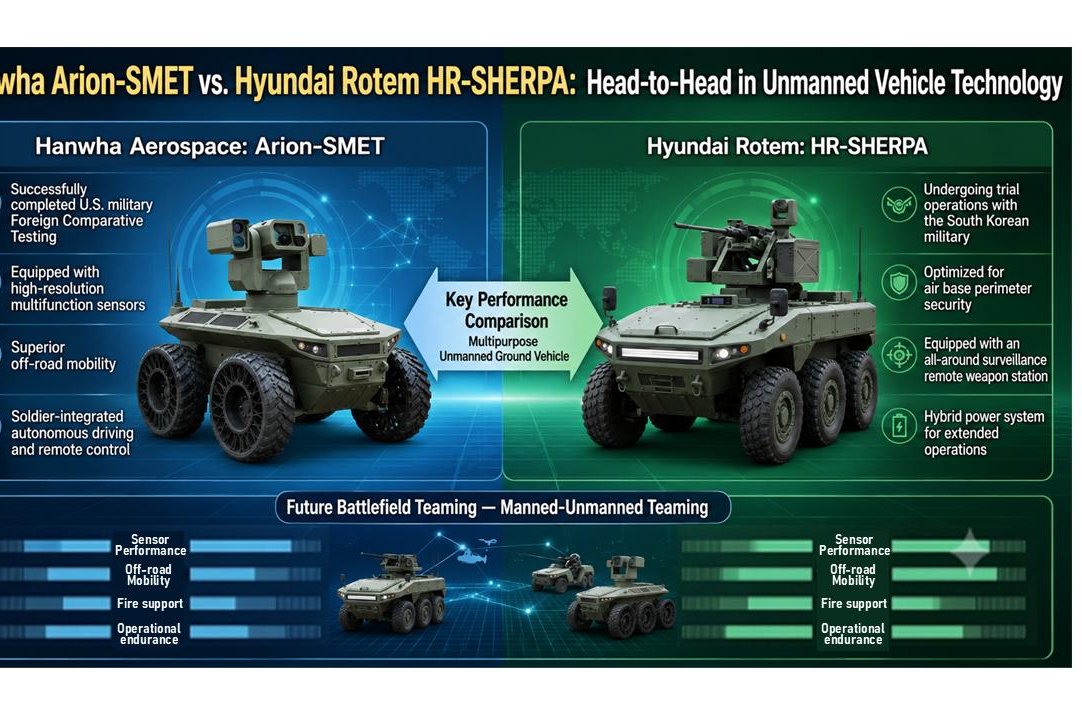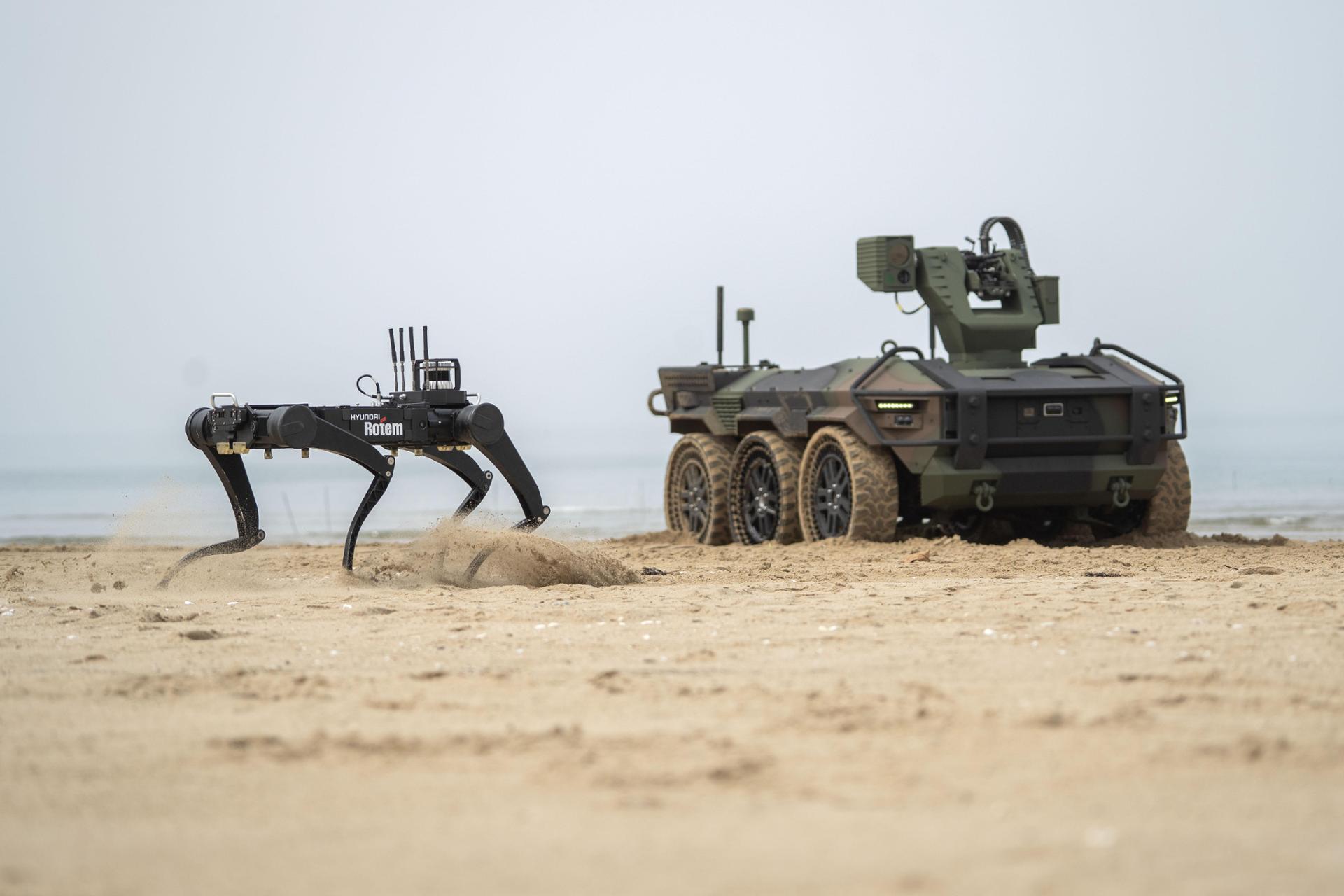
Hyundai Rotem's HR-Sherpa multipurpose unmanned ground vehicle, right, and quadruped robot / Courtesy of Hyundai RotemHyundai Rotem has secured two state-backed research and development projects aimed at advancing unmanned robot technologies powered by physical artificial intelligence (AI), as it works to strengthen future battlefield capabilities.The company said Tuesday it has been selected to lead two national initiatives. The first, commissioned by the Ministry of Trade, Industry and Resources, focuses on developing an integrated control system for multiple types of robots that can be operated using natural-language commands. The second, commissioned by the Agency for Defense Development (ADD), involves building a physical AI-based simulator and a modular robotic platform.The industry ministry-led project aims to create software that allows operators to control different unmanned robots through spoken or written instructions. Today, unmanned systems are usually operated one by one using remote controls or manually input commands. The new system is designed to let a few operators manage several different platforms at once.Hyundai Rotem plans to apply the technology to its HR-Sherpa unmanned ground vehicle and quadruped walking robots. The company ultimately aims to build a command-and-control system that can operate multiple robots in coordinated swarm formations.The government-backed project is part of efforts to speed up the commercialization of AI-based technologies, with a stronger focus on real-world readiness and technological maturity.The ADD-led project focuses on developing a digital twin simulator and a modular robot platform that can test performance in virtual environments designed to closely match real operating conditions.Digital twin technology creates virtual replicas of equipment and environments to test performance and safety before real-world deployment. The simulator will allow repeated testing across different terrains and mission scenarios, helping reduce development time and improve reliability.The modular robot platform will include four-legged robots with detachable wheels. It can also be fitted with mission-specific equipment, such as robotic arms and explosive detection tools.It will also use edge AI, allowing robots to make independent decisions based on field data even without a central server connection.Hyundai Rotem said it will expand its unmanned defense technologies in line with the physical AI strategy of Hyundai Motor Group. Earlier this month, it also signed a memorandum of understanding with Anduril Industries to cooperate on future unmanned systems and battlefield technologies.
Hyundai Rotem wins 2 state-backed R&D projects for AI robotics - The Korea Times
Hyundai Rotem has secured two state-backed research and development projects aimed at advancing unmanned robot technologies powered by physical art...
371 words~2 min read