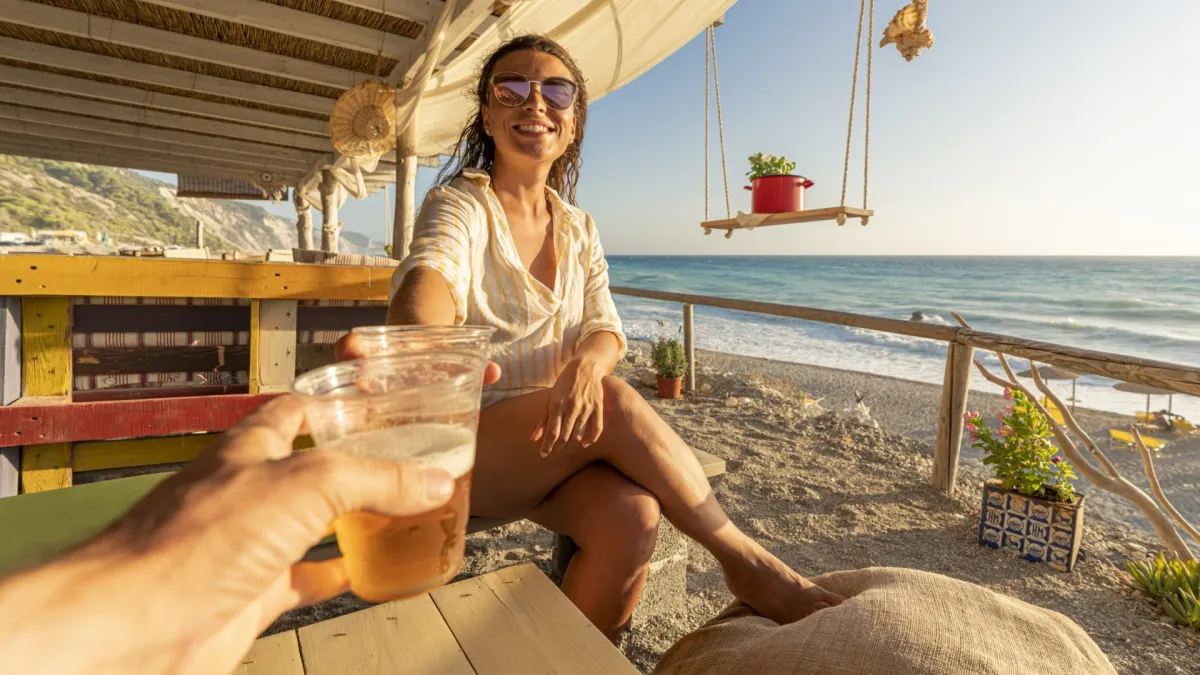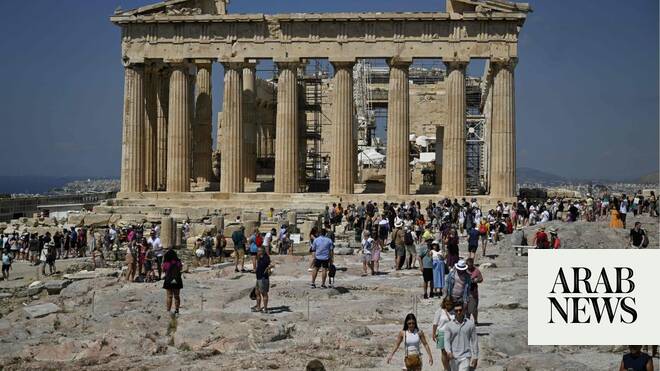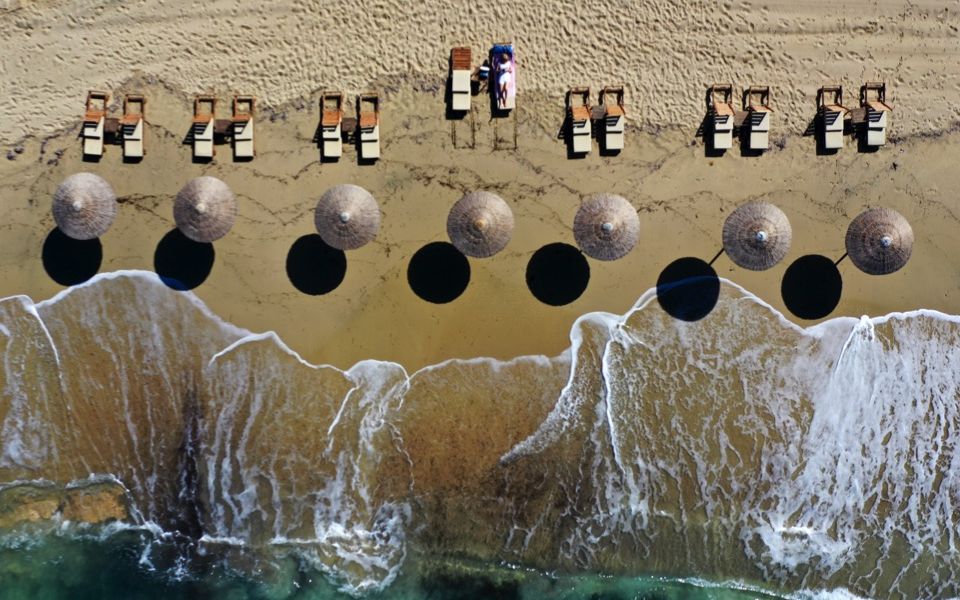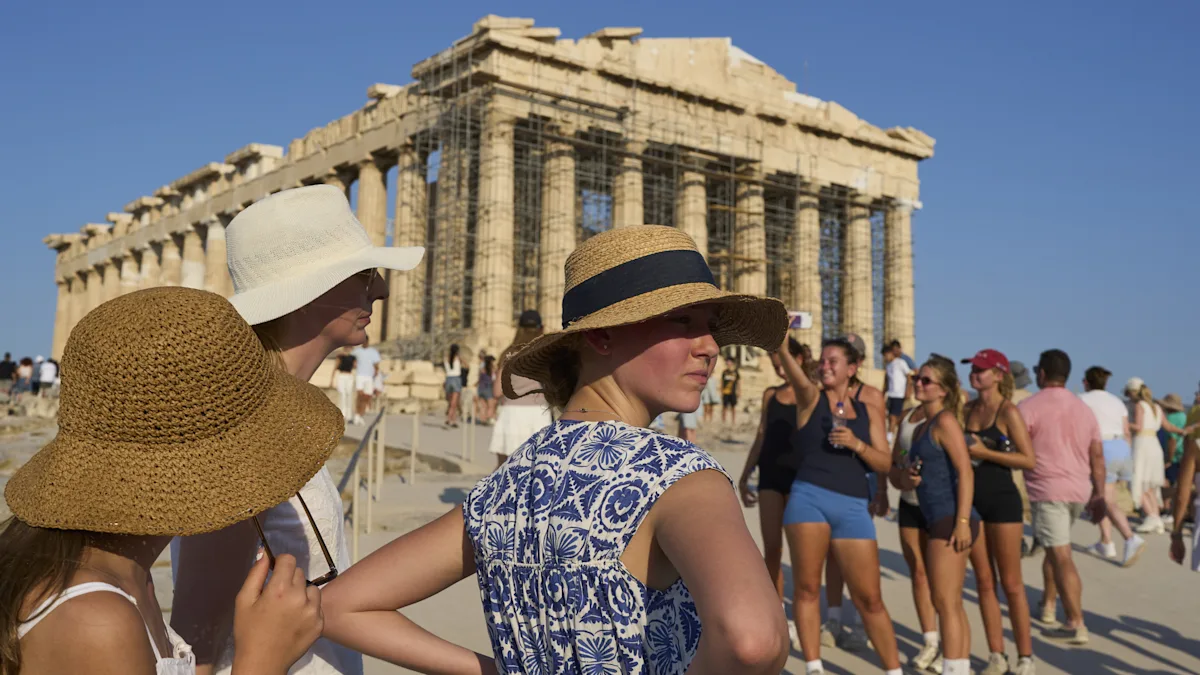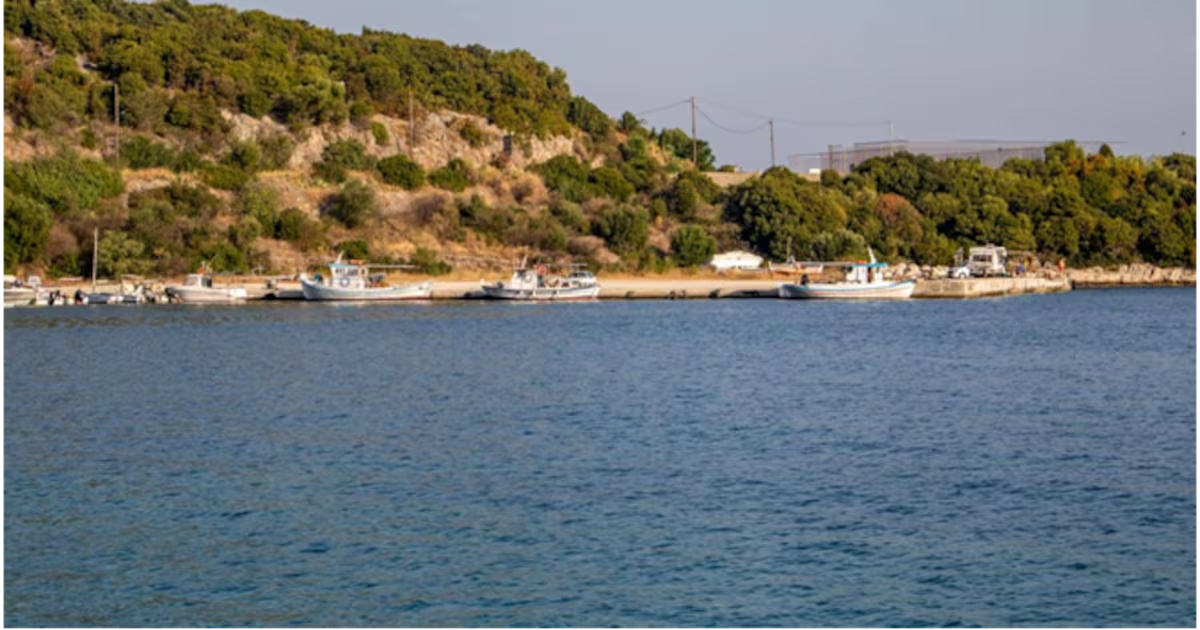
I recently wrote about the severe problem of “overtourism” in Greece – that is, when the host country cannot support the weight of the tourist market which it has created, especially with the problems of environmental damage, infrastructure, water supply and waste management caused by too much development in too small a space. I also questioned whether such small communities could be “resilient” to the impact of tourism, and criticised “authenticity” as a marketing tool.Two days after my last column appeared, Greek tourism minister Olga Kefalogianni stated unequivocally that “Greece does not have issues of overtourism”. She insisted that “we are promoting a gentle development, while maintaining authenticity”. Kefalogianni was speaking at the Delphi Economic Forum, at the same time as academics from British and Greek universities convened in Corfu to discuss ways of making Greek destinations more “resilient” to tourist needs. In Delphi, however, Kefalogianni also stated very emphatically that “Greek tourism remains mature and resilient”. Every new hotel reduces, rather than enhances, the attraction of the landscape and diminishes non-tourist endeavours such as agriculture, winemaking and fishing. One of the basic issues is the preservation of the areas designated under the “Natura 2000” legislation dating from 1986, which technically protects approximately 28 per cent of Greece’s land area.The Greek environment ministry recently introduced draft legislation to allow urban development where existing towns or villages abut on “Natura 2000” designated areas. The principal justification is to regularise existing anomalies of “planning disorder” by legalising unplanned constructions. The ministry claims the new law will assist in the “spatial planning” necessary where human settlements and ecosystems coexist, but critics see this as a wedge to simply increase the footprint of the built environment in order to facilitate tourism development.There is a considerable credibility gap between what is broadcast at national level and what is muttered at local and regional level. This is particularly noticeable in the case of small islands, where the wealth created by tourism has to be balanced against its impact on the environment and on the quality of life of the indigenous population.Close to my home in Corfu is the (at present) tiny fishing village of Imerolia, with 125 inhabitants and a deserted beach, with turquoise and, unfortunately, deep water. Due to the deep water, it has been designated by the local authority as the site for a marina. In the next bay is a rapidly expanding and successful fish farm, of which one of the developers with an interest in the marina has said nonchalantly: “It will have to move.”Luxury yachts sit at moorings in Flisvos marina, Greece. Photograph: Simon Dawson/Bloomberg via Getty Images The projected marina will occupy a land area of 23 acres, but how this land is to be acquired is not explained in the development plan. On this proposed site, three buildings, totalling 3,000 sq m (32,292 sq ft) will be constructed. The marina itself will have parking for 241 yachts – a massive transformation for the area and its 125 local people.While the local authority states that the project has local support, this is disingenuous: the Corfu branch of “People’s Rally” (a strong and persuasive political entity) has denounced the “grandiloquence” of the idea that the marina will “upgrade” the area. “But for whom?” they ask. “For the yachts. Not for the residents.” The objection pointed out that there had been no public consultation and that the plan had been rushed through a local authority meeting without discussion. “The people of North Corfu must defend their quality of life.”[ Imagine Inishturk with a dozen five‑star resorts: a warning from the Greek islandsOpens in new window ]At a “Reimagine Tourism” conference in Athens last year, the incoming head of the United Nations World Tourism Organisation recognised that “Greece has reinvented tourism as a strategic national asset capable of stabilising the economy, attracting global investment and revitalising cultural heritage”. That was a very diplomatic way of saying that tourism, amounting to at least 25 per cent of GDP and over 20 per cent of tax revenues, is central to the Greek economy, and that foreign investment in the creation of large-scale resorts is vital to its growth. Why cultural heritage should need to be revitalised is another issue, but the conference did focus on “cultural heritage – a pillar of national wealth”, suggesting that, in addition to Greece’s beaches and waterways, the cultural heritage has a role to play in developing the tourism product. Nevertheless, most tourism is beach-oriented, not museum-related. Most holidaymakers want beer and sunshine, not temples and statues.Porto Timoni Beach near Afionas village in the north of Corfu, Greece. Photograph: Mateusz Slodkowski/SOPA Images/LightRocket via Getty Images It is becoming clear on a daily basis, winter and summer, that tourism-related projects are prioritised above the needs of “ordinary” people. Cafes and tavernas that were traditionally open year-round now cater only for the tourist season, to the detriment of local communities. Economic growth should not be based predominantly on what, despite the minister’s insistence, is a volatile market.
Sleepy Corfu fishing village may soon have 241 yachts for company
Behind language of sustainability, transformation of this quiet corner of Greece tells more complicated story of tourism
835 words~4 min read