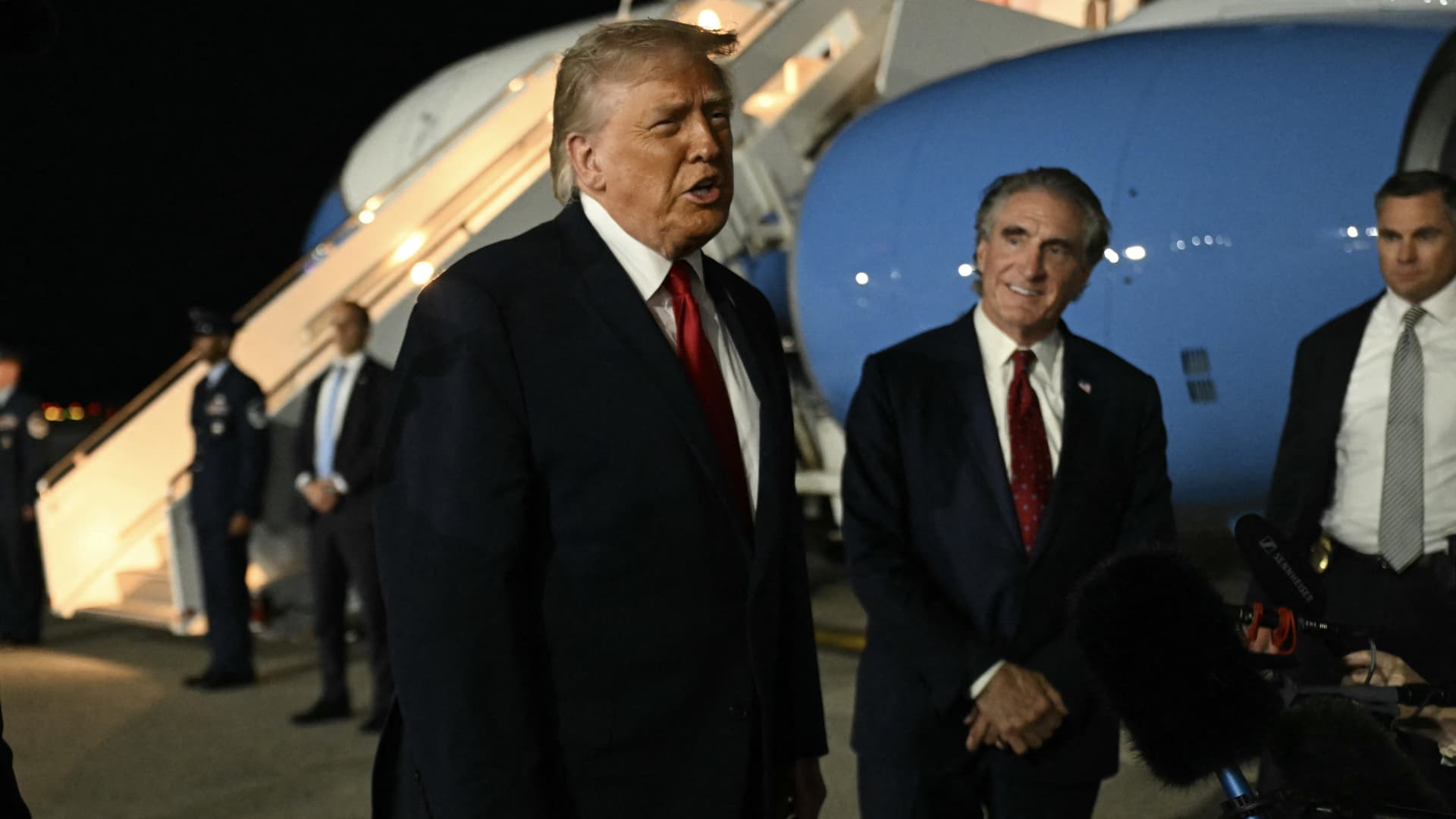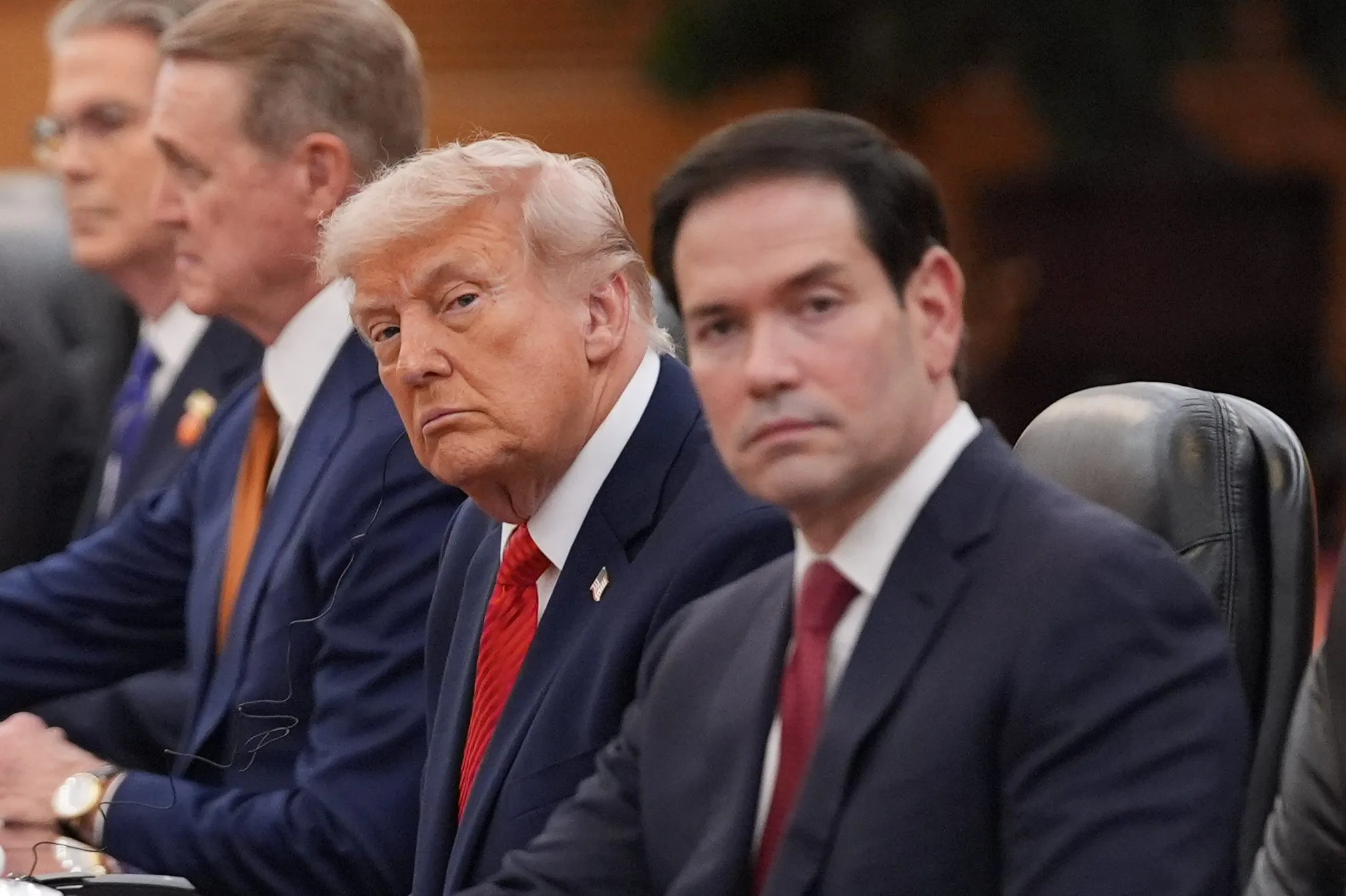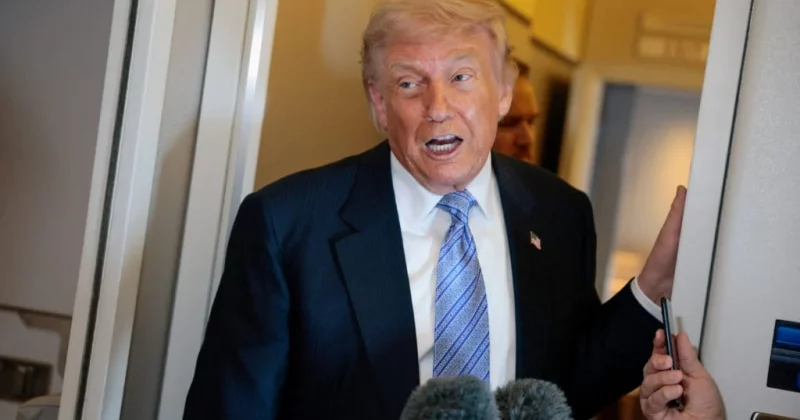
OpinionMay 26, 2026 — 12:02pmOil prices have tumbled overnight as negotiations between the United States and Iran appeared to be edging closer to a deal. The optimism, however, might have been premature.Monday’s market response, which saw the price of Brent Crude drop from about $US104 a barrel to $US96 a barrel, might have been precipitate for two reasons.One is that we’ve seen Donald Trump herald an end to the war (and a US triumph) too many times already, only to be disappointed.The world has seen Donald Trump herald an end to the war too many times already, only to be disappointed.BloombergThe other is that, even if the war were to end, or at least the Strait of Hormuz were reopened and tanker traffic through it resumed, it could be months before the global oil market is restored to the prewar status quo.Trump is, as usual, all over the place in trying to describe the status of the negotiations.On Saturday, he said “final aspects and details” of an agreement were being discussed and would be announced shortly. Then he said he had instructed his negotiators not to rush into a deal.On Sunday, he said the deal “isn’t fully negotiated yet”.On Monday, he touted negotiations were “proceeding nicely” but that it would be “only a Great Deal for all, or no Deal at all – Back to the Battlefront and shooting, but bigger and stronger than ever before – And nobody wants that.”Then, just hours later, the US launched fresh strikes on Iranian boats and missile sites, which it said were to defend its forces “while using restraint during the ongoing ceasefire”.Unsurprisingly, Brent prices edged higher again in the aftermath, climbing 2.3 per cent to $US98.39 shortly before midday AEST on Tuesday.Iran is now very aware that it has the power to threaten, or impose, a global energy shock. Whatever it might agree to, it isn’t going to relinquish that power.Make of that what you will, but the broad outlines of what the US is seeking to end the conflict are emerging.Essentially, Washington is desperate to reopen the Strait of Hormuz, release the 140 million barrels of oil, perhaps more, that are trapped in the Persian Gulf and restore oil shipments from the Middle East to their prewar levels as quickly as possible to lower an oil price that is generating a global energy shock and forcing inflation and interest rates higher around the world.The more complex issue – how to deal with Iran’s stockpiles of enriched uranium – would be deferred for at least 60 days, with the US releasing the $US12 billion ($16.7 billion) of Iran’s frozen sanctioned wealth in tranches, depending on the progress of the uranium negotiations and the reopening of the strait.Iran wants more than an end to the war and its own money back. It wants reparations for the damage the US and Israeli attacks have done to its infrastructure and people, and it doesn’t want to relinquish control of the strait.Indeed, while the US insists that the strait should be reopened without tolls, the Iranians are talking to Oman, which borders the other side of the strait, about collecting “navigation fees” from the strait’s shipping.Let’s assume that there is a deal struck on the strait, with the uranium issue parked in the “too hard” basket for the moment so that Trump can claim the decision to attack Iran has produced something, albeit just the reopening of a strait that had never been closed before he decided to go to war.It will take weeks, if not months, for the mines in the strait to be cleared and for the trapped tankers to exit.It will take months for normal levels of traffic – 130 to 140 ships a day – to be restored. That is, if they are restored.Shipowners and operators and their insurers will now be wary of using a passage where safety is at the discretion of Iran, a threat that wasn’t present before the US and Israeli attacks.One of the curious aspects of this episode is that oil prices haven’t been affected as much as might have been expected. There were predictions early on of prices of more than $US150 a barrel, even $US200 a barrel.When Russia invaded Ukraine in 2022, the oil price peaked at just under $US140 a barrel. In this war, the highest price reached so far has been $US126 a barrel last month (although some deals for immediate delivery have been struck at significantly higher prices).The reason the price spike has been relatively constrained is that there was a glut of oil before the war – in excess of demand – and a lot of oil already on the water.From March, the International Energy Agency also co-ordinated the release of 400 million barrels of oil from the strategic inventories of its member countries – more than twice the volume of releases in response to the invasion of Ukraine. About 250 million barrels of inventoried oil had been released to the market by the end of last month.There is no obvious outcome from the war that isn’t humiliating for the US and Trump.That has helped offset the loss of nearly 13 million barrels a day of supply because of the strait’s closure.There has also been some reduction in demand for oil and oil-derived products in response to the higher prices and lower economic growth.Those are Band-Aids, and the longer the war drags on the more the fundamentals of underlying supply and demand will assert themselves.Even if the war were to end next month, it will take months for supply and the broader inventory declines to build back to prewar levels. The national and industry strategic stockpiles will need to be replenished and the rundown of stocks at refineries will need to be reversed.So, while the knee-jerk response to a deal between the US and Iran might be a further drop in prices, it is likely that oil and gas prices will remain materially above their prewar levels, when oil was trading below $US70 a barrel.The US Energy Information Agency forecast earlier this month, based on an assumption that the strait would reopen by the end of May, that oil prices would average $US89 a barrel in the fourth quarter of this year and $US79 a barrel next year.The longer it takes for the strait to be reopened and for most of the lost supply to be restored, of course, the higher those prices are likely to be – potentially significantly higher, as the stockpile inventory releases end and the oil that was on the water is completely consumed.There is no obvious outcome from the war that isn’t humiliating for the US and Trump.The US might be able to do a deal that sees Iran relinquishing its enriched uranium, and they have destroyed much of Iran’s nuclear infrastructure. But Barack Obama’s 2015 deal with Iran (which Trump disparaged and tore up in his first term) had proven effective in containing Iran’s nuclear ambitions at a fraction of the cost in dollars and lives, and without any global economic disruption.The level of strategic thought that went into the war is an embarrassment to the US because Iran’s responses – the closure of the strait and its own attacks on its neighbours’ energy infrastructure – were predictable and, indeed, had been predicted.The Trump team ignored the threat because it believed the war would end, and the Iranian regime would capitulate, within days.Iran is now very aware, having trialled it, that it has the power to threaten, or impose, a global energy shock. Whatever it might agree to, it isn’t going to relinquish that power and so, whatever “victory” Trump might claim (he will, of course, claim victory), he will have achieved little, if anything.Trump and those around him thought that military power would give them the leverage over Iran to force its leaders to do whatever they were told by the US.Leverage, according to Trump’s (ghost-written) The Art of the Deal, is what he always looks for in any negotiation. He miscalculated.Iran has shown that it has the leverage. And now the rest of the world has to find a way to live with the unintended, but foreseeable, consequences of the misconceived attack, while the Trump team tries to extricate itself from a mire of its own making.The Market Recap newsletter is a wrap of the day’s trading. Get it each weekday afternoon.From our partners
Oil traders are too optimistic about a Trump ‘victory’ in Iran
The outline of a deal to end the war with Iran is emerging, but its aftermath will be higher oil prices and the humiliation of the Trump administration.
1,401 words~6 min read