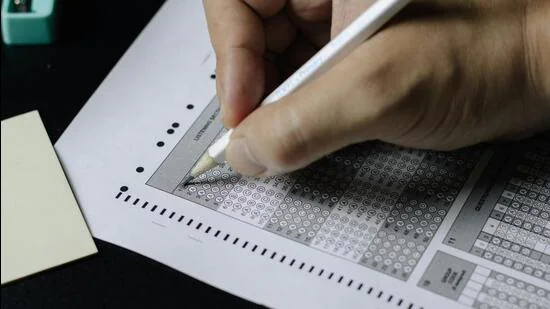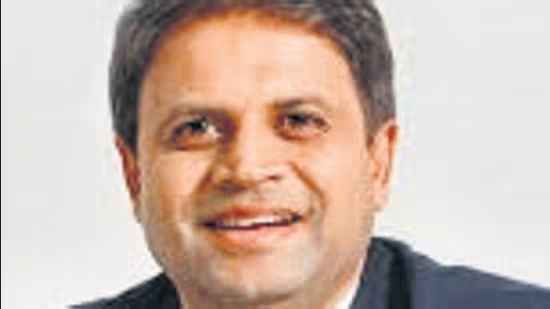
Computer-based testing (CBT) can eliminate nearly 95% of vulnerabilities that allow paper leaks, and students will see “fundamental shifts” in the way the National Testing Agency (NTA) functions within the next 8-10 months, Pankaj Bansal, one of the seven members of the reform panel headed by K Radhakrishnan, said in an interview with HT.Pankaj Bansal is one of the seven members of the reform panel headed by K Radhakrishnan. (HT photo)Calling for exemplary punishment for the “exam mafia”, Bansal — a board member of Educational Testing Service (ETS), a global non-profit organisation that develops and administers standardised tests, expressed confidence that NEET’s shift to CBT format next year will restore public trust. Edited excerpts:After first NEET controversy 18 months back, NTA is once again under scrutiny. How do you asses its response?There is a problem, and that must be acknowledged. But students and families deserve the full, holistic picture, not a one-sided narrative.Our panel worked deeply for nearly six months and submitted 95 recommendations. If you include supplementary suggestions, the number goes beyond 100. A large number of these have already been implemented. But reforms of this scale cannot happen overnight. Institutional change takes time.There is also an exam mafia that constantly tries to identify vulnerabilities even as reforms are being implemented. That is why this has to be viewed as an evolving process.What are the biggest reforms still needed in NTA?Three things. First, punishment for the exam mafia must be of the highest order and delivered swiftly. It must create a principle so strong that no one dares repeat this. Second, our report strongly recommended computer-based testing. Pen-and-paper exams involving over 2.2 million candidates create vulnerabilities at every stage — printing, transporting and securing papers across thousands of centres. CBT solves nearly 95% of those problems because encrypted papers can reach centres just hours before the test. Third, confidential operations — both before paper-setting and during candidate verification at centres — need to become much stronger.Has NTA moved seriously on Radhakrishnan panel’s recommendations?Absolutely. One key recommendation was that a senior officer of the rank of additional secretary or above should lead NTA. That has happened. Now you have Abhishek Singh as NTA DG, who has already demonstrated capability in large-scale digital governance projects. He has only recently taken charge, and by then this year’s exam cycle was already underway.I am very confident students will see fundamental shifts over the next 8-10 months. The decision to move NEET to CBT has effectively been taken, and that is a major structural reform.Investigators have indicated possible NTA insider collusion in NEET-UG 2026 paper leak. How can that be prevented?We recommended that NTA should build a stronger permanent workforce instead of relying heavily on contractual staff. We also recommended institutionalising 10 core functions and building a strong internal technology team.If an insider is found guilty, the punishment must be exemplary. That sends a message everywhere.We also recommended conducting exams increasingly in government premises so the system depends more on accountable public employees than external operators. Cancellation of NEET-UG this year also sent a strong message to parents and students paying huge sums for leaked papers: shortcuts do not help in life.India has never conducted NEET at this scale in CBT mode. Is the infrastructure ready for NEET in CBT mode from next year?It is absolutely possible if preparation is systematic. There are two layers — backend encryption and security standards, which can match global benchmarks, and physical infrastructure like functioning devices, power backup, keyboards and network stability. These are solvable implementation challenges.We have also proposed futuristic solutions like mobile CBT vans to reach underserved areas and ensure no child is excluded because of geography or access constraints. If multi-stage and multi-shift testing is adopted, the infrastructure burden reduces significantly.Why did the panel recommend multi-stage testing and attempt limits in NEET-UG?These reforms should not be viewed only through the lens of paper leaks. This is about balancing merit, inclusivity and fairness.Multi-stage testing reduces pressure on one high-stakes day and creates a more holistic assessment framework. As for attempt limits, fairness requires balance. Unlimited attempts create distortions.And let me be blunt: the argument that multiple shifts make the exam “non-uniform” is flawed logic. Who in the world says a test stops being uniform because it is held in two shifts? That is primitive thinking. Normalisation happens globally. We are not inventing something new. We need progressive testing systems, not regressive excuses.Students remain deeply distressed. Why should they trust the NTA-administered exam system again?We understand their pain deeply. Our committee received more than 37,000 suggestions through digital submissions and physical consultations. We met students, parents, school leaders, state authorities and testing experts. This was not symbolic work; it was serious national reform. Can anyone guarantee that no mistake will ever happen again? No system in the world can make that promise.But I am very hopeful. The reforms are real. The intent is real. The implementation is underway. Students should remain optimistic and not lose faith because of criminal actions by a few. Those responsible will face both the law of the land and the law of God.These students are India’s future. Every reform we are pushing is for them, and I am confident NTA and the education ministry will leave no stone unturned to restore trust.
HT interview: CBT can eliminate 95% vulnerabilities in NEET exam, says Bansal
Computer-based testing (CBT) can eliminate nearly 95% of vulnerabilities that allow paper leaks, and students will see “fundamental shifts” in the way the National Testing Agency (NTA) functions within the next 8-10 months | India News
880 words~4 min read