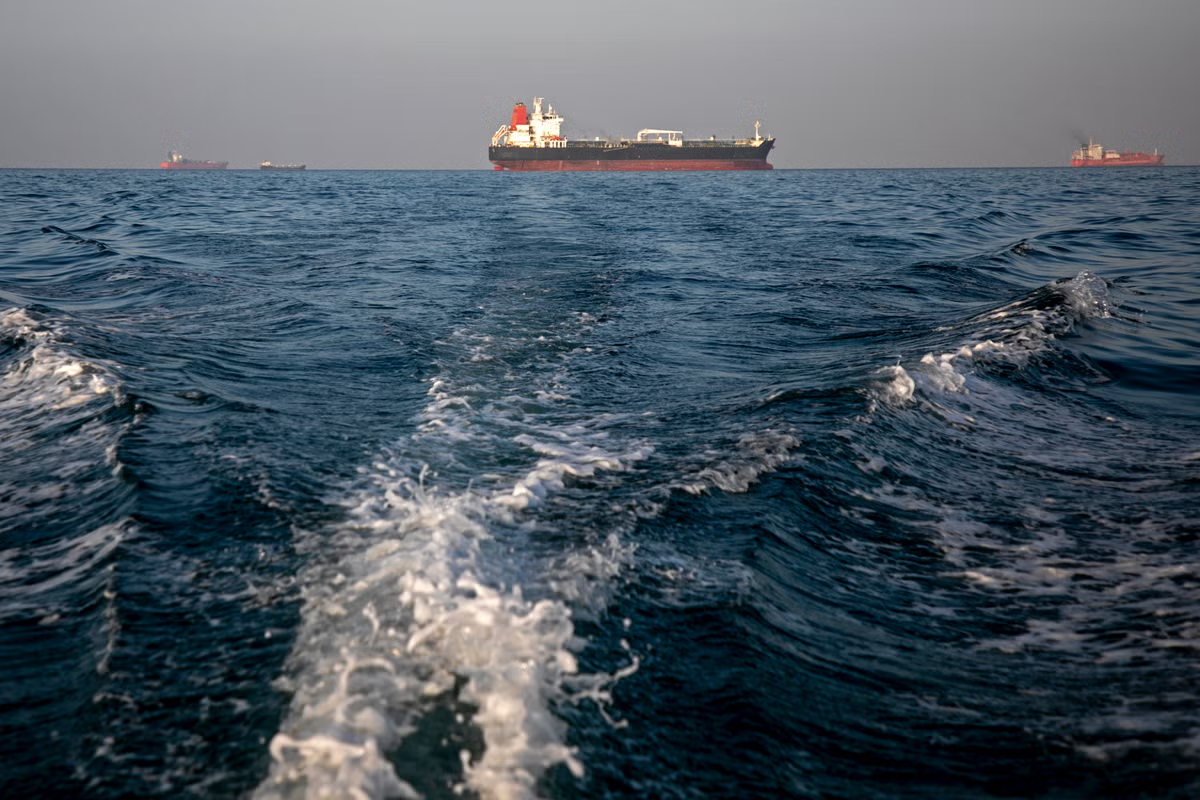
Why are oil prices crashing down today, and will Brent and US WTI crude futures continue to decline or move upwards again? Global oil markets recorded a major fall after signs emerged that the United States and Iran could move closer toward a peace agreement. Brent crude futures and US West Texas Intermediate crude futures both declined sharply during Monday trading. Investors reacted to reports that talks involving Iran, the United States and Qatar were showing progress. Market participants believe any agreement could help reopen oil movement through the Strait of Hormuz and reduce fears about supply disruptions in the Middle East.Oil prices dropped almost 7% on Monday as traders responded to reports connected to possible progress in talks between the United States and Iran. Reuters reported that Brent crude futures fell by $7.24, or almost 7%, to $96.30 per barrel during afternoon trading. US West Texas Intermediate crude futures also dropped by $6.30, or 6.5%, to $90.88 per barrel.The decline came after reports suggested that both countries were moving closer toward an agreement linked to the ongoing conflict in the Middle East. Traders believe such a deal could improve oil supplies and reduce pressure on global energy markets. Trading activity remained lower than normal because of the US Memorial Day holiday. Lower market participation sometimes increases price swings because fewer traders are active in the market.Iran’s foreign minister and top negotiator reportedly visited Doha for discussions with Qatar’s prime minister regarding a possible agreement with the United States. According to officials familiar with the discussions, both sides made progress toward a memorandum of understanding. The proposal would temporarily halt the conflict and provide negotiators 60 days to work on a final agreement.Oil market reacts to possible reopening of Strait of HormuzThe Strait of Hormuz remains one of the most important shipping routes for global oil transportation. A large percentage of the world’s oil exports move through the narrow waterway. Any disruption in this area usually pushes oil prices higher because markets fear supply shortages.However, reports suggesting that oil could begin moving more freely through the Strait of Hormuz caused traders to reduce their risk expectations. Phil Flynn, senior analyst at Price Futures Group, said markets were reacting to hopes that oil flows could improve even though a final agreement has not yet been completed.Flynn explained that traders were already pricing in the possibility that the region could become more stable if negotiations continue successfully. Lower geopolitical risk generally reduces oil prices because markets expect more stable supply conditions.At the same time, some analysts warned that the situation remains uncertain. Rory Johnston, founder of Commodity Context newsletter, said previous negotiations between the United States and Iran had also shown progress before collapsing later over unresolved details. He pointed out that the Strait of Hormuz still remains restricted and that no final agreement has yet been signed. Because of this, traders continue monitoring developments closely.US-Iran negotiations remain key for oil pricesUS President Donald Trump also commented on the talks through a Truth Social post. Trump said discussions with Iran were progressing in a positive direction. However, he warned that military action could continue if negotiations fail.Trump also encouraged more Arab and Muslim-majority countries to join the Abraham Accords. The agreements were introduced during his earlier term and focused on improving diplomatic relations between Israel and several Arab nations.Market analysts believe broader diplomatic progress in the Middle East could reduce geopolitical risks in the energy market. Reduced tensions often lead to lower oil prices because traders no longer expect major supply disruptions.Iran’s foreign ministry stated that the country was currently negotiating an end to the conflict and not discussing nuclear issues at this stage. This statement showed that discussions remain focused mainly on military tensions and regional stability.Analysts insights and market outlookSeveral analysts said that even if a peace agreement is reached, global oil supply problems may not disappear immediately. Oil and gas infrastructure damaged during the conflict will require repairs before production fully returns.June Goh, analyst at Sparta Commodities, said the market still faces a supply shortfall of around 10 to 11 million barrels per day. According to her analysis, oil inventories may continue falling until Middle Eastern crude production returns to normal levels.She explained that restoring full production and transportation capacity could take several months. This means oil prices may continue experiencing volatility even if political negotiations improve. UBS analyst Giovanni Staunovo also stressed the importance of monitoring physical oil flows instead of only political headlines. He said restrictions through the Strait of Hormuz still remain in place and continue affecting supply movement.Ship-tracking data showed that some liquefied natural gas tankers recently passed through the strait. The vessels were reportedly heading toward Pakistan, China and India. A supertanker carrying Iraqi crude oil to China also moved through the region after remaining stranded for nearly three months. These developments suggest that some energy shipments are slowly restarting, although overall conditions remain unstable.Will Brent and US WTI crude futures continue to decline or move upwards again?Future price direction for Brent crude and US WTI crude futures will depend largely on political developments and supply conditions in the Middle East. If the United States and Iran successfully reach an agreement and shipping restrictions ease further, oil prices could continue moving lower because markets would expect better supply availability.However, if negotiations fail or tensions increase again, prices could quickly rise because traders would once again fear supply disruptions. Analysts believe markets remain highly sensitive to developments involving the Strait of Hormuz. Oil infrastructure repairs, production recovery and shipping conditions will also influence future price movement. Since global demand for oil continues while supply remains restricted in some regions, price volatility may continue in the coming weeks.What should investors do now?Investors are closely watching diplomatic negotiations, tanker movement data and production updates from the Middle East. Analysts suggest that energy markets may remain unstable until clearer information emerges regarding oil flows and final agreements.Market participants are also monitoring inventory levels and crude production figures to understand whether global supply conditions are improving. Short-term price movements may continue reacting strongly to political statements and negotiation updates. Investors with exposure to energy markets may focus on risk management because oil prices could move sharply in either direction depending on future developments.FAQsQ1. Why are oil prices crashing down today?Oil prices fell after reports suggested the United States and Iran were making progress toward a possible agreement. Traders expect improved oil supply and reduced geopolitical risk if negotiations continue successfully.Q2. Will Brent and US WTI crude futures rise again?Brent and US WTI crude futures may rise again if negotiations fail or tensions increase. Prices may also stay volatile because oil supply restrictions and infrastructure repairs still affect the market.
Why are oil prices crashing down today, and will Brent and US WTI crude futures continue to decline or move upwards again? Oil market reacts to US-Iran peace deal hopes
Why are oil prices crashing down today, and will Brent and US WTI crude futures continue to decline or move upwards again? Oil prices dropped nearly 7% after reports suggested the United States and Iran were moving closer to a deal linked to the Strait of Hormuz. Brent crude and US WTI futures declined as traders reacted to hopes of improved oil supply. Analysts said uncertainty still remains because negotiations are not final and oil flows through the region continue to face restrictions.
1,120 words~5 min read