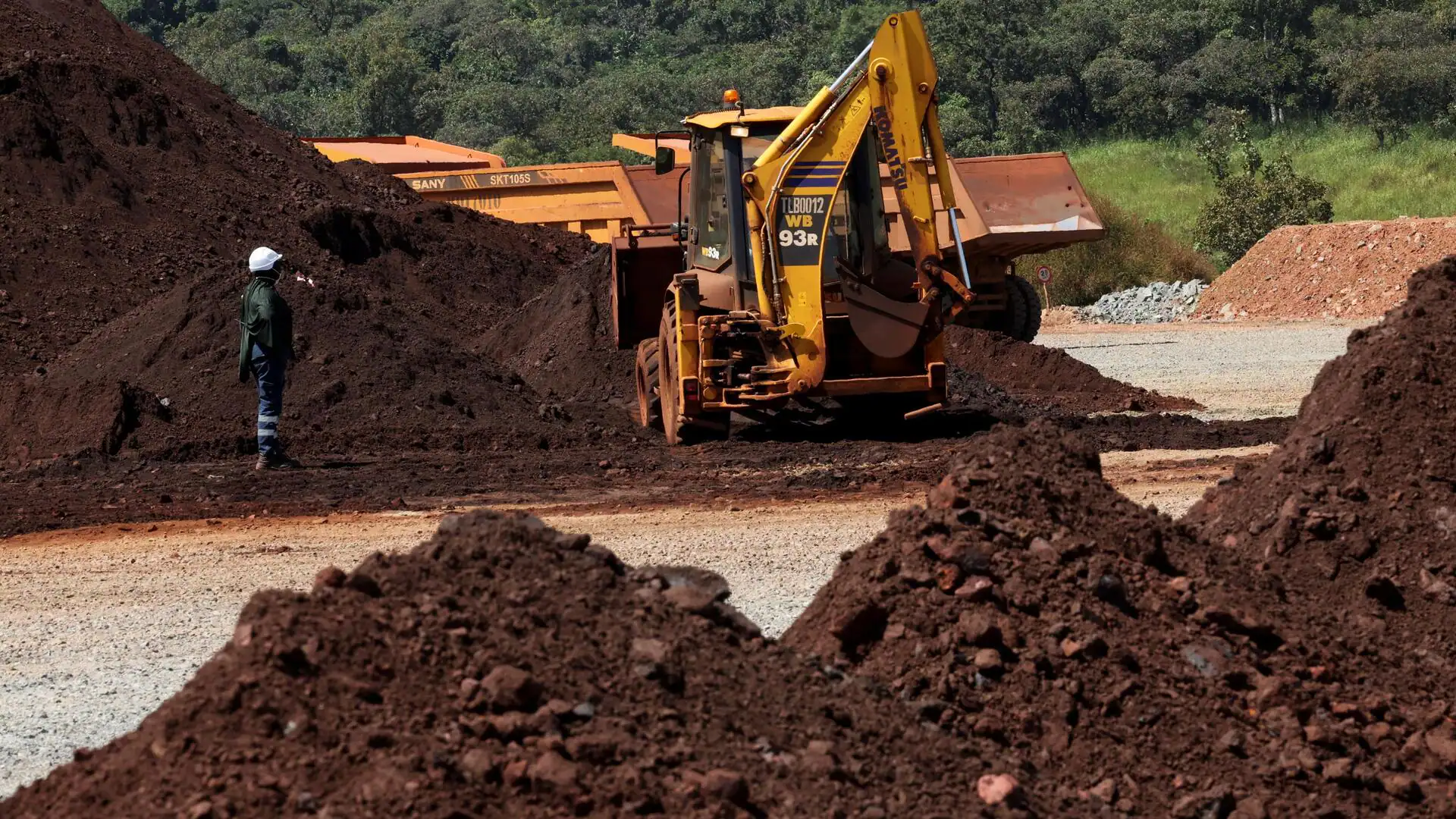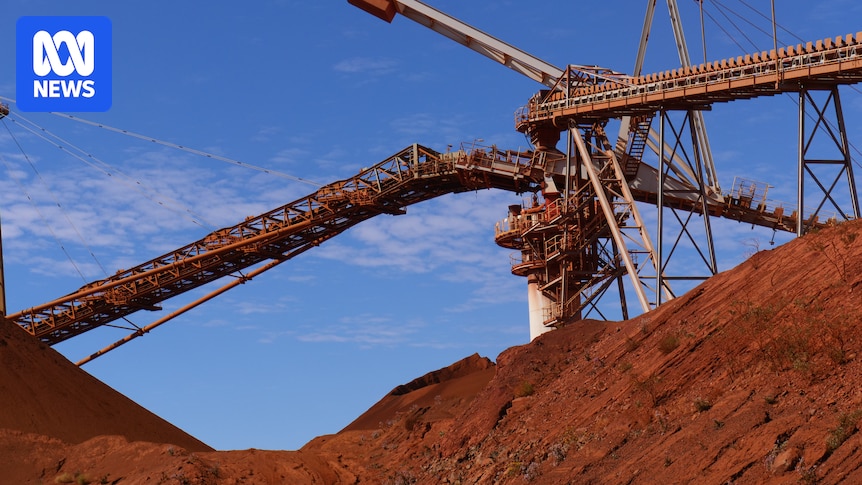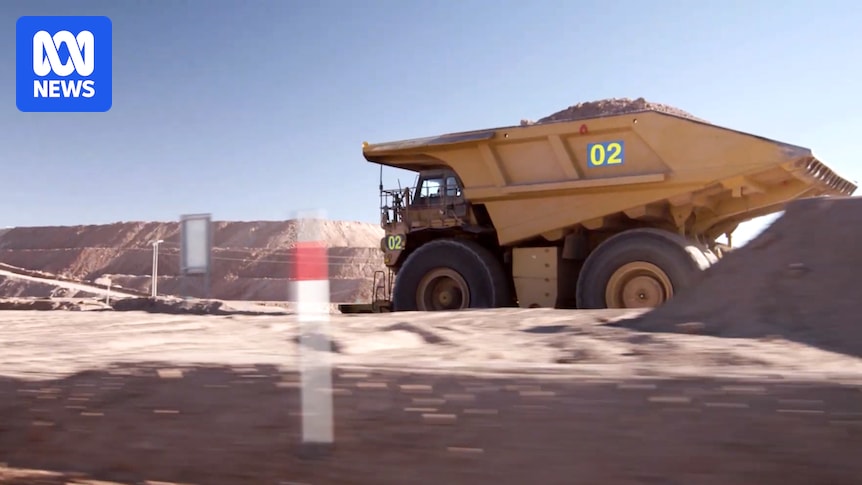
BHP's vast WA iron ore operations are forecast to cut emissions by just 1 per cent by 2030, leaked internal documents reveal, raising doubts inside the company about whether it can meet its pledge to reach net zero by 2050.The documents, obtained exclusively by Four Corners and Guardian Australia, focus on BHP's operations in WA. Given those mines account for 30 per cent of BHP's global emissions, big cuts would be needed in the Pilbara to achieve the 2050 goal.The mining giant's delay in the rollout of renewable energy and its first fleet of electric trucks and trains has raised doubts inside the company about it meeting its ambitious climate goal."Solutions are still being sought to achieve net zero," it said in a memo from May last year. Separately the document said delaying climate action into the 2040s "risks achieving 2050 goal".In another document, BHP staff noted its decision to stick with diesel trucks at one Pilbara mine was "inconsistent with the trajectory for greenhouse gas abatement and pathways to net zero".Tim Buckley from think tank Climate Energy Finance said BHP was not currently on track to meet net zero operational emissions by 2050."Their actions are not aligned with the science," he said.BHP said its global emissions have already fallen 36 per cent since 2020. This is largely due to converting its Chilean copper mines to renewable energy."BHP continues to focus on delivering our operational emissions target and long-term net zero goal," the company said in a statement.Diesel rebateThe leaked documents also give an insight into how the mining giant thinks about the contentious diesel fuel rebate.The federal government is under pressure from a loose coalition of unions, economists, green groups and crossbench MPs who argue the rebate is slowing the transition to zero emission technology in the mining sector.The documents show BHP does explicitly link the diesel fuel rebate to how quickly it cuts emissions at its WA iron ore mines.An internal memo from May last year, signed by BHP's head of Australian operations, Geraldine Slattery, discusses how delays in adopting electric trucks and trains, powered by renewable energy, will affect the company.The memo, titled "Decarbonisation Plan" said one risk of not acting was that there could be "material changes in diesel prices".It said an example of this would be the federal government's diesel fuel excise being "revoked".The rebate gives mining companies the excise they pay on diesel back in the form of a tax credit.BHP relies on diesel to power trains that support its operations in the Pilbara. (Four Corners: Ryan Sheridan)"The removal of the diesel fuel rebate would provide a strong incentive to decarbonise," said economist Ross Garnaut, who authored two landmark government reviews on the economics of climate change.Prior to the federal budget in May, the Albanese government was strongly considering major reform to the rebate, according to Tim Buckley, who was involved in the discussions.That changed when fuel prices spiked with the latest outbreak of conflict in the Middle East."All of a sudden fuel security became the number one issue and we were told it had been taken off the table," Mr Buckley said.The company's WA iron ore operations account for 30 per cent of its global emissions. (Four Corners: Ryan Sheridan)Those in favour of reforming the rebate, which costs the federal budget $11 billion every year, are now targeting the ALP national conference in July as the next opportunity to push for reform.Federal Energy Minister Chris Bowen recently reaffirmed the government's support for the diesel fuel rebate in parliament, pointing out that farmers also make use of the policy.BHP is the mining industry's largest diesel user and received an estimated $622 million in fuel tax credits from the federal government last financial year, including $379m for its WA iron ore mines.BHP has strongly opposed any changes to the rebate.The company does plan to test electric trucks — it received two in December — but it wouldn't say if its trial had begun yet.In a statement BHP told Four Corners much of the zero-emission technology needed by the mining industry to decarbonise was "not yet ready to be deployed".It said the technology for large haul trucks was "not advanced enough to scale to an operational fleet".These comments are at odds with some of the leaked internal documents.One document from last year shows BHP staff were considering deploying electric trucks at its yet to be built Ministers North mine in the Pilbara.These staff raised no concerns about having 24 electric trucks operational by 2029 or that the technology would not be ready in time.They flagged being seen as a "green mining company" as one advantage of buying the electric trucks.In the end BHP went with repurposed diesel trucks but said they came with "reputational risk" as there would be "no decarb".The document said not going with the electric truck option at the new Ministers North mine was "inconsistent" with its "pathway to net zero".BHP said it remained committed to net zero by 2050, but its incoming chief executive Brandon Craig has qualified this goal set by the company in 2019."As BHP, we've made many public commitments across a range of areas: social value, decarbonisation and similar. Those commitments do not change under my leadership," he said at the press conference announcing his appointment to the top job."So we will continue to pursue those. But we want to pursue them with a level of economic discipline. That's very important."The leaked internal documents show BHP has consistently baulked at spending money on renewable energy projects at its WA iron ore mines.The memo mentioning the diesel fuel rebate said BHP's "financial value" would be put at "risk if [there were] material changes in diesel prices".It cited fuel excise as one example of its financial value being hurt and "carbon prices" as the other.BHP has said publicly it supports the federal government's carbon pricing scheme, known as the Safeguard Mechanism, as the policy that will help Australia reduce emissions.The policy is designed to cap the greenhouses gases of the biggest emitters, to enable the government to reach its net zero goal by 2050.But the internal BHP memo shows the company expects no significant financial penalties for more than a decade if it does not decarbonise its WA iron ore mines.The memo said BHP did not expect any "material increases in carbon prices" until the 2040 financial year.Last financial year BHP paid just $8 million to buy carbon offsets for its WA operations."When it comes to decarbonisation, we've got one foot on the brake and one foot on the accelerator at the same time," said independent WA MP Kate Chaney, who wants to see the diesel rebate reformed."The safeguard mechanism creates an effective carbon price of about $30 to $40 a tonne. But with the diesel fuel tax credit in place, the incentive to keep using diesel is about five times that."Chris Bowen told Four Corners the safeguard mechanism did put "enforceable limits" on the biggest emitters.He said BHP "needs to keep delivering emissions reductions to meet Australia's legislated requirements and BHP's own net zero commitments".Watch Four Corners' The BHP Files on ABC iview now.
Leaked documents reveal doubts over BHP's ability to hit net zero
The mining giant's delay in the rollout of renewable energy and a fleet of electric trucks and trains in the Pilbara has raised doubts inside the company about it meeting its ambitious climate goal.
1,184 words~5 min read