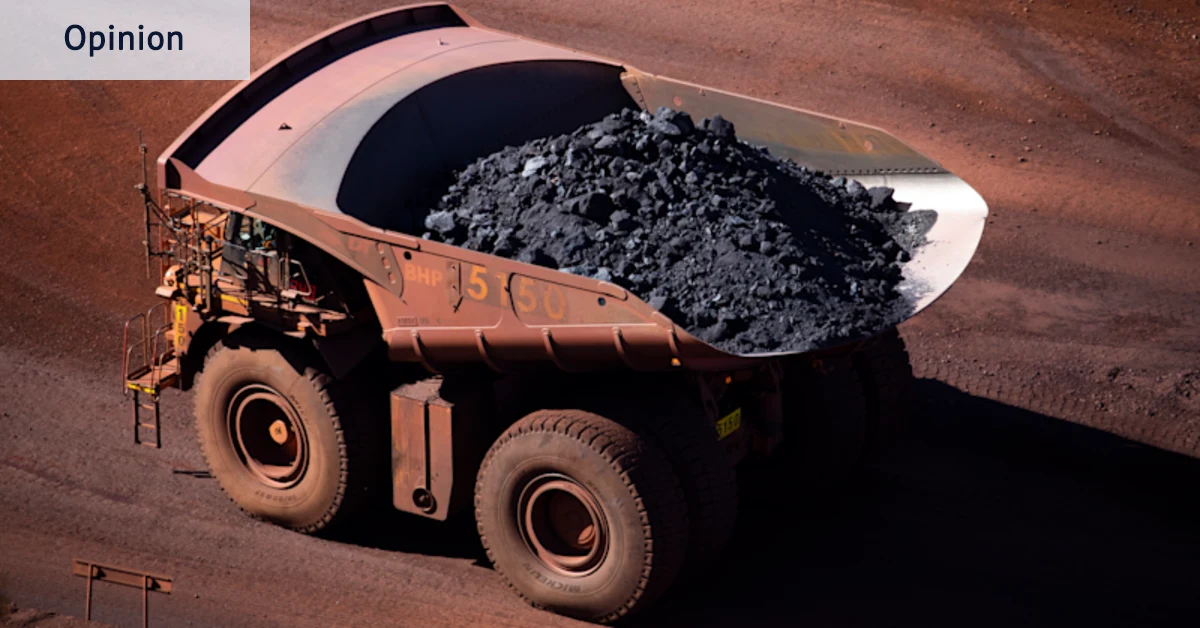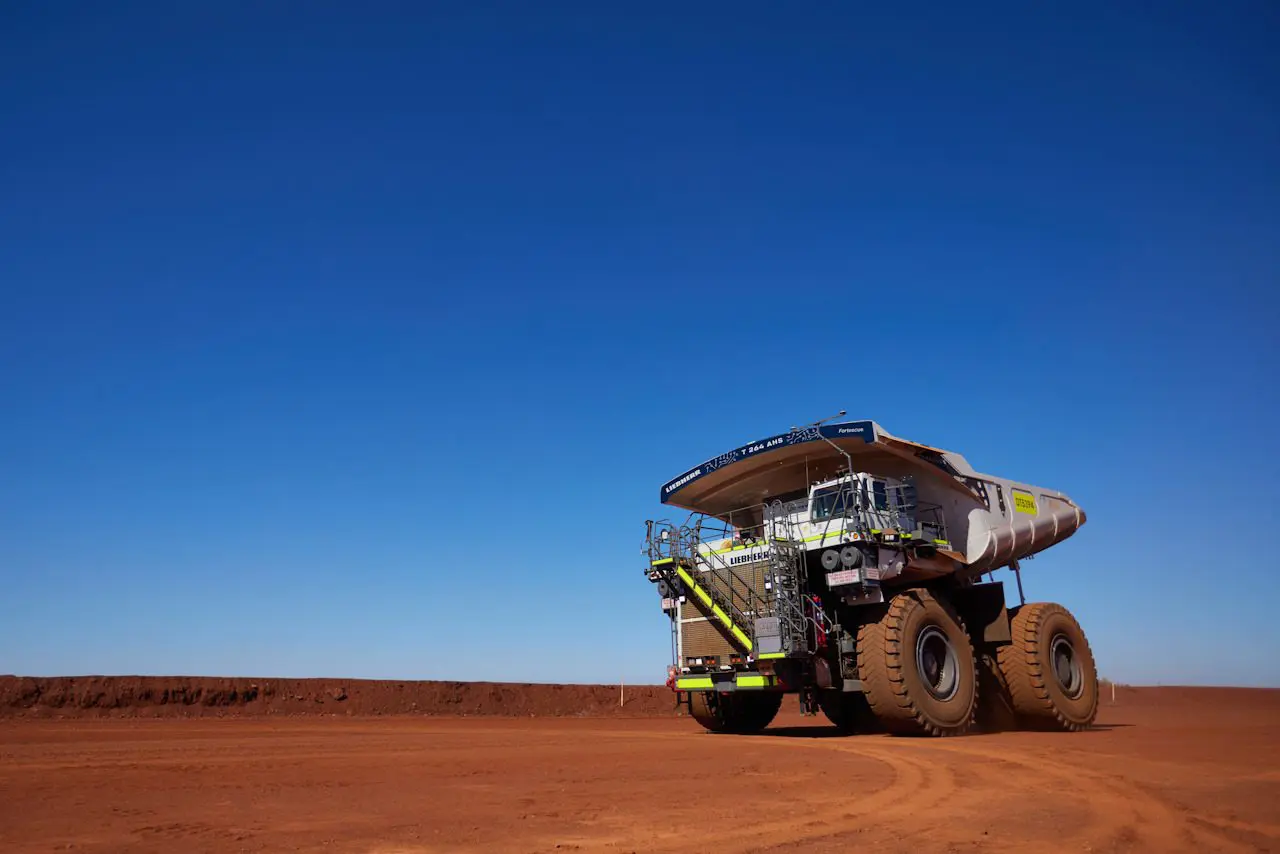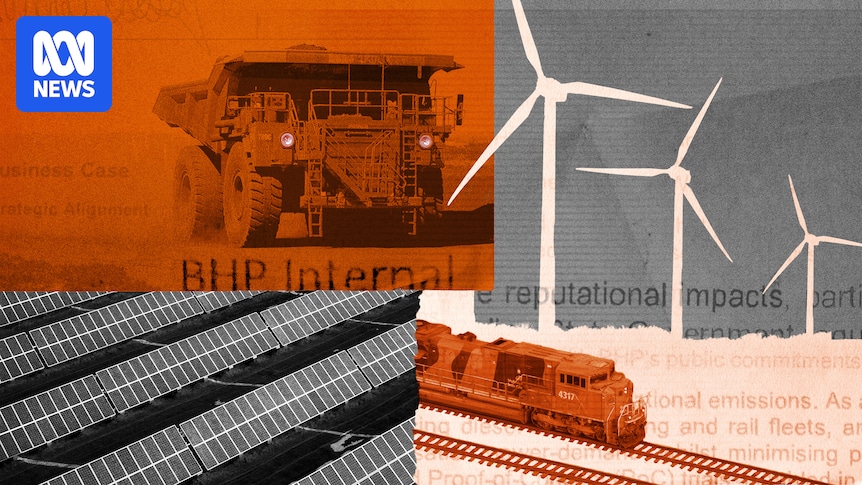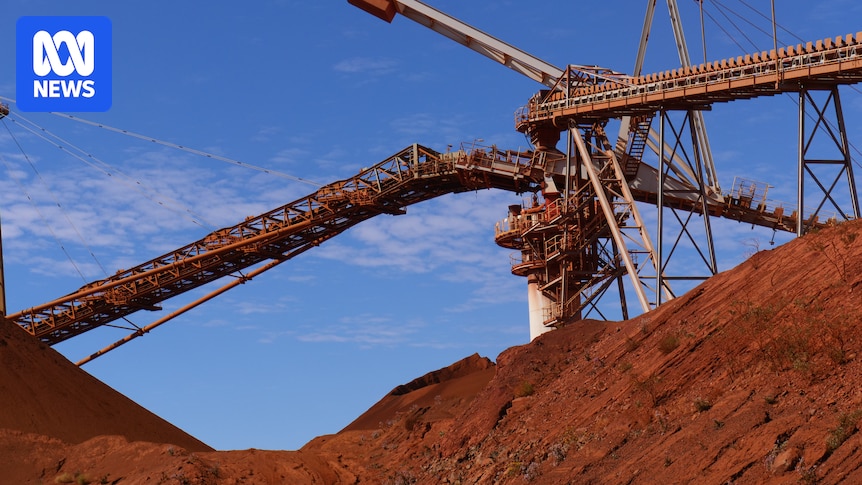
BHP is rightly sensitive about its reputation as a corporate leader on climate change. Its outgoing chief executive, Mike Henry, did an excellent job positioning BHP as the global miner digging up the metals needed to power the clean energy transition.But digging up those metals is still a dirty business. At BHP's mine sites, massive diesel haul trucks and heavy locomotives pump greenhouse gases into the atmosphere at alarming levels. What documents, leaked exclusively to the ABC and Guardian Australia, tell us is that the big miner has yet to come to grips with this big problem, despite telling shareholders it was doing just that.The diesel problem is acute in Western Australia's Pilbara, home to BHP's lucrative iron ore business, and everyone in the company knows it. In 2022, BHP's then-vice-president for planning, Anna Wiley, spelt out to senior executives that the Pilbara mines accounted for a quarter of BHP's total operational emissions globally. But the Pilbara stood out because 75 per cent of its emissions came just from diesel, its hefty fleet of 240-tonne haul trucks being the largest contributor.Back then, the company's internal documents show, BHP drew up a comprehensive plan to decarbonise the Pilbara mines. It included proposals for a high-voltage renewable energy project, backed up by gas, to power a new fleet of electric haul trucks and trains.Dedicated people inside BHP worked on the decarb plans and a core group became known as "The Coalition of the Willing". They knew BHP would need to take some big risks. It had to heavily incentivise its major equipment suppliers to work with urgency on the untested technology of massive electric battery haul trucks which BHP wanted to begin rolling out this decade.A different political climateBack in 2022, before Donald Trump, the risks seemed worth taking. Action on climate change had political traction and made financial sense. Joe Biden was in the White House promising to spend billions on a clean energy future for America. The new Albanese government had been elected promising to cut Australia's emissions in line with net zero. Big miners like BHP were expected to step up. Companies not acting on their net zero promises faced reputational loss, shareholder revolts and threats of legal action.There was a real sense of urgency inside the company. It signed agreements with its haul fleet suppliers, America's Caterpillar and Japan's Komatsu, to develop the new electric haul trucks. One senior executive told investors in June 2024: "If technology develops as we believe it can, we expect the first electric truck fleet adoption by FY2028, and in FY2030, the first of multiple future electric locomotive deployments."This optimism climaxed in August 2024 when BHP released its Climate Transition Action Plan, which won 92 per cent shareholder approval. "Our [WA Iron Ore] asset will likely be our first operated asset to progressively roll-out electric haul trucks and excavators towards the end of the 2020s," it said.Less than a year later, BHP was walking back the Pilbara plan, indefinitely delaying the start of the electric haul fleet rollout and shelving the renewable energy project.A document approved by BHP's head of Australian operations, Geraldine Slattery, stated bluntly: "The urgency to source renewables generation and storage services by 2030 has diminished." The fleet rollout was pushed back to the 2030s but BHP wouldn't tell the ABC whether this was early, mid or late 2030s.What changed? BHP blames its fleet suppliers who couldn't meet the timetable. It says it's still adapting the electric trucks to ensure they are "technically, commercially and operationally" viable.But some with knowledge of the program suggest another reason for BHP's lack of urgency. Right now there's not much financial or political pain for BHP if it carries on using diesel in the Pilbara well into the next decade.BHP has already met its own company-wide target to cut its operational emissions 30 per cent by 2030. Less publicised is that many of these cuts come from its copper mines in Chile. There, BHP worked closely with outside power providers to source its electricity from renewables, helping the Chilean government achieve its goal of a cleaner mining industry. In the Pilbara, the company can use cheap carbon offsets to pay for its greenhouse emissions from its huge diesel truck fleet.But some former insiders warn delaying the Pilbara plans indefinitely holds serious risks for BHP.Fortescue scales up renewablesIts rival Fortescue, led by brash billionaire Andrew Forrest, is promising to fully decarbonise its Pilbara mines by 2030. Fortescue has already begun building a large renewable energy plant to charge its future electric truck fleet. It has teamed up with German-Swiss manufacturer Liebherr and China's XCMG to build the fleet and is expecting the first operational truck onsite in September with 10 more next year, right in line with BHP's original timetable. But Fortescue needs at least 300 more trucks operational by 2030 to meet its promise.While many, including BHP, are expressing deep scepticism about Fortescue's strategy, it will put pressure on BHP. That pressure will only increase if Fortescue succeeds in its parallel campaign to slash the lucrative diesel rebate for the big miners.Last year BHP received an estimated $622 million in diesel fuel tax credits from the federal government under the rebate scheme; over half of that was for diesel in the Pilbara. It dwarfs the amount BHP pays for carbon offsets under the government's Safeguard Mechanism scheme, which is supposed to force big companies like BHP to cut its Australian emissions in line with net zero at home.The campaign to cap the rebate for the big miners at $50 million is gathering broad support among the crossbench, ALP branches and the unions, as well as environmental groups. There is also pressure on Climate and Energy Minister Chris Bowen to tighten up the use of offsets by the big miners in the upcoming review of the Safeguard Mechanism. If Fortescue can rapidly bring down its emissions in the Pilbara, BHP will have less justification for relying on offsets.The biggest risk for BHP in delaying its plans is that its path to net zero now looks very unclear. The Pilbara was supposed to be a key learning ground for its fleet electrification globally. The longer it delays electrification in the Pilbara, the bigger its diesel problem becomes throughout its global operations.That is the problem now facing its chief executive, Brandon Craig. While Craig has said BHP's commitment to net zero will not change under this leadership, he and the board will need to present shareholders with a new climate plan in the next two years explaining how they intend to get there.For the company that prides itself on digging out the metals for the world's clean energy future, saying nothing about its own clean energy future is not an option.
The BHP files reveal a big problem facing the mining giant
For a company that prides itself on digging out the metals for the world's clean energy future, saying nothing about its own clean energy future is not an option.
1,124 words~5 min read