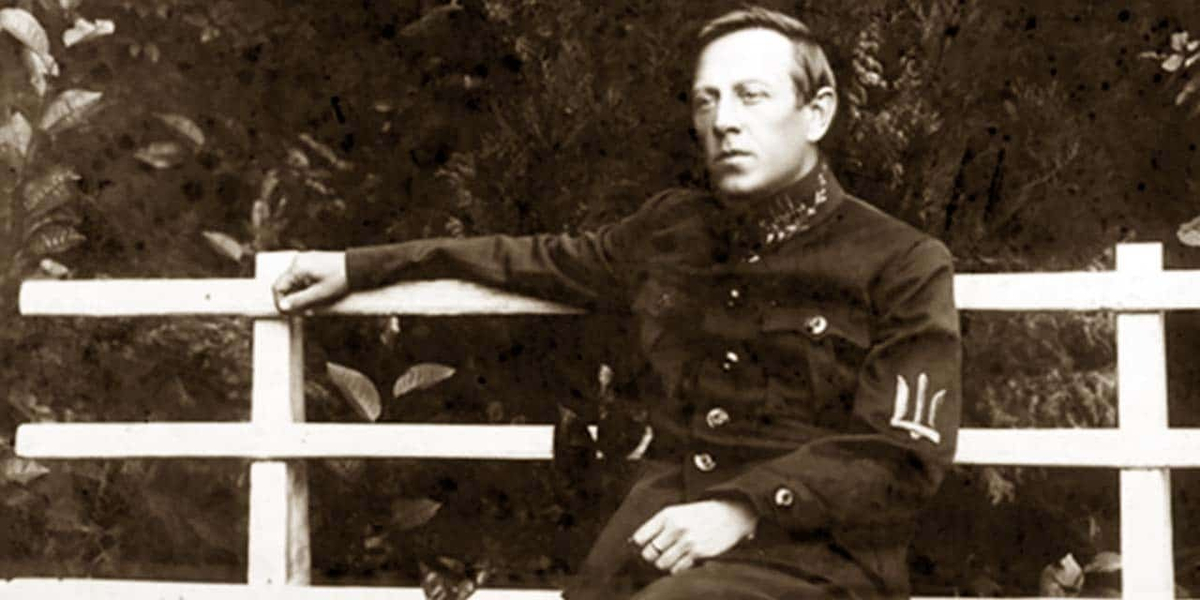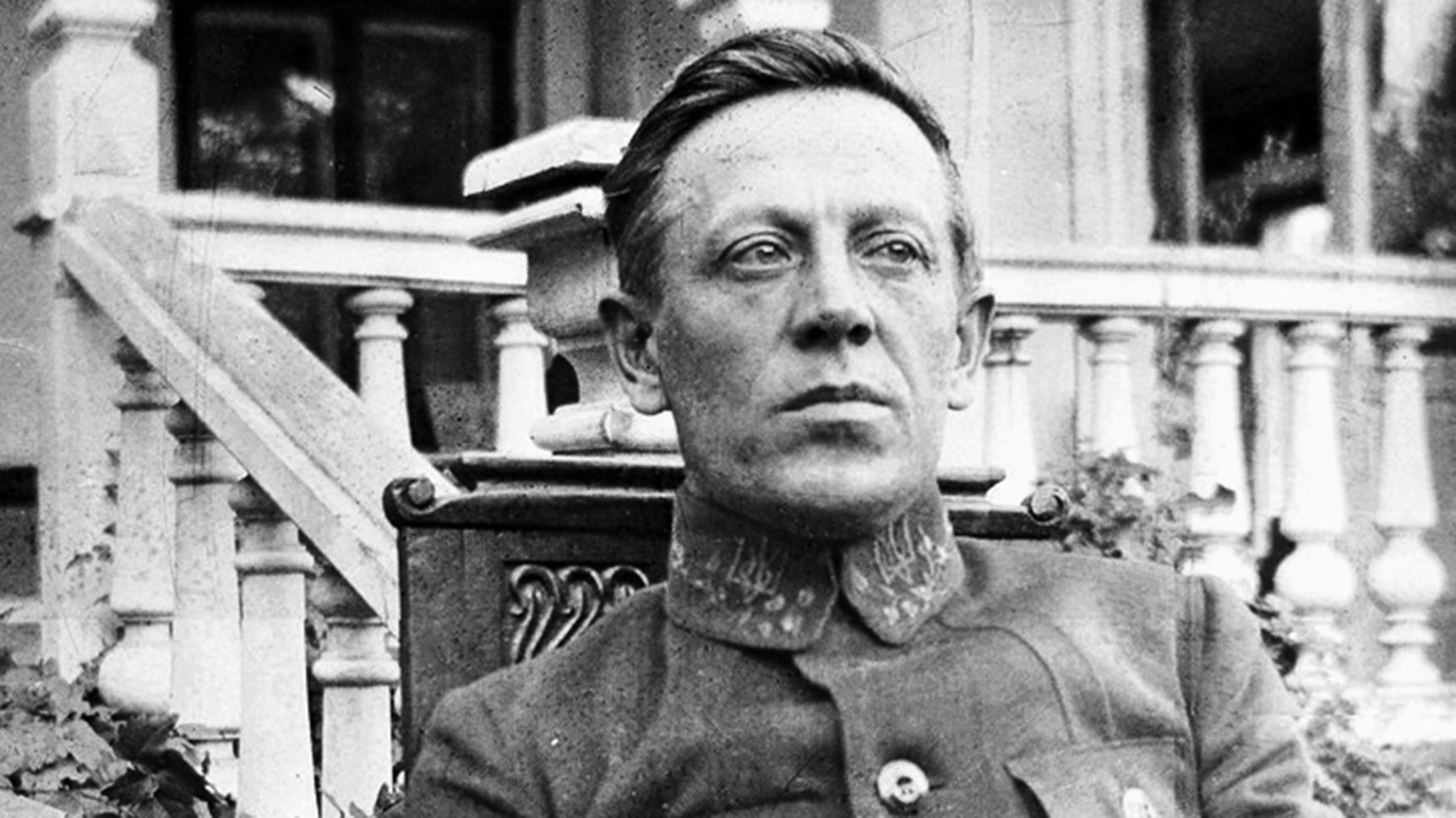
Symon Petliura, supreme commander of the Ukrainian People's Army, in 1919. (Wikimedia)A century ago, on May 25, 1926, an otherwise ordinary afternoon in Paris’ bohemian Latin Quarter was disrupted by a barrage of gunshots, leaving one of Ukraine’s famous military leaders dead in the street.“I emptied my revolver,” Samuel “Scholem” Schwartzbard, the Jewish-Ukrainian man who killed Symon Petliura, told the court, as quoted by Time magazine in 1927.“A policeman came up quietly and said: ‘Is that enough?’ I answered: ‘Yes.’ He said: ‘Then give me your revolver.’ I gave him the revolver, saying: ‘I have killed a great assassin.’”Born in Poltava in 1879 to a family of Cossack descent, Symon Petliura would rise to command Ukraine’s military forces during the country’s war of independence, devoting his life to the cause of Ukrainian statehood. Unlike a number of his contemporaries, Petliura saw that true independence demanded a decisive break from centuries-long Russian influence.
Petliura went into exile in 1921 after an alliance with Poland failed to halt a Bolshevik advance. From France, he attempted to lead a government-in-exile and champion Ukrainian culture abroad, recognizing the role of soft power in keeping the cause alive.A mix of factors led to Petliura’s exile, including infighting within Ukraine’s leadership, as each faction pushed its own vision for the country’s future. Still, even without these internal divisions, historian Yaroslav Hrytsak told the Kyiv Independent, the odds were stacked against Petliura.Symon Petliura (CL), Volodymyr Vynnychenko (C), Mykhailo Hrushevsky (CR) during a rally marking the Third All-Ukrainian Military Congress in Kyiv, Ukraine, in November 1917. (Wikimedia)“His power was doomed mainly because of geopolitical circumstances. 1919 was virtually a war of all against all. Under such circumstances, only the most violent and ruthless power — the Bolsheviks — came ahead,” Hrytsak said.A century after his assassination, Petliura remains an enigmatic and polarizing figure in Ukraine’s history. It’s a legacy shaped in part by what Hrytsak describes as persistent misconceptions, both in Ukraine and abroad, about his life and leadership.The label most often attached to Petliura in the historical record is that of an antisemite, a reputation cemented by his assassination by Schwartzbard, who blamed Petliura for the deaths of his family during the Jewish pogroms.Sholem Schwarzbard, the Jewish-Ukrainian man who assassinated Symon Petliura, photographed in 1926. (Wikimedia)Between 1918 and 1921, a wave of anti-Jewish pogroms swept through Ukraine that resulted in the deaths of tens of thousands of people, and some of these atrocities were carried out by the Army of the Ukrainian People's Republic under Petliura’s leadership.Pogroms against Ukraine’s Jewish population during this turbulent period were carried out by the Ukrainian army, the Russian Bolshevik Red Army, the pro-Tsarist White Army, and the Polish army, as well.While there is documented evidence of Petliura’s attempts to halt the violence committed specifically by certain units of the republic’s forces, historians continue to debate how much authority he tried to wield and how effective he could have been in enforcing these orders.