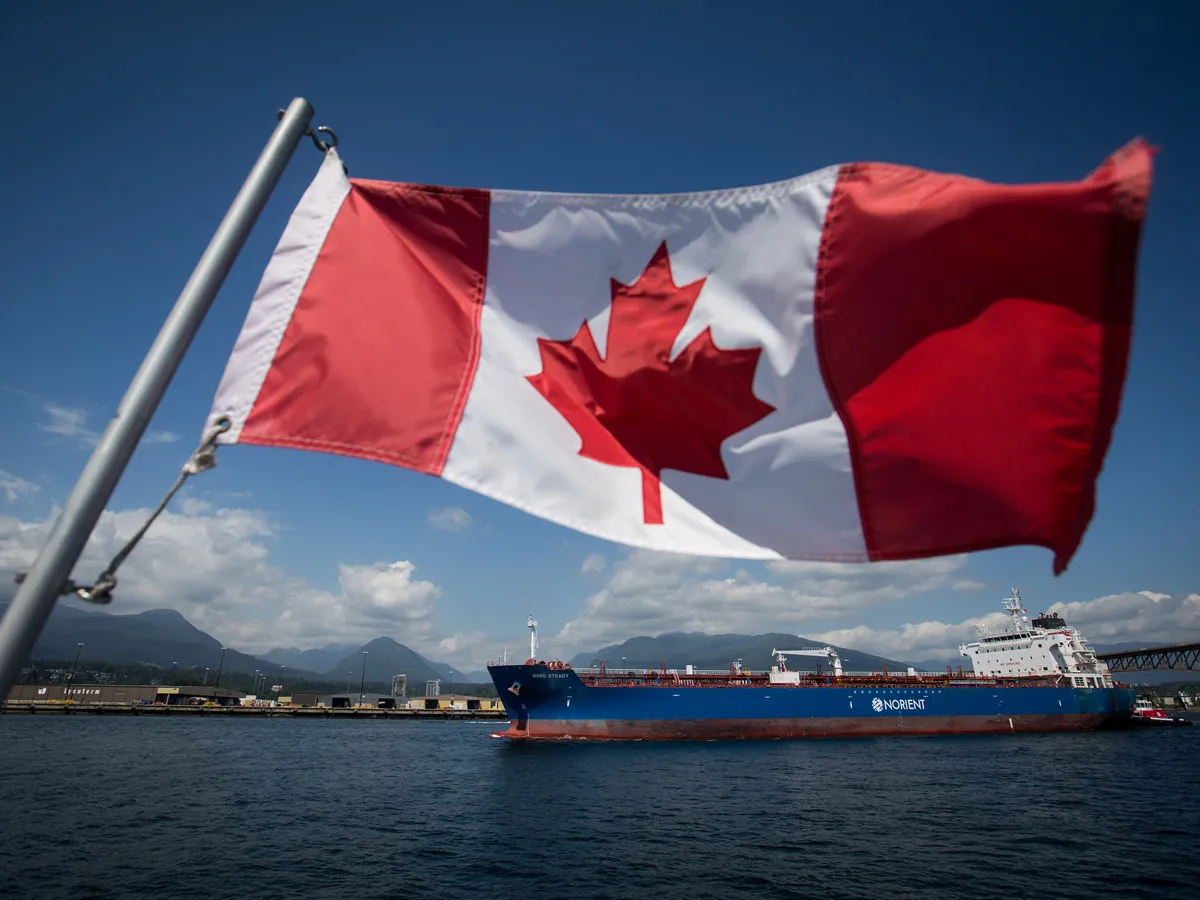
Skip to Content Subscribe Our Offers My Account Manage My Subscriptions FAQ Newsletters Canada Canadian True Crime Canadian Politics Health World Israel & Middle East Financial Post NP Comment Longreads Puzzmo Diversions Comics NP News Quiz New York Times Crossword Horoscopes Life Eating & Drinking Style Sponsored Play for Ontario Travel Travel Canada Travel USA Travel International Cruises Travel Essentials Culture Books Celebrity Movies Music Theatre Television Business Essentials Advice Lives Told Tails Told Shopping Buy Canadian Home Living Outdoor Living Tech Style & Beauty Kitchen & Dining Personal Care Entertainment & Hobbies Gift Guide Travel Guide Deals Savings National Post Store More Sports Hockey Baseball Basketball Football Soccer Golf Tennis Driving Vehicle Research Reviews News Gear Guide Obituaries Place an Obituary Place an In Memoriam Classifieds Place an Ad Celebrations Working Business Ads Archives Healthing Epaper Manage Print Subscription Profile Settings My Subscriptions Saved Articles My Offers Newsletters Customer Service FAQ Newsletters Canada World Financial Post NP Comment Longreads Puzzmo Diversions Life Shopping Epaper Manage Print Subscription HomeNP CommentDavid Knight Legg: Canadian oil is our best answer to global conflictWe can mediate conflict by supplying oil to Asia You can save this article by registering for free here. Or sign-in if you have an account.A Canadian flag flies from a Harbour Authority patrol boat as the Nord Steady oil and chemical tanker is guided by tugboats out of the Port of Vancouver in Vancouver, British Columbia, Canada, on Tuesday, July 11, 2017. Photo by Darryl Dyck/BloombergIn an era when energy security has eclipsed environmental rhetoric, Canada is at a strategic crossroads as an energy superpower whose two largest trading partners are the United States (76 per cent of all export trade) and China (four per cent of all exports).Enjoy the latest local, national and international news.Exclusive articles by Conrad Black, Barbara Kay and others. Plus, special edition NP Platformed and First Reading newsletters and virtual events.Unlimited online access to National Post.National Post ePaper, an electronic replica of the print edition to view on any device, share and comment on.Daily puzzles including the New York Times Crossword.Support local journalism.Enjoy the latest local, national and international news.Exclusive articles by Conrad Black, Barbara Kay and others. Plus, special edition NP Platformed and First Reading newsletters and virtual events.Unlimited online access to National Post.National Post ePaper, an electronic replica of the print edition to view on any device, share and comment on.Daily puzzles including the New York Times Crossword.Support local journalism.Create an account or sign in to continue with your reading experience.Access articles from across Canada with one account.Share your thoughts and join the conversation in the comments.Enjoy additional articles per month.Get email updates from your favourite authors.Create an account or sign in to continue with your reading experience.Access articles from across Canada with one accountShare your thoughts and join the conversation in the commentsEnjoy additional articles per monthGet email updates from your favourite authorsSign In or Create an AccountorThe U.S. is the largest energy producer in the world. China is the world’s largest energy consumer and global emitter. The natural tension between these two superpowers has been underscored by U.S. military operations over the past four months. Last week during the China-U.S. summit in Beijing, President Xi Jinping invoked the idea of the Thucydides Trap — an ancient historian’s warning about Sparta and Athens that a rising power’s challenge to an established one makes war almost impossible to avoid.While Xi signalled a preference for cooperative competition, the backdrop is stark: In January, the American rendition of Nicolas Maduro put Venezuela — the country with the world’s largest oil reserves — under American control. China depended on about 500,000 barrels a day of Venezuelan heavy crude. Within a week, that oil — four per cent of Chinese seaborne supply — was headed to U.S. refineries. China planned to replace that supply with Iranian crude. Within two months, the U.S. Navy was overseeing a blockade of the Strait of Hormuz, through which China had been receiving over 7 million barrels a day from Iran and other Gulf nations. Within four months, half of China’s seaborne energy supply was under U.S. Navy control.This newsletter from NP Comment tackles the topics you care about. (Subscriber-exclusive edition on Fridays)By signing up you consent to receive the above newsletter from Postmedia Network Inc.We encountered an issue signing you up. Please try againChina is self-sufficient in dozens of ways, but is extremely vulnerable when it comes to the oil and gas that powers transportation, electricity, manufacturing and industrial processes. It is an understatement to say that China is in the middle of an urgent search for diversified, dependable supply to reduce its energy vulnerability.Canada is perfectly positioned to meet Chinese demand, with vast reserves that exceed the U.S. and Russia, and crude that matches Venezuelan and Iranian chemistry almost perfectly; it could provide a seamless substitution into China’s refining network. Geographic proximity via Pacific routes gives Canada a decisive edge over more distant, risky suppliers. We also have existing models for delivery, like TMX and the already-blueprinted Northern Gateway pipeline, that deliver nearly 450,000 barrels a day to Asian markets; increasing these exports could replace China’s entire Venezuelan supply without risky maritime chokepoints.Domestically, a West Coast pipeline of this scale would generate billions in annual revenue at current prices, create thousands of direct and indirect jobs, and deliver billions in federal and provincial taxes. But this is more than just an economic opportunity. In an era of global great power competition over energy security, Canadian pipelines are strategic geopolitical assets. Energy infrastructure can confer trade and economic hard power as we forge long-term, contract-based energy ties to China that compete directly with Russia, diversify our dependency on the U.S., and reduce global exposure to maritime chokepoints.Canada has proven Asia Pacific demand with the TransMountain pipeline TMX, which tripled throughput to 890,000 barrels a day in 2024. In addition to its own economic impact, the diversified market focus on Asia also narrowed Western Canadian Select price discounts and dramatically increased non-U.S. export volumes, adding billions to the Canadian economy from trade and pricing leverage.In the contest of wills between the U.S. and China, Canada is obviously allied with the Americans. But a pipeline supporting Chinese energy security spells out a powerful alliance between two close friends, not servility. Canada has the freedom — and the economic imperative for its own stability — to build global market access to Asian and European markets that need our energy.The only limits on Canada’s opportunity are self-imposed taxes and regulations against our own energy development in the name of the environment. This is well-meaning but often deeply misdirected, resulting in Asian markets being denied lower-carbon-intensive Canadian alternatives that would reduce overall global emissions.Those self-imposed rules have the effect of making Canada far more economically dependent on the U.S. and stand in the way of forging new economic, strategic and diplomatic energy security ties to other nations.When Prime Minister Mark Carney said in January that “nostalgia is not a strategy,” that statement spoke as much to the fixed assumptions of our domestic politics as to any great power dynamics.To attract the global capital and contracts needed to create an energy bridge with China — and Asia broadly — Canada will need to honestly assess the relationship between a domestic carbon tax and global emissions. It will also need to repeal the Oil Tanker Moratorium Act to allow safe tanker export traffic in northern B.C., as well as reform the Impact Assessment Act to guarantee permitting processes on timelines competitive with other energy-rich nations.Finally, Canada will have to expand First Nations economic participation using the model of the Alberta Indigenous Opportunities Corporation: debt-financed equity stakes for communities with land rights to expedite tidewater infrastructure.The off-ramp of the Thucydides Trap between the U.S.. and China runs through Canada and our ability to provide a mediating influence on points of conflict like energy security. The economic, strategic and diplomatic rewards for doing so are enormous — it just requires choosing to get out of our own way and build global market infrastructure to Asia.National PostDavid Knight Legg is a board director and advisor to energy, finance and technology firms. He was the former principal advisor to the premier of Alberta where he structured the Alberta Indigenous Opportunities Corporation and InvestAlberta Corporation to expedite global investment into Canadian energy. Join the Conversation This website uses cookies to personalize your content (including ads), and allows us to analyze our traffic. Read more about cookies here. By continuing to use our site, you agree to our Terms of Use and Privacy Policy.
David Knight Legg: Canadian oil is our best answer to global conflict
Getting our most powerful resource to market would be one way to mediate when fighting breaks out abroad
1,431 words~7 min read