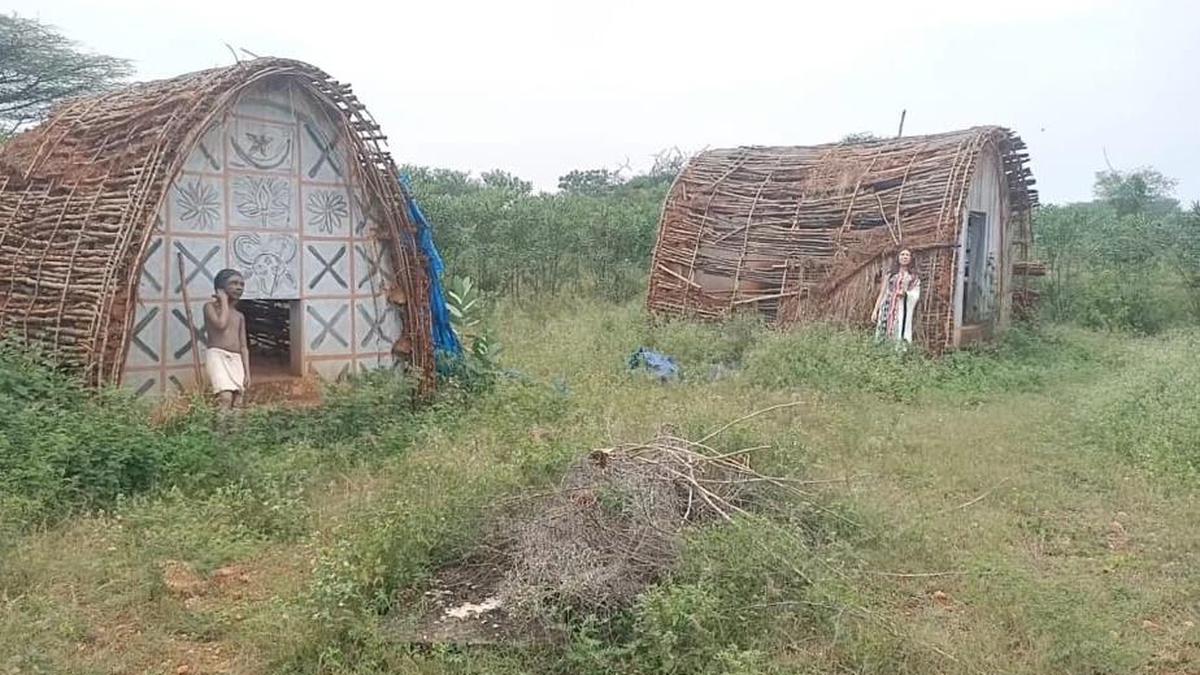
Tribal model huts surrounded by bushes at the Tribal Eco-Cultural village at Karachikorai near Bhavanisagar in Erode district in Tamil Nadu.
| Photo Credit: File Photo.
The ₹7-crore Tribal Eco-Cultural Village established in the Sathyamangalam Tiger Reserve (STR) to showcase the State’s tribal heritage remains unopened and is falling into disrepair, drawing criticism from visitors and local residents.The museum, developed behind the Sujjalkuttai forest check-post under the Bhavanisagar Forest Range of the STR and located along the road leading to Thengumarahada, was conceived as a model eco-cultural village to familiarise tourists with the lifestyles of ethnic tribal communities and their close association with forests. Visitors have urged the authorities to complete the remaining works and open the facility to the public.The project was introduced during the AIADMK regime under the State Innovation Fund for 2018-19. The foundation stone was laid on December 8, 2018, and the village was planned across 20 acres. Though the project was scheduled for completion by December 2019, the COVID-19 pandemic delayed the works. Construction resumed in 2021 and reached nearly 90% completion. However, after the change in government, the project witnessed little progress. Though Ministers had then stated that additional funds would be allocated and that the works would resume, the facility remains incomplete.The museum includes model houses of various tribal communities, ponds, displays of tribal musical instruments, costumes, antiques, stone and wooden artefacts, a Sangam literature studio, interpretation centres, an auditorium, a tribal market, a food court, and medicinal plant gardens.The project was aimed at preserving and promoting the eco-friendly culture, traditional knowledge and heritage of tribal communities, besides highlighting forest-based lifestyles and tribal arts. It was also intended to create economic opportunities for tribal residents through the sale of artefacts, performances of traditional dance and music, and the promotion of ethnic cuisine. However, the facility now wears a deserted look. Bushes have overgrown around several structures, pathways remain unattended, and many installations have suffered damage due to prolonged exposure to the elements. Local residents said several portions of the campus had begun to deteriorate even before inauguration because of the absence of maintenance and security. They added that model structures, display units and roofing sheets had been damaged at several places, while some sections were gradually becoming unusable.Tourists visiting the STR said the abandoned facility was disappointing, particularly as the region had limited eco-tourism attractions. Many said the museum could become an important educational and tourism centre introducing visitors to tribal traditions, forest conservation and sustainable living practices. They also pointed out that a project created with substantial public funds should not have been left neglected for years without being put to use.“The safari project in the STR was also stopped and there is little hope of reviving it. At least the museum should be restored and opened to visitors,” said P.N. Vadivel, a wildlife enthusiast. He pointed out that eco-tourism initiatives in other forest regions helped create awareness about conservation, while Erode district, despite having extensive forest cover, lacked such opportunities.Some tourists said the museum could attract students, researchers and nature lovers if properly maintained and managed. Another visitor said the State government should take immediate steps to revive the project and ensure that infrastructure was put to public use instead of being allowed to deteriorate further. Published - May 25, 2026 05:41 pm IST