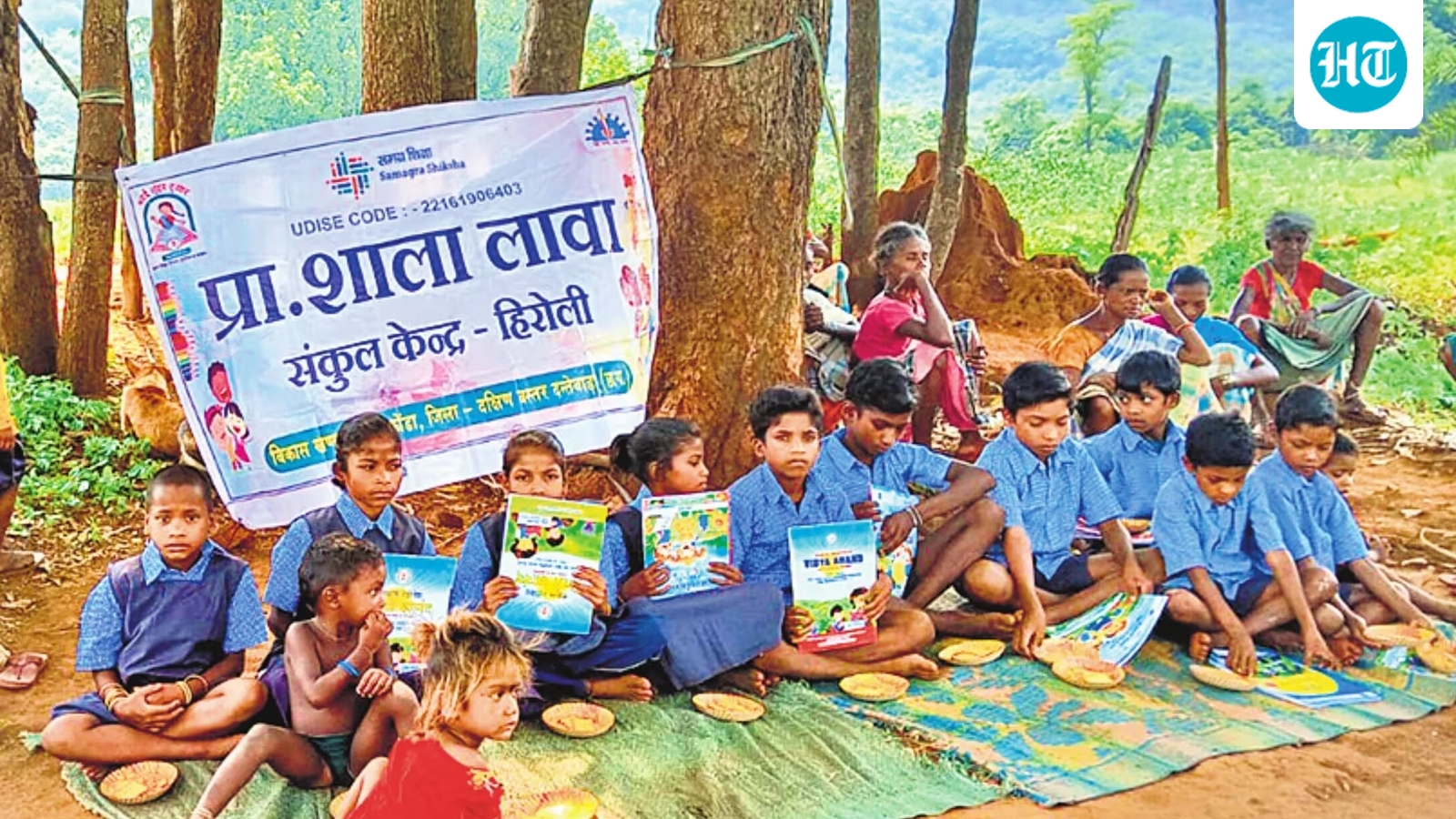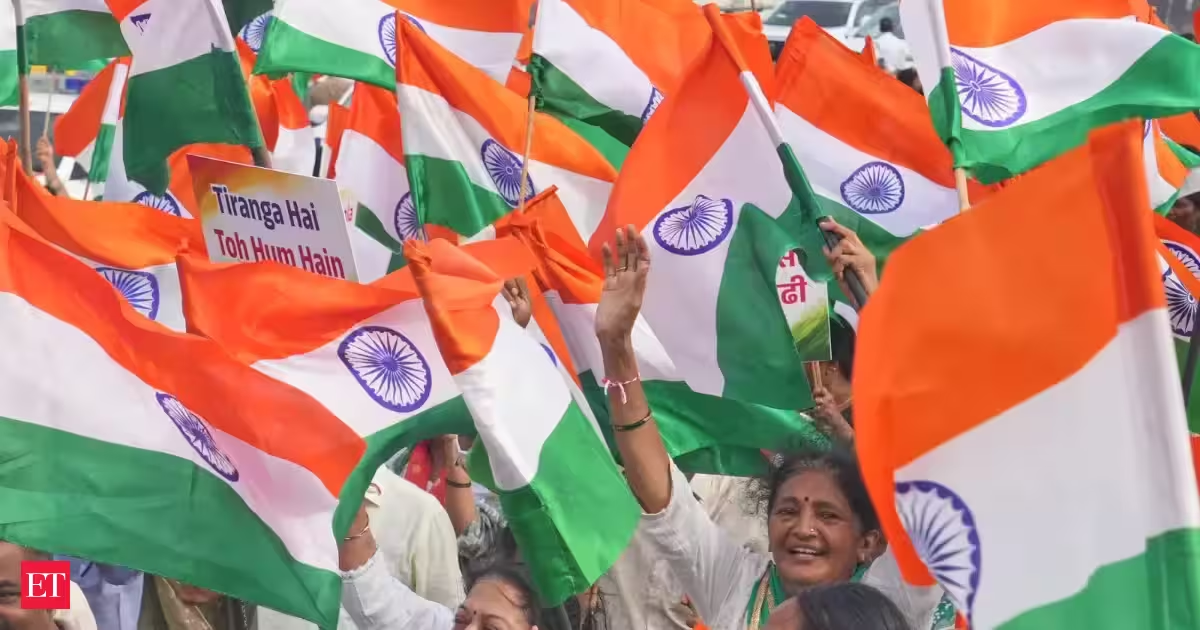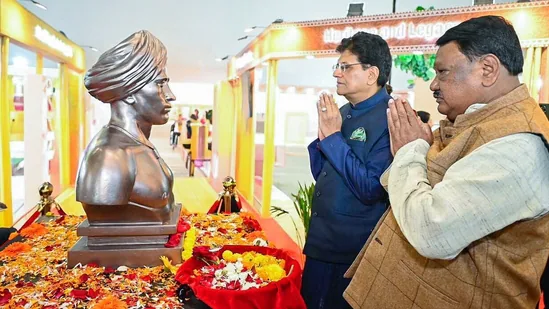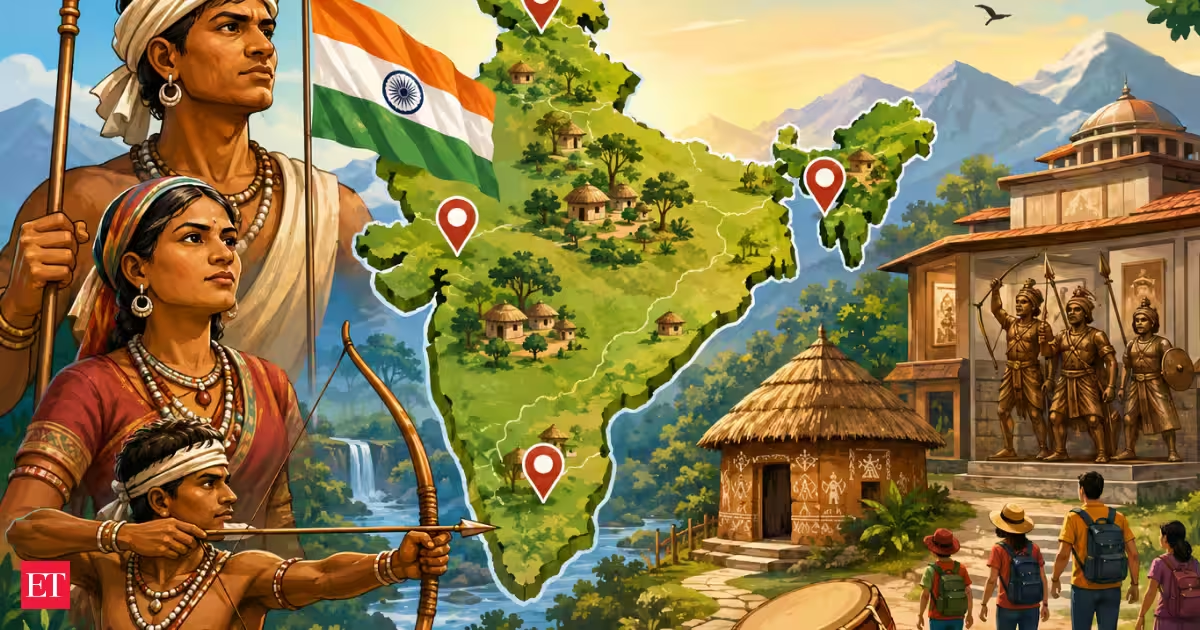
From Matho in Leh to Thondarnad in Wayanad and Vedchhi in Surat to Jorai in Assam, India is set to put 50 tribal villages on the tourism map through tales of valour and sacrifice of tribal freedom fighters.The Centre has identified 50 native villages of tribal freedom fighters across the country. The long-forgotten tales of India’s freedom struggle will be curated and then recreated through museums and memorials in these villages. Before development activities are planned, baseline surveys will be conducted in the villages.This will entail collecting data on socio-economic parameters, infrastructure status including road connectivity and status of government schemes. The surveys will be followed by preparation of implementation plans. According to people with knowledge of the matter, the government plans to initiate documentation of tribal freedom fighters, which will include oral history and traditions. Apart from development of museums and memorials, the implementation plans will include interpretation centres and other cultural infrastructure.“The villages will be developed in entirety including saturation of all government schemes,” said a senior official, who did not wish to be identified.About Rs 20 lakh per village will be allocated for the exercise and all government schemes will be integrated for the purpose.A beginning will be made with 11 villages: Bhagwan Birsa Munda’s Ulihatu village in Jharkhand, Munshi Abdul Sattar’s Matho (Ladakh), Raja Shankar Shah’s Ram Nagar village (Madhya Pradesh), Sonakhan of Shaheed Veer Narayan Singh (Chhattisgarh), Nadimpalem village of Gam Gantam Dora (Andhra Pradesh), Kumran Bheem’s Jodeghat village (Telangana), Thalakkar Chandu’s Thondarnad (Kerala), Joya Taosen’s Jorai (Assam), Bhagoji Naik’s Nandur Shingote village (Maharashtra), Rendo Majhi’s Urladani village (Odisha) and Dasharibahen Kanjinhai Chaudhari’s Vedchhi (Gujarat).The Centre has sanctioned 10 tribal freedom fighter museums in Gujarat, Jharkhand, Andhra Pradesh, Chhattisgarh, Kerala, Madhya Pradesh, Telangana, Manipur, Mizoram and Goa. The idea to honour tribal freedom fighters was first mooted by Prime Minister Narendra Modi in 2016. In his Independence Day address, he had said that the sacrifices made by tribals during the freedom struggle were not well known.“When we talk about the history of our freedom struggle, a lot is spoken about a few people. In fact, in some cases, it is more than necessary. But in our freedom struggle, the contribution of our tribals living in the forests was incomparable. They lived in jungles. We may have heard about Birsa Munda but there is hardly any tribal district which did not make sacrifices since 1857 till we got freedom,” Modi had said in his address.He further said, “What is freedom? What is struggle against slavery? They have taught us with their sacrifices. But our coming generations are not fully aware of this history. The government desires and is planning permanent museums in the states where these tribals lived, struggled against the Britishers and refused to be bowed down. The government will work to make such museums in different states so that the coming generations may know how our tribals were far ahead in making sacrifices.”
Independence Day 2026: 50 villages of tribal freedom fighters to showcase tales of valour, sacrifice
To commemorate the bravery of India's freedom fighters, plans are underway to create fifty tribal villages equipped with museums and memorials highlighting their heroic stories. Prior to the development of these villages, baseline surveys will be conducted to ensure community needs are met. Each location will benefit from an allocation of twenty lakh rupees, with the initiative set to commence in eleven villages soon.
489 words~2 min read