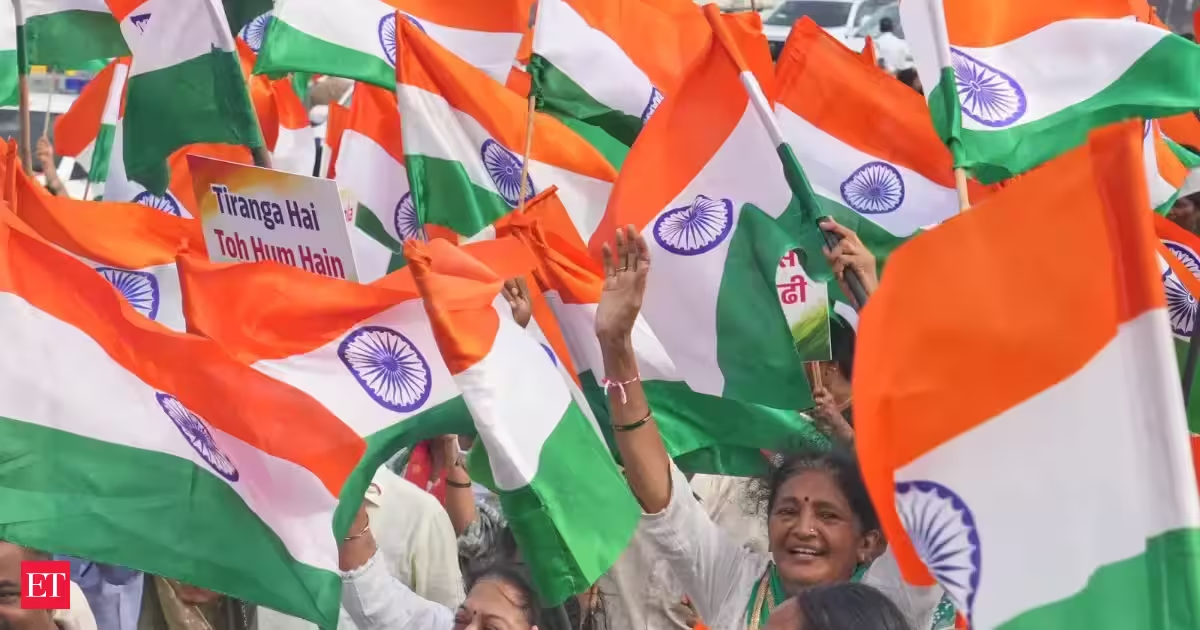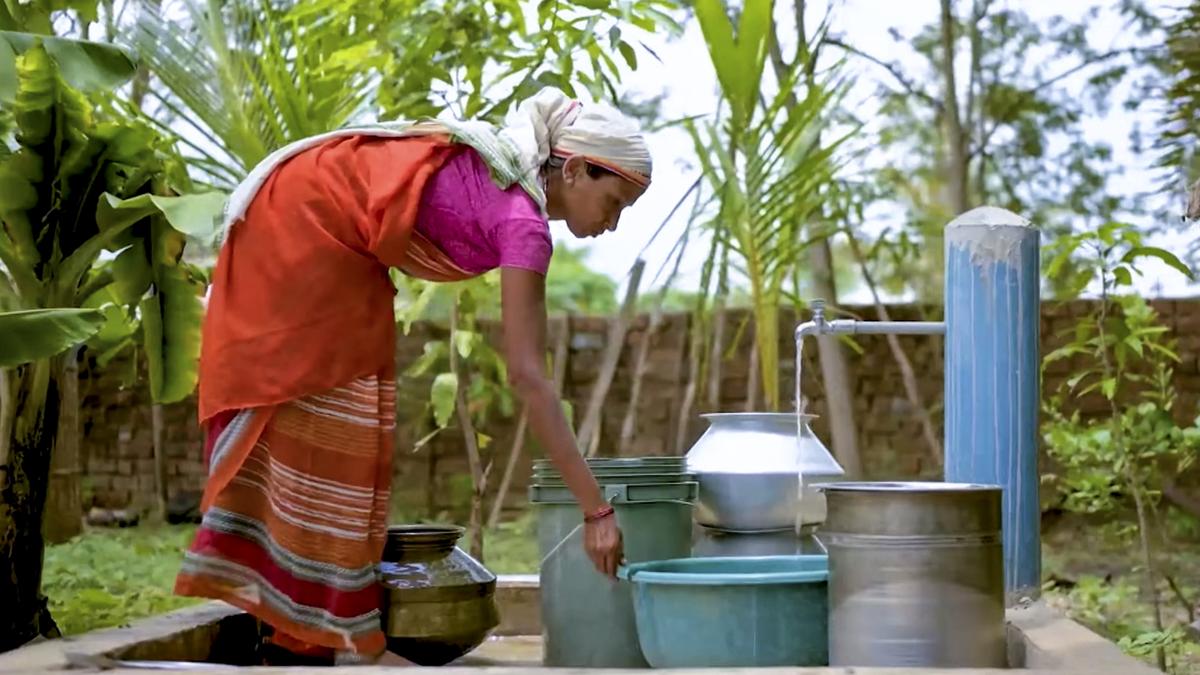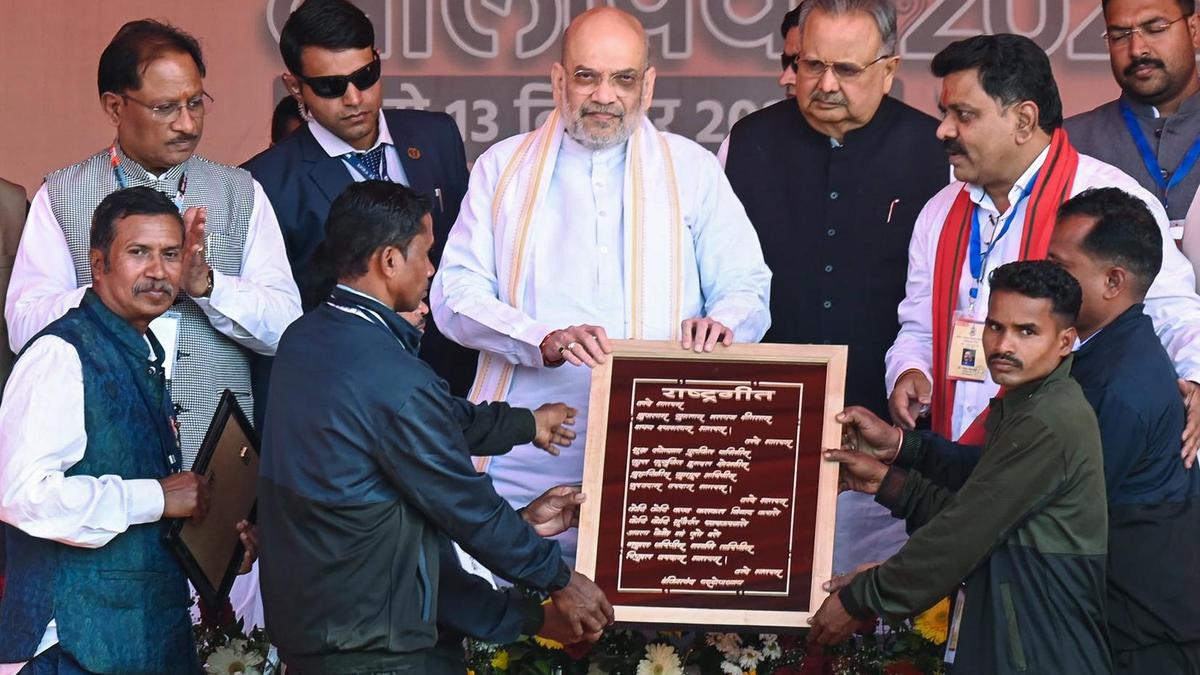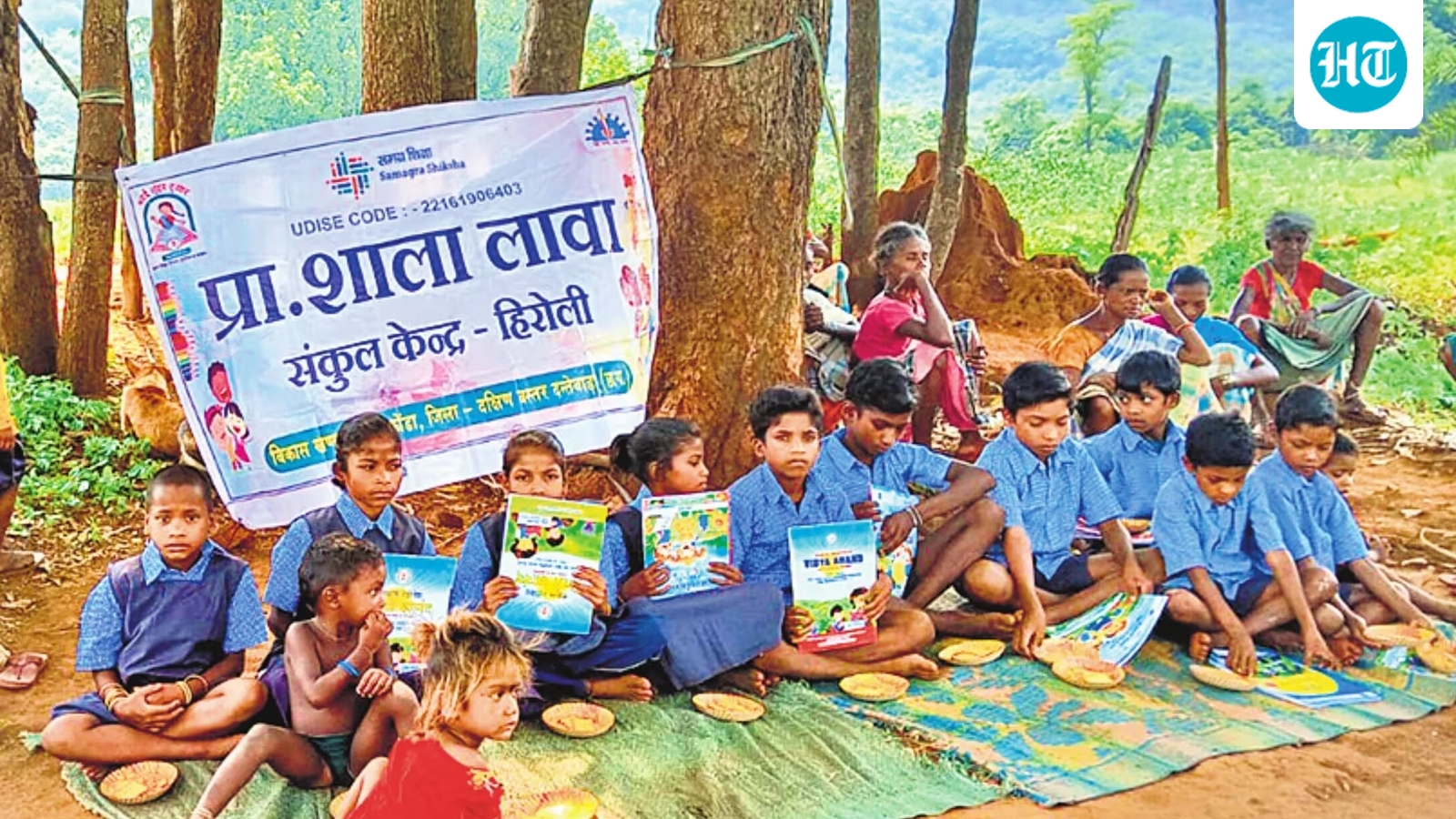
Raipur/Dantewada : For decades, August 15 was like any other day in Ramji Dhruv’s life. Driven out of his village of Konge in 2013 by Maoists, the 42-year-old let Independence Day pass without any fanfare, fearful of the ever-watchful rebels.Months after the government declared the region free of left-wing extremism (LWE), three schools will hoist the national flag on August 15The dense forests that ringed his village held stories of isolation, fear and insurgency. Informally known as the capital of the Maoists, this remote region of Abujhmad in Chhattisgarh’s Bastar region was cut off from the rest of the world, this isolation stymied government efforts to push back the rebels and win over villagers.“Maoists had branded me a police informer and held me hostage,” he said.Residents – who largely hailed from the Madiya communities -- were forced to undertake arduous journeys for basic necessities to Bijapur either on foot, bicycles or sometimes by tractors.Maoists banned celebrations, ordered villagers to remain indoors and replaced the national flag with red and black ones. Celebration of national symbols and occasions would trigger threats, or worse.Not anymore. After security forces drove Maoists from large chunks of Abhujhmad, Dhruv returned to his village in 2026.“I returned after 13 years. This year, I will celebrate Independence Day in my own village for the first time. It is the biggest day of my life,” he said.He isn’t the only one.Months after the government declared the region free of left-wing extremism (LWE), three schools will hoist the national flag on August 15 after a gap of 26 years in Dantewada; In Bijapur, 11 educational institutions will celebrate Independence Day after nearly 21 years. Across Abujhmad, several villages that once remained beyond the reach of the state are also preparing to celebrate Independence Day for the first time in decades. In Dantewada’s Purangel, Lava and Badepalli, schools had closed down as Maoist violence engulfed the villages and government infrastructure was destroyed. With insurgency over, primary schools have now been reopened.For now, classrooms have moved into the homes of villagers as there are no school buildings yet. But on August 15, those modest classrooms will have something absent for a generation: The Tricolour unfurled outside.Masiharam Nureti of Garba village said several local residents spent years away from their homes after being forced to flee. “We have finally returned. India became independent on August 15, 1947, but Abujhmad has received its real freedom only now. This year, we will hoist the Tricolour with pride,” he said.Officials said 92 villages across Bastar – including 33 in Bijapur, 50 in Sukma and nine in Narayanpur – will hoist the Tricolour on August 15 for the first time since Independence. More than 500 locations across Bastar, including schools, public squares and community buildings, will also be renamed after martyrs and local icons on August 15.In the Gondi language, Abujhmad means “the unknown hills” – a dense forest spanning approximately 5,000 square kilometres and the districts of Narayanpur, Bijapur, and Dantewada in Chhattisgarh.A challenging terrain of thick forests of Sal, Teak and Tendu, and hills has historically limited access and administrative presence, putting the indigenous communities – the Gond, Muria, Abujhmarhia, Madiya, and Halba tribes – at the mercy of the insurgents. Since the early 1990s, Maoists have used the Abujhmad to build training camps and establish control over local communities – roughly 50,000 tribespeople live in 300 villages – calling the region often a “liberated zone”.The isolation of Abujhmad made it a strategic stronghold for the Communist Party of India (Maoist), which brought the entire region under its grip in the early 2000s, by repeatedly destroyed infrastructure such as schools and roads, and establishing a parallel administration known as “jantana sarkar”.Dantewada superintendent of police Chandramohan Singh said the villages had effectively disappeared from the administrative map during the height of the insurgency. “Revenue records for these villages are available only up to the 1990s. After the formation of Chhattisgarh, Maoist activities intensified and these areas remained severely affected. The Maoists demolished government buildings in the villages and cut the roads connecting them with the administrative headquarters, effectively cutting them off from the rest of the district,” Singh said.But since the government declared the end of Maoist insurgency earlier this year, the situation has changed. “Today, there is no area in Dantewada where the police and administration cannot reach. Government institutions are returning, schools are reopening and development work is reaching villages that remained inaccessible for decades,” Singh said.A similar story is unfolding in Bijapur’s Pidiya area. Eleven educational institutions there will hoist the Tricolour after nearly 21 years. District education officer Rajesh Pandey said schools had once functioned in these villages but were shut after entire settlements were emptied during the counter-Maoist Salwa Judum period. The Maoists later demolished schools and anganwadi buildings, further severing the villages from the institutions that connected them with the state. “But after nearly two decades, these schools will once again hoist the Tricolour and celebrate Independence Day,” Pandey said.In Koraskodo, Hachekoti, Adnar, Boter, Kumnar, Diwalur, Gundekot, Rekapal and Rasmeta, residents said black flags were hoisted on August 15 and villagers were often ordered to remain inside their homes. Those who disobeyed were branded police informers, attacked or forced to flee. The villages were once part of the Maoists’ military and political network, with senior leaders operating from the dense forests of Abujhmad.Boter is now a symbol of the region’s dramatic transformation. It was in the forests around the village that Maoist general secretary Nambala Keshava Rao alias Basavaraju, one of the insurgency’s most senior leaders, was killed in a security operation earlier this year. His death was followed by intensified operations in areas that had remained largely inaccessible to the administration for decades.“No one could have ever dared to enter this area before 2026. The situation has changed now, and people can move around freely without the fear that existed earlier. Celebrating Independence Day is something completely new for us. We have never seen such a ceremony being held here before,” said Ramesh Mandavi, a resident of Boter village, located near the spot where Maoist leader Vasu Raju was killed.Security camps have become gateways for roads, schools, healthcare and drinking water. Government schemes that once existed only on paper are now reaching remote villages. The Indo-Tibetan Border Police and the Border Security Force camps have also helped establish security and facilitate the movement of government agencies into areas where roads had once been cut off and bridges destroyed.For the children of Purangel, Lava and Badepalli, Independence Day will carry a meaning beyond the familiar speeches and ceremonies. The flag will fly above schools that have themselves returned from the shadows.“It is a moment of great pride for the villagers and especially for the children, who will be able to celebrate the day in their own village,” said Sunita Mandavi, a teacher at the government school in Pademta village in Abujhmad.
After decades, Red corridor gears up for tryst with freedom
After decades under Maoist control, villages in Chhattisgarh’s Bastar prepare to hoist the Tricolour on Independence Day for the first time. | India News
1,152 words~5 min read