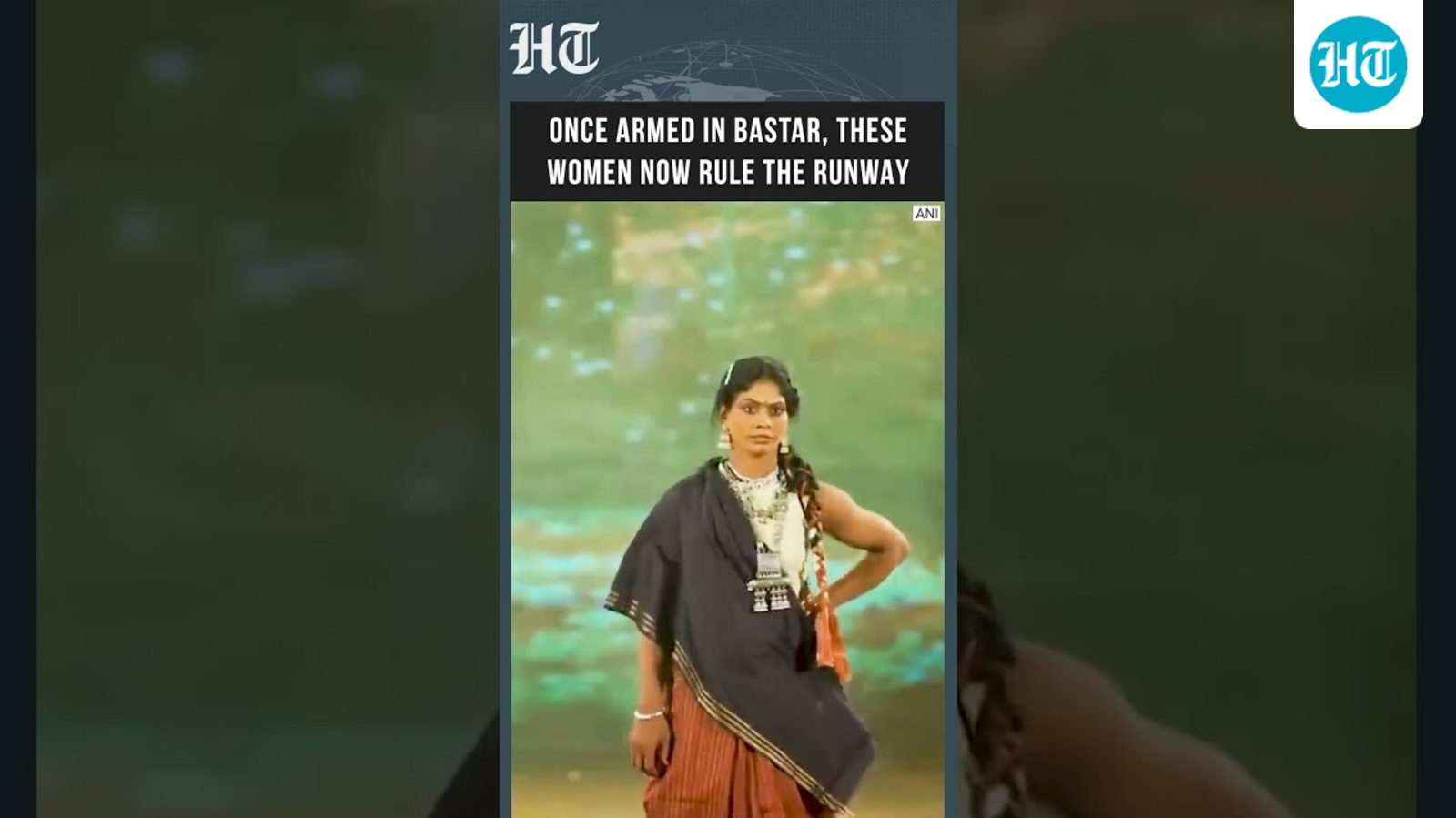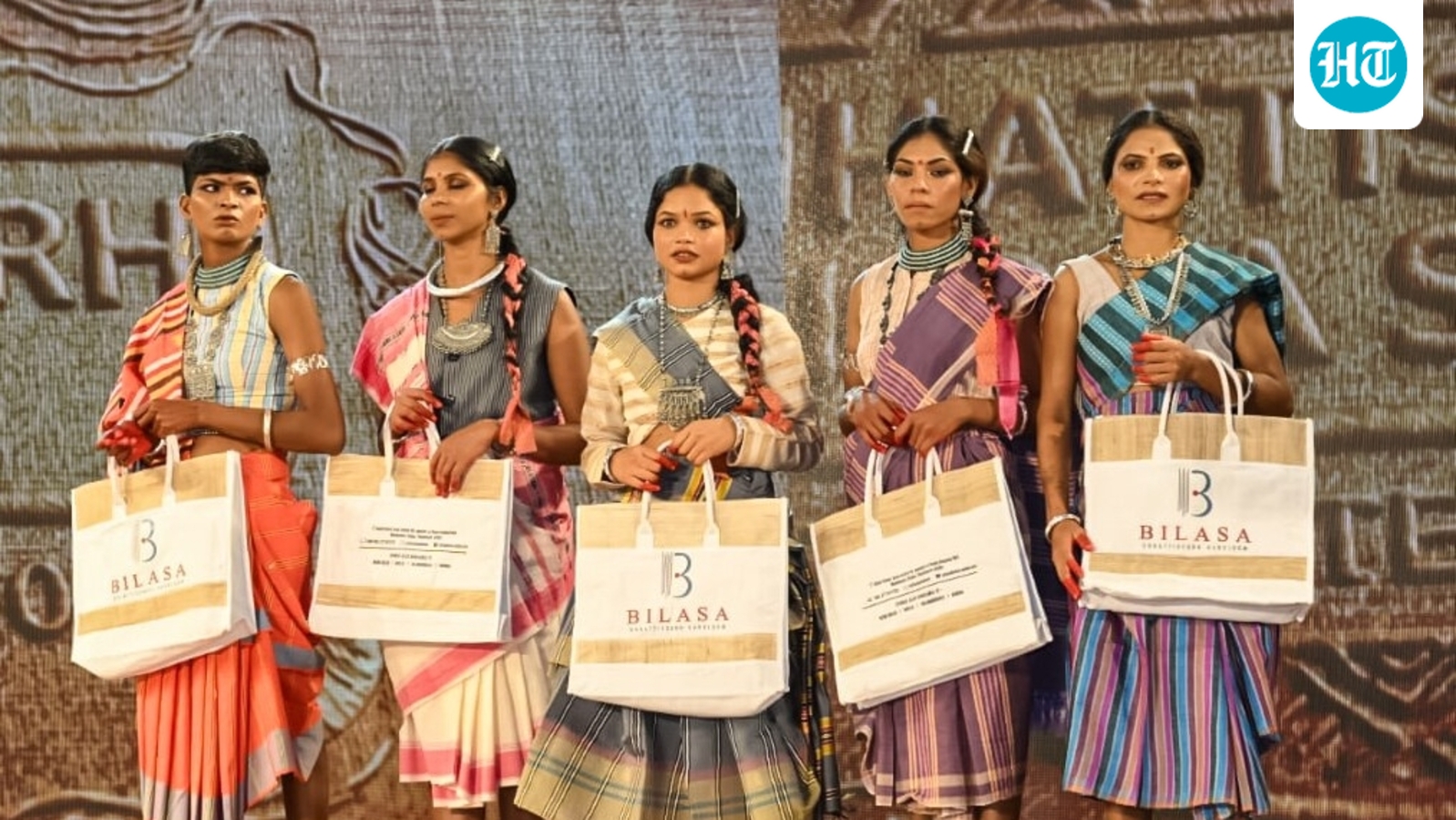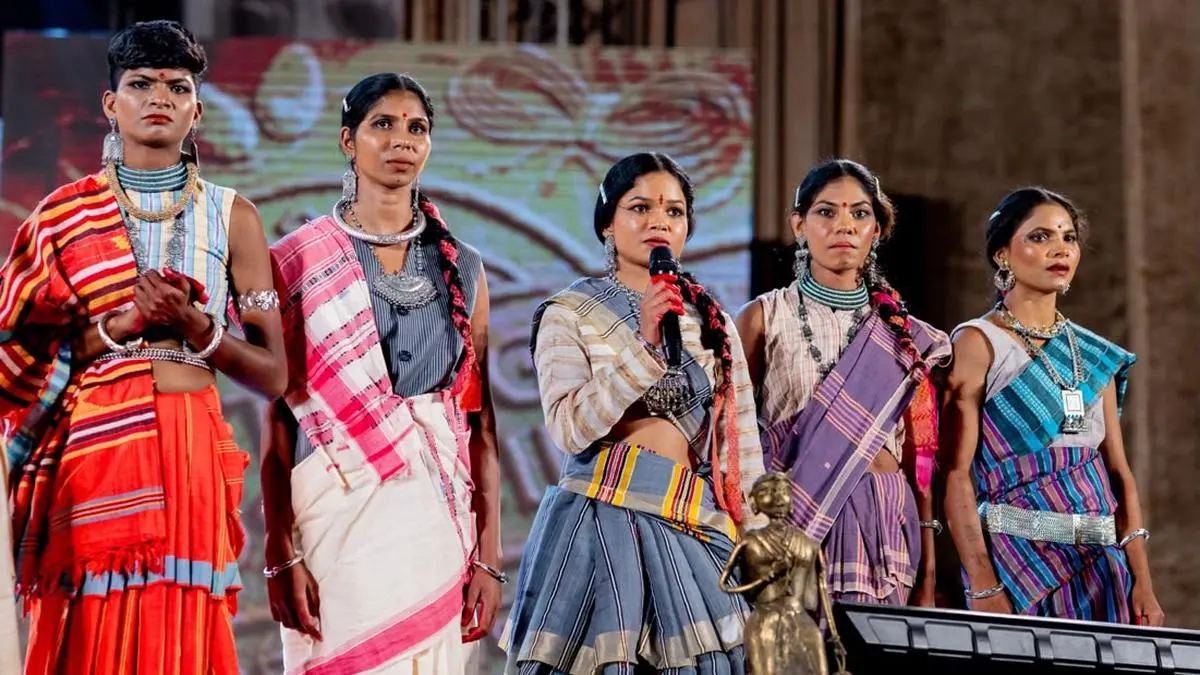
Even a year ago, former Naxal women walking the ramp charismatically in handloom sarees would have been unimaginable, bordering on the fictitious. But on 7 August, observed as National Handloom Day, this illustration came to life.
For decades, the story of Chhattisgarh’s Naxal conflict has been defined by dense forests, guns, and an armed challenge to the Indian state. But after the Modi government declared India “Naxal-free” on 31 March, that imagery is undergoing a slow makeover.The video of surrendered Naxal women walking the ramp cannot be dismissed as just a fashion event.
The applause they received was for more than their clothes or confidence. It was, in many ways, an acknowledgement of a much larger journey: from insurgency to surrender, from isolation to integration, and from a life defined by violence to one built around dignity and livelihood.Women dressed in Kosa silk and handwoven garments drew applause as they showcased Chhattisgarh’s rich textile heritage.“From Lenin to Linen,” wrote an X user. Another wrote: “From camps to the Ramp.”There are few internal security conflicts in the world where the State has attempted to bring former insurgents so visibly into the mainstream. In the last two years, intense security operations were undertaken to eradicate Naxalism, resulting in hundreds of Naxals surrendering and many being neutralised.The perception that haunted Bastar for decades is now changing.“We are working to transform the region from once a red corridor to a green corridor. Bastar is Naxal-free now,” Chhattisgarh CM Vishnu Deo Sai told ThePrint earlier.That is what makes Chhattisgarh’s rehabilitation story unusual.