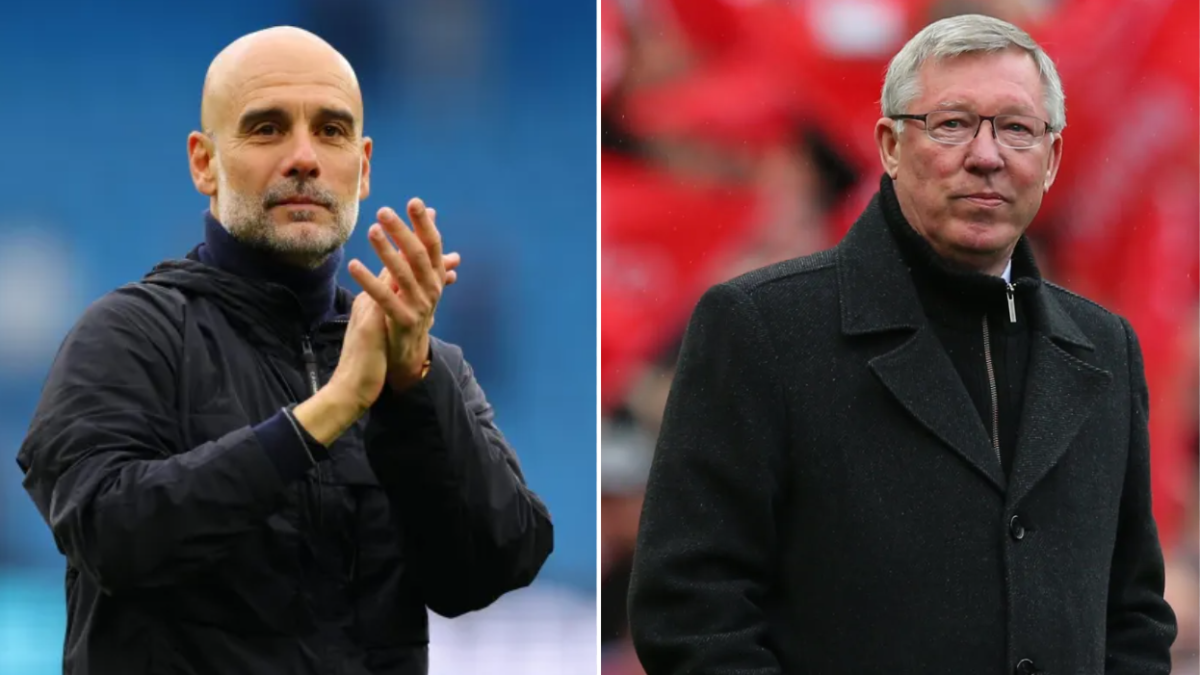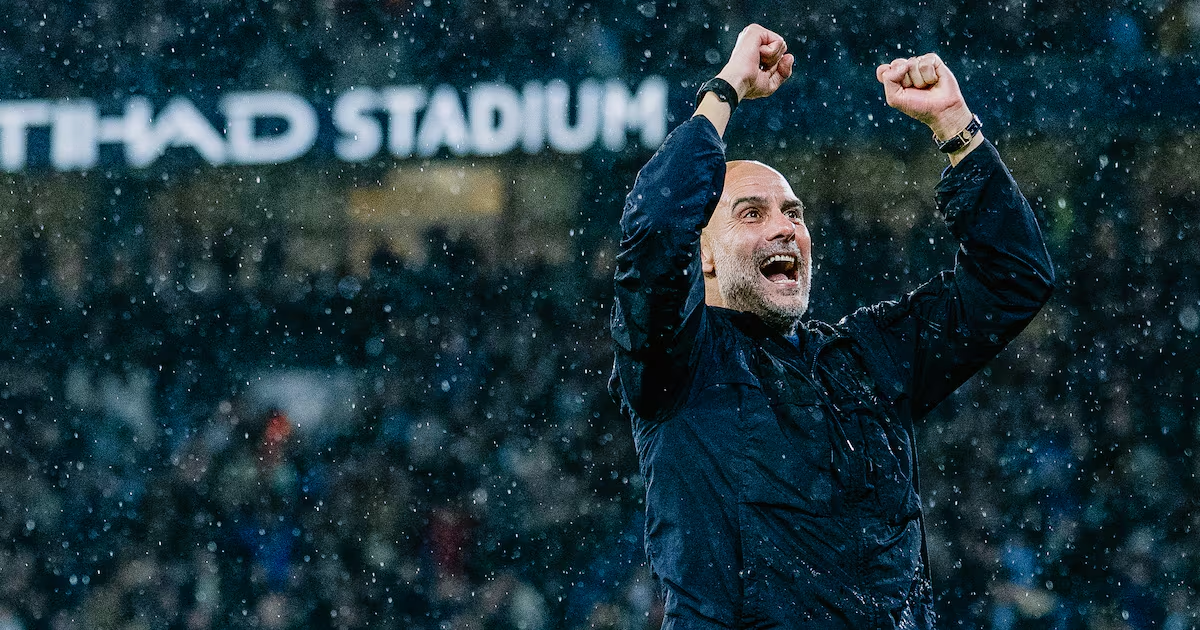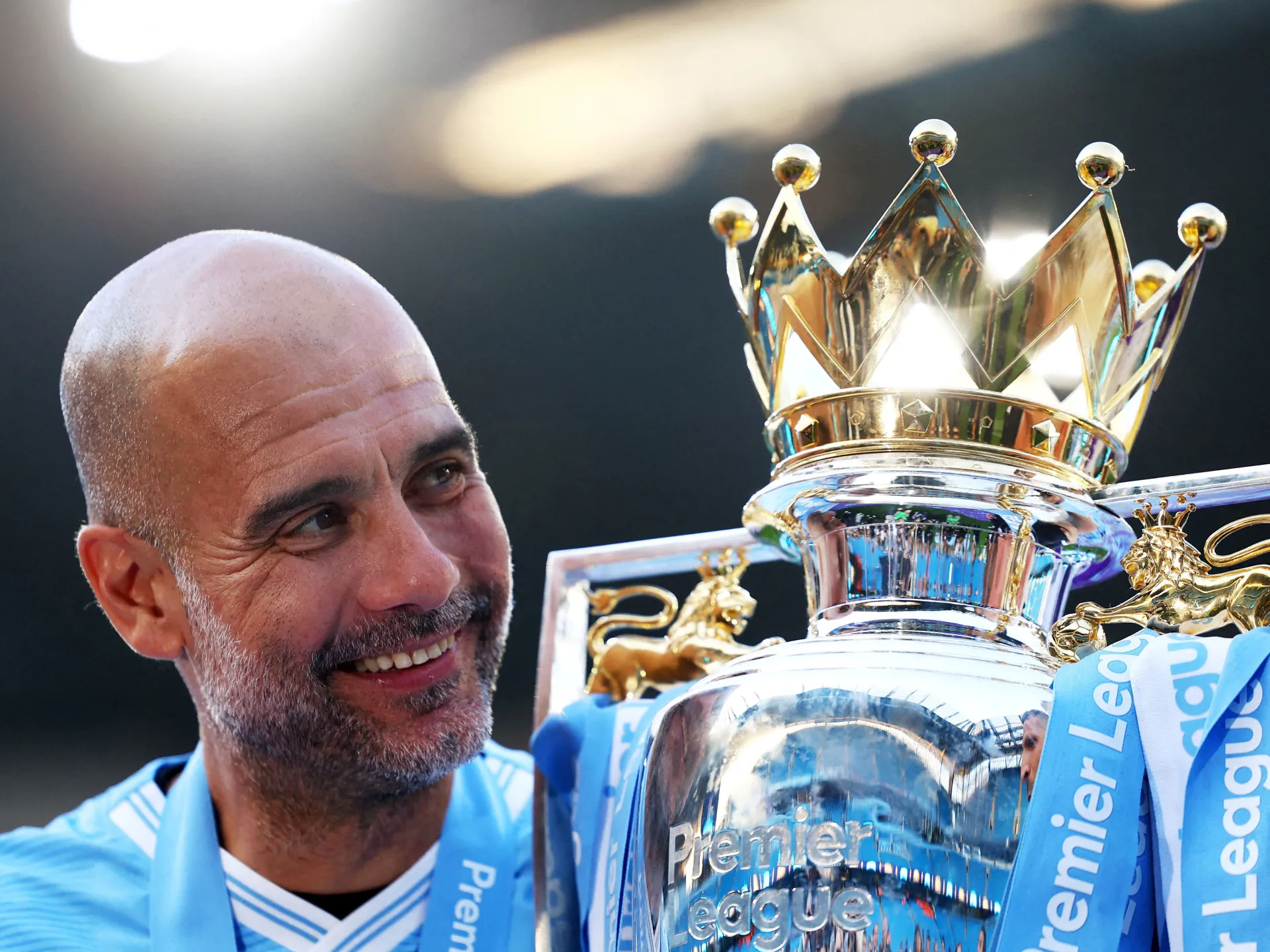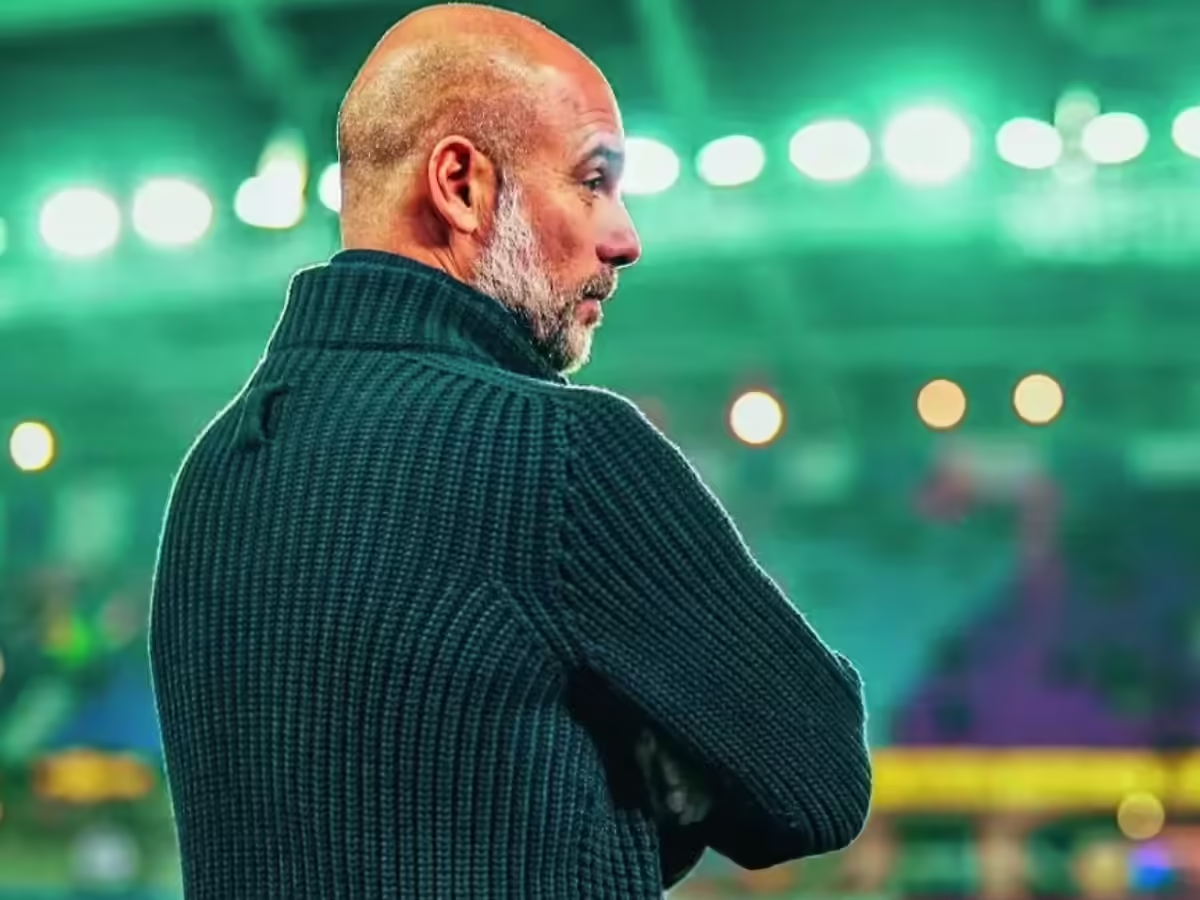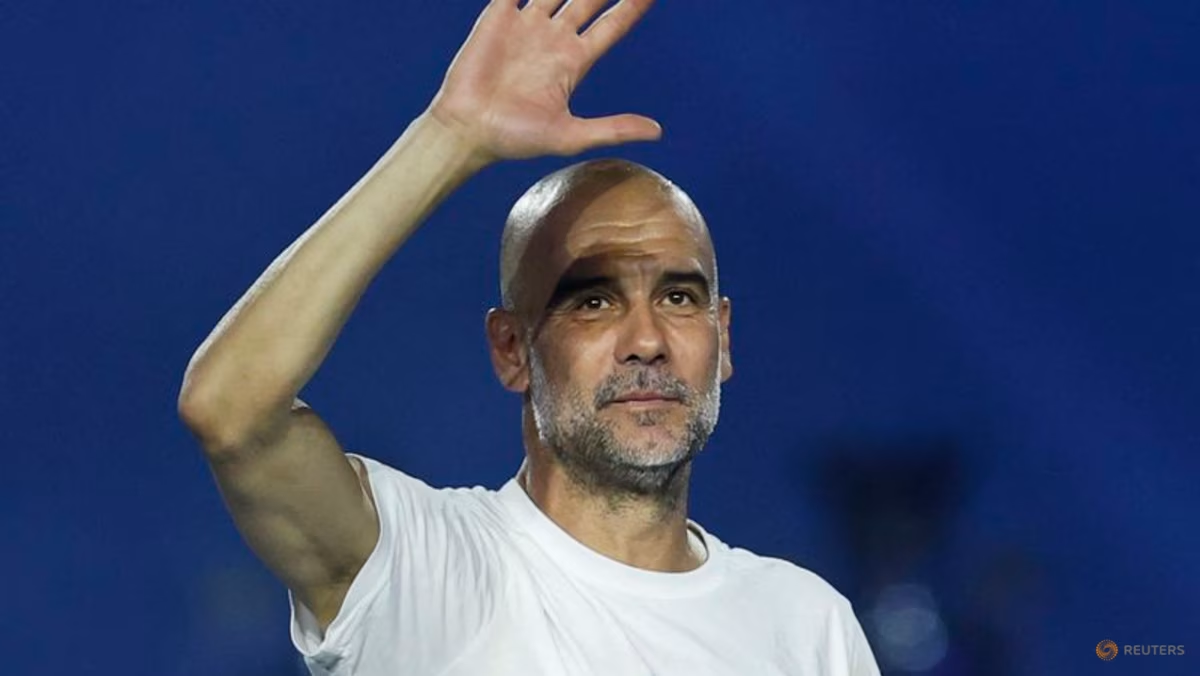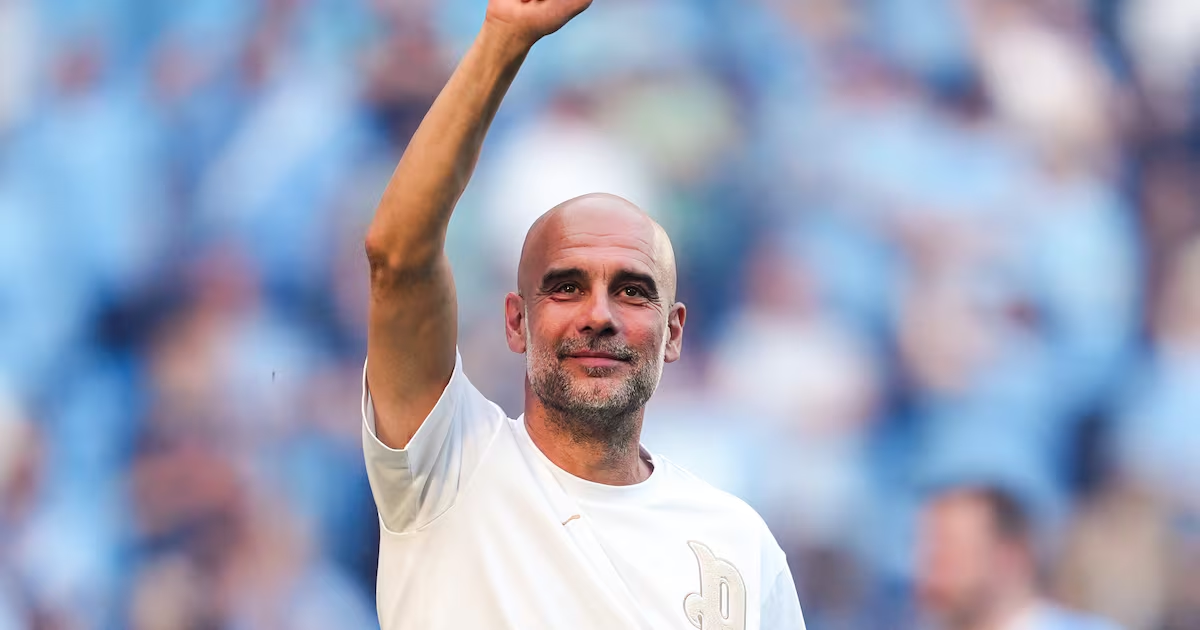
Manchester City’s video announcing the departure of Pep Guardiola featured a cold open in which Guardiola, ostensibly before the real recording begins, says in a voice ragged with emotion, “It will be tough, guys,” and nervously taps his finger on a table. The suggestion is that Pep is about to be vulnerable, to speak to us directly from the heart. But within a few seconds he has launched into a tourist-board pabulum about Manchester. “This is a city that’s built from work. From graft. You see it in the colour of the bricks. From people who clock in early, and stay late. The factories. The Pankhurst. The unions. The music. Simply, the Industrial Revolution, and how this changed the world. And I think I grew to understand that, and my teams did too.” This doesn’t sound like Pep. This sounds like Manc-GPT. Why even bother with this? In another recent goodbye interview, he claimed that his biggest regret of his time at Manchester City was not giving Joe Hart – now a popular pundit – a chance to show he could adapt to the new footballing style. Really?It recalled the time when Guardiola, oddly weeping amid City’s 2021 title celebrations, said of Sergio Agüero: “We cannot replace him. He is so nice.” It was Pep who had decided not to renew Agüero’s contract after a season in which he had started eight games and scored six goals. If Pep has sometimes struck false notes in these public interactions, the same cannot be said about his dealings with his players. He is often regarded as a tactical genius, as though his talent was some kind of spatial-conceptual superpower – and to some extent it is – but his teams also reflected his tremendous force of personality. You will not get players to perform with the kind of passion his players have so often showed unless you can show it to them first. Guardiola has that streak of madness common to the very best managers. In his case it takes the form of an absolute belief and conviction in the rightness of his way of doing things that cannot fail to impress those around him. Is he the greatest of all time? Jamie Carragher argued as much in a column for the Telegraph headlined “Guardiola eclipses Ferguson as the greatest manager of all time”. But the last line of the piece says: “Guardiola leaves City as the greatest football coach there has ever been.” A different claim, and a smaller one. [ Pep Guardiola’s milestones at Manchester City: from selling Joe Hart to conquering EuropeOpens in new window ]As a pure visionary of football, Guardiola can probably only be compared with Johan Cruyff. Alex Ferguson certainly never invented a style of play that was copied by the rest of the world. In fact, he often left the actual coaching to other people. But as a manager, a builder and leader of clubs? Compared to Ferguson, Guardiola has won his titles on easy mode. Pep Guardiola during his farewell ceremony following the match between Manchester City and Aston Villa at the Etihad Stadium on Sunday. Photograph: Dan Mullan/Getty Images The criticism he’s heard so often is that he’s only ever won with the biggest clubs and the best players; could he achieve outstanding results at a small club? On one level this line of criticism is nonsensical. It’s natural that the best coach gets the best jobs. Not many coaches turn down the chance to win with big teams on the basis that winning with little ones is more of a challenge. The unusual thing about Guardiola is that he started coaching at the very top and stayed there his whole career. At the age when Guardiola was first handed the keys to Barcelona, Alex Ferguson was still managing a pub in Glasgow. It’s a missing element in Pep’s story – the hero’s rise. There isn’t anything there as thrilling as Ferguson leading Aberdeen to victory over Real Madrid in a European final. Guardiola managed Barcelona and won titles, but Barcelona won titles before he came and kept winning them after he left. Barcelona always win titles. Bayern: same story. Roberto Mancini and Manuel Pellegrini had already won the league with City by the time Guardiola arrived.Another missing element is the struggle against limits. Ferguson was managing a powerful club at United, but there were always constraints. Throughout his last decade in the job, first Chelsea and then also City had more financial firepower. He famously wanted to sign Marcelo Salas but couldn’t match the wage demands. A City fan holds a sign thanking Pep Guardiola at the Etihad Stadium in Manchester on Sunday. Photograph: Martin Rickett/PA Wire Contrast that with Pep. Has there ever been a player he really wanted that he couldn’t get? Why were none of the other clubs in Europe smart enough to sign Erling Haaland for a bargain £51 million? Why was nobody else clever enough? We all know why. In his last prematch press conference, Guardiola was asked, in relation to the still-unresolved Premier League charges against City: “What made you feel so passionate about defending the club?” [ Manchester City face their biggest fixture yet – fighting the Premier League’s financial rulesOpens in new window ]“Because I trust them,” Guardiola replied. “I trust them. I trust them because I spoke with them, and I trust how they behave and how they did. What happened happened, and there will be the resolution. Nobody of the staff, back-room staff, many of the players and manager was here. It was a long, long time ago. I trust them.”Pep looked into the eyes of the Manchester City executives and decided to trust them; that’s his story and he’s sticking to it. The decision to trust was a happy one, for it allowed him to stay in control of one of the most powerful clubs, competing every year for the biggest titles while earning one of the highest salaries in football. The suggestion that nobody currently at City was there when the alleged breaches occurred is not strictly true, as the period under investigation includes Guardiola’s first two seasons, and City’s alleged failure to co-operate with the investigation continued for several seasons after that. Clearly the team that established him in England, the 2018 Centurions, this team was built by City in the years under investigation. As José Mourinho remarked in his famous “football heritage” press conference back in 2018: “Do you know what is also heritage? Otamendi. Kevin De Bruyne. Fernandinho. Silva. Sterling. Agüero. They are investments from the past. Not from the last two years, from the past.The implication of Guardiola’s stance is that if the long-awaited ruling does find against City, then it’s nothing to do with him – it would just mean he’s been lied to. The only thing he’d be guilty of is being too innocent. And of course, Guardiola himself is not accused of any wrongdoing. Still, the ruling will be relevant to how his time at City will be remembered. No previous manager had ever won four league titles in a row, but maybe no previous manager had the deck so stacked in their favour.
Ken Early: Compared with Alex Ferguson, Pep Guardiola had it easy
The unusual thing about Guardiola is that he started coaching at the very top and stayed there his whole career
1,201 words~5 min read