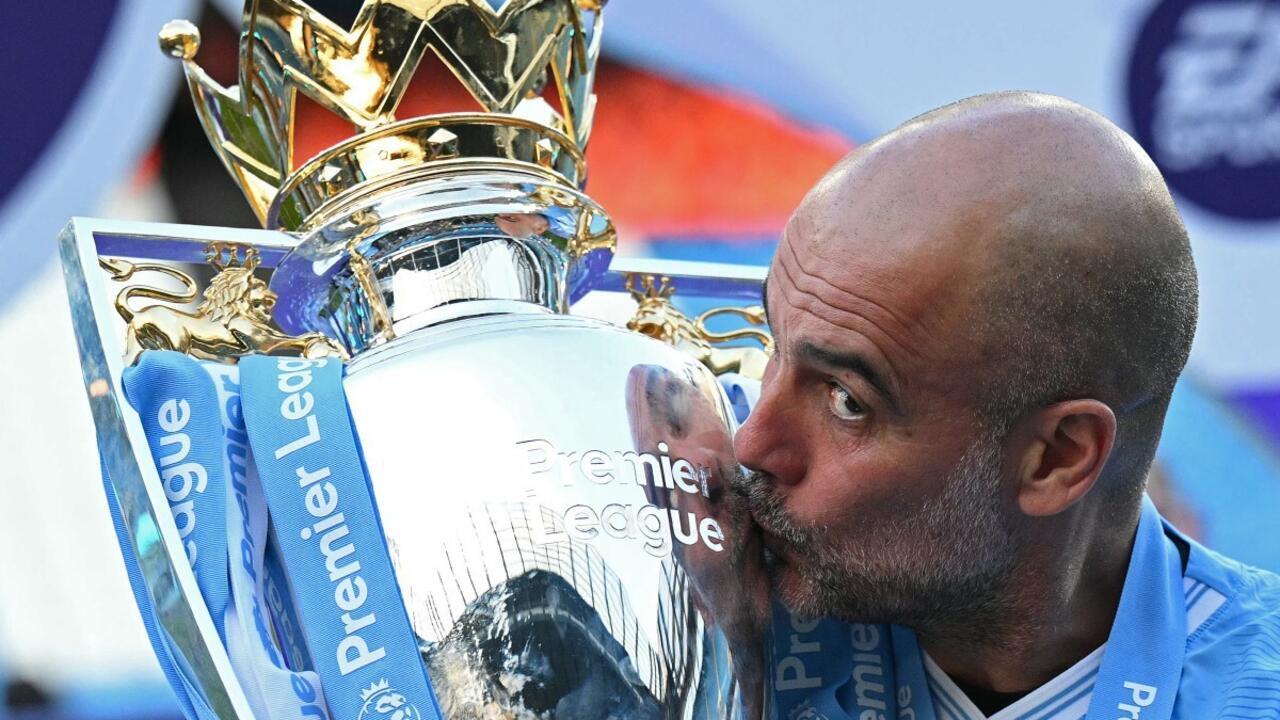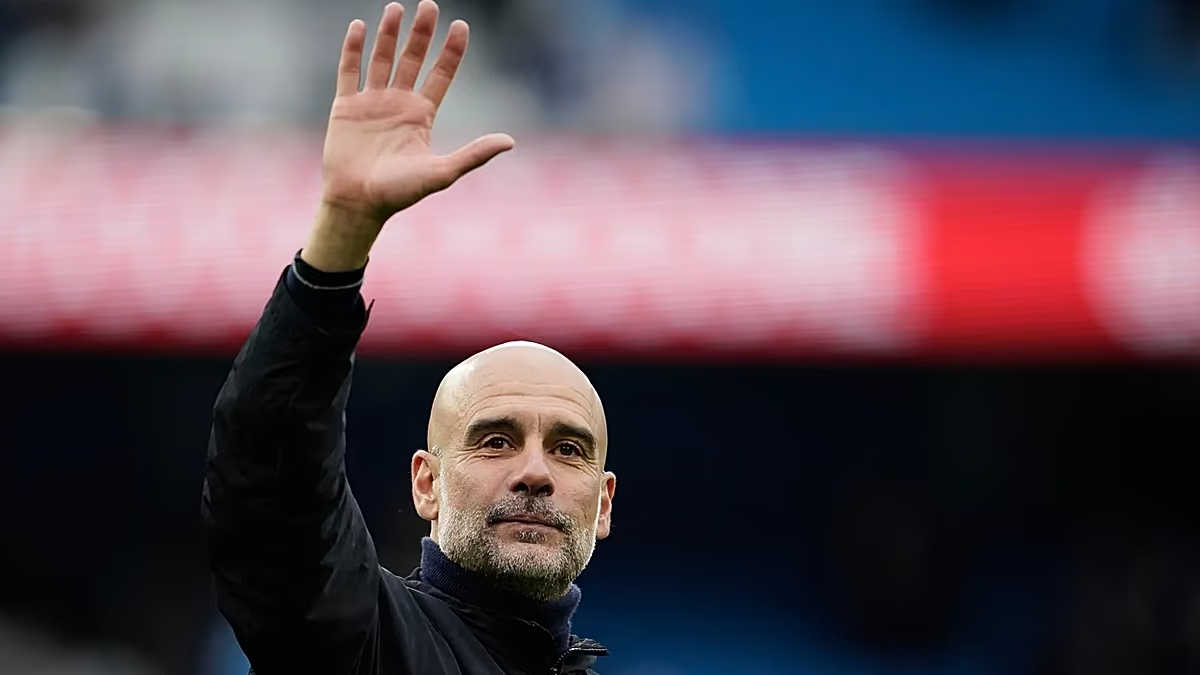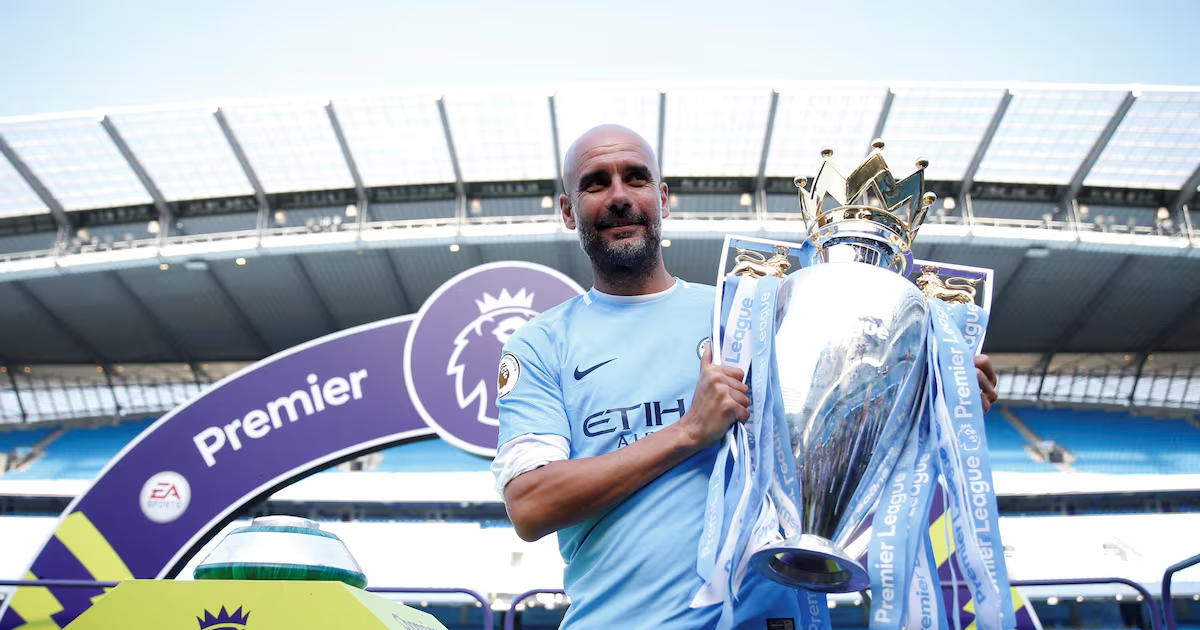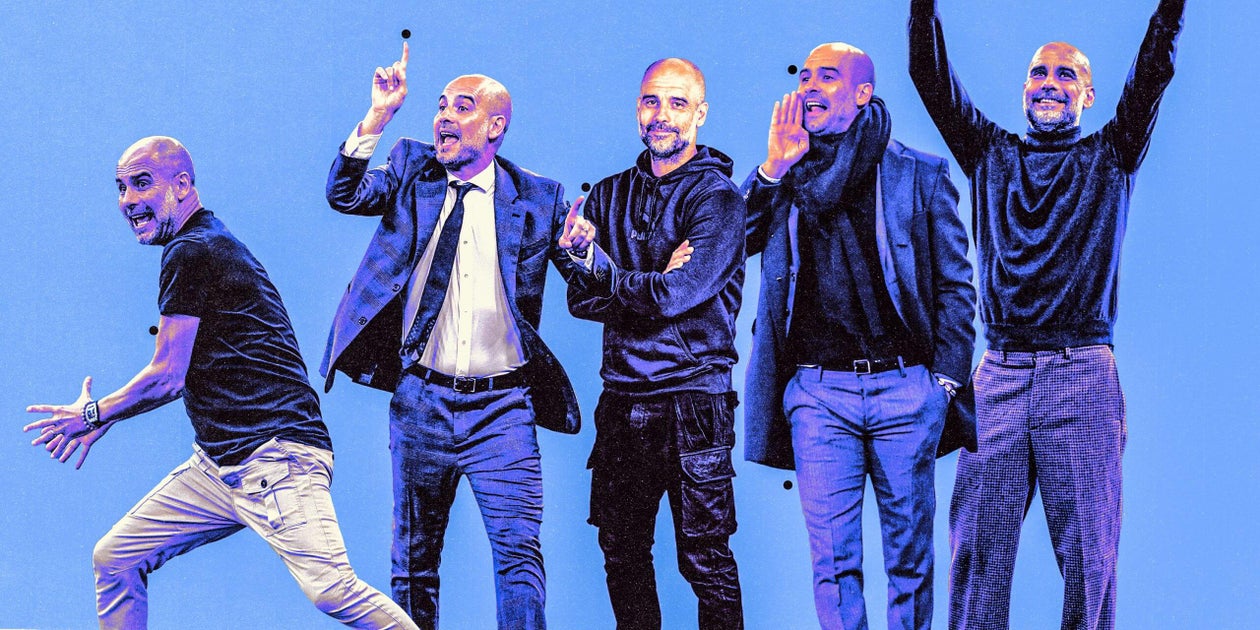
Jack Grealish had rolled on the floor in agony. It was a training session on the eve of Manchester City’s FA Cup final against rivals Manchester United in May 2023 and Pep Guardiola’s side were closing in on a historic treble.Grealish had injured his hand — he wore a bandage on his fingers during the final itself — and the manager spotted an opportunity to rally his troops. According to one onlooker, he challenged his players over their readiness to fight before dropping to the floor to make his point and rolling around, grabbing his hand and screaming, feigning the injury that had befallen Grealish. Meanwhile, Coldplay watched on from the gallery.This was just another day at City during Guardiola’s remarkable 10-year reign.Guardiola came to love Manchester City, and the city of Manchester. His achievements at the club, the moments he experienced and the support he received mean that it was a wrench for him to decide to leave.During his decade in charge, he has made the extraordinary appear routine. Four Premier Leagues in a row, four Carabao Cups in a row, a domestic treble — none of that had been done before. Six Premier League titles in seven years, in an era when the norm is that champions immediately lose their hunger and drop down the table the year after.One source close to a key player of the Guardiola era — speaking on the condition of anonymity to protect relationships, like some others in this article — says the manager had intended, a couple of years ago, to stay at City until he had won 10 Premier League titles, partly due to his love of U.S. sports and milestones, and partly because it had seemed like a reasonable aim, until last season’s crash.He will be remembered as a true genius, a wild, intense, football-obsessive. Many people he worked with loved him; others, not so much. He is a complex man who can be high one moment and low the next, somebody who motivated his players with moments of inspiration but frustrated others by leaving them out of his teams when they closed in on trophies.According to his friend, the Oasis guitarist and songwriter Noel Gallagher, Guardiola has been looking back on his time at City as the best 10 years of his life.“On Saturday after the match, he was quite reflective,” Gallagher tells The Athletic of their conversation after the FA Cup final on May 16. “For the first time, I thought, ‘I think he’s leaving’, because he was going on about this being the best decade of his life.“He went from 45 to 55, which is a big, significant time of your life. I’m in my late fifties now, so turning 50, I know what that is like. To spend that time at the top of your game in a foreign country, although he calls it home, and he’s been going through personal stuff in his family life, so it’s a big change for him. But he was in a very reflective mood. For once, he didn’t talk about the future and I thought maybe that’s a clue.”Pep Guardiola and Rayan Cherki embrace on the pitch after this season’s FA Cup final (Michael Regan – The FA via Getty Images)He has lived that decade at a frantic pace. One source describes Guardiola as a “Hollywood actor” when he stands up in front of his players to deliver their instructions, although he regularly changes his mind.“There is one story that perfectly sums up his obsession,” Ilkay Gundogan, captain of City’s treble-winning team, tells The Athletic, speaking about another incident. “One morning, Pep came into the video room with incredible energy. He had this ‘new idea’ and spent 45 minutes passionately explaining a complicated tactical change he wanted us to try on the pitch.“We were all listening intensely, trying to process it and we went out to train, but after about 45 minutes of trying to make it work, he suddenly stopped everything. He looked at his screen, looked at us, and just said: ‘Forget everything I just told you. All of it. It was nonsense. It doesn’t make sense.’“We just stood there, stunned! We went back to playing a normal rondo and training as usual. But that was Pep. He is so honest with himself that if he realises an idea isn’t perfect, he kills it immediately. Of course, the next morning, he arrived with a new plan that actually worked perfectly. It showed me that even the best in the world is constantly questioning himself.”Gundogan was Guardiola’s first signing when he arrived at City, with the club putting pieces in place long before he arrived. He was consulted on Kevin De Bruyne and Raheem Sterling when they signed in 2015, while he was still Bayern Munich manager, and he called Aymeric Laporte to try to convince him to sign in 2016, telling him about the planned arrival of John Stones.Gundogan, who lived next to Guardiola in City Suites in the part of Salford that is effectively Manchester city centre, has come to regard his former manager as a “mentor and a friend” after eight seasons together, and is well placed to describe how the 55-year-old changed during his time in England.“I think he became more ‘human’ and a bit more relaxed with the players,” the German says. “In the early years, he was 24/7 high intensity, every second was about perfection. Over time, especially after we won more titles, he started to trust the group more. He realised that sometimes the players need a bit of freedom or a day off more than a tactical meeting. His communication became more about the emotional state of the team rather than just moving pieces on a board.”Guardiola can be a hard man to read, even for those who have worked with him most closely.“Our relationship was always nice,” Fernandinho, who won four Premier League titles at City under Guardiola and captained the team for two, tells The Athletic. “I always came to him and gave him a hug and a kiss and asked him some things and then tried to talk to him respectfully. But honestly, doing the job that he does, sometimes he was really stressed and sometimes relaxed, depending on the situations of many things inside the club, not just the results, many things inside the club. Obviously, we weren’t aware of some things that were going on but you can see the body language.”Fernandinho was 31 when Guardiola joined the club — he thinks he would have been a far better player had he worked with the Catalan earlier — and he explains how Guardiola’s early training sessions set the tone for the next decade.“It was a simple 11-v-11 and normally in training the first action was like, ‘OK, we start the game relaxing and then after we’re gonna see what happens’,” he says. “The first touch of the ball, I don’t remember who did it, he whistled and stopped the session and said, ‘Listen, if you’re thinking you’re gonna play that way, it’s impossible. From the first minute to the last minute, we go full gas’.“The message was really clear because most of the players were used to going through the game or the session and in some actions we go full gas. But with him, since the first session, he says from the first whistle you have to go full gas.“This was the first impression we had with him and after that, every training session was in that way.”The importance of having the right attitude was something he also hammered home in the very first player meetings.“As we walked in, the first video we did, he showed the replay of Kevin De Bruyne,” Bacary Sagna, who cherishes his one season with Guardiola at City, tells The Athletic. City had qualified for the Champions League on the final day of the 2015-16 season under Manuel Pellegrini, a 1-1 draw at Swansea seeing them squeeze into the top four.“What happened is we were disappointed about that because if you are a competitor, you cannot be pleased about coming third or fourth in the league. We reached the semi-final of the Champions League, so I think you cannot be pleased with that, so even though we reached the target of qualifying, the disappointment was bigger.“Pep paused on Kevin De Bruyne celebrating. As soon as the referee blew the whistle, he paused, and only Kevin raised his hands, both of his hands. And he was like, ‘Guys, I have a question. How come only Kevin was celebrating, you guys just qualified for the Champions League, and none of you are celebrating? None of you are happy? Only Kevin is celebrating?’“He said to us, ‘I want guys like him, happy to have achieved something. And this is not normal, because you did achieve something. Of course it is not what you expected but you qualified for the Champions League, which is massive for this club.’ He said this is where I want to take you guys, to celebrate the little details. And I was like, I should try to be more positive, enjoy football and enjoy moments like this.”Guardiola worked hard in those first months to establish a close bond between the players, implementing strict rules designed to ensure certain behaviours became second-nature. He cut off the wi-fi so players spoke to each other rather than look at their phones, and mandated that they eat breakfast and lunch at the training ground.He also ensured foreign players spoke English, with non-native speakers having to sit exams before his first Christmas in Manchester, and he was strict on players’ weight.“We had to respect our weight,” Sagna says. “If we were 1.5kg over, he would not like it. You were out of the squad, you were running on your own until you got back to the right weight.”Sagna laughs as he thinks back: “Maybe then he might include you again in the training session — but he will not forget.”Guardiola also set about teaching the fundamentals of his philosophy, the seemingly small changes that lead players to say he transformed their way of playing the game.“Something that shocked me, the first session I did, we were doing a rondo, five against two,” Sagna says. “And then at some point, I’m outside, two players were pressing the ball and then suddenly, the ball is coming to me, and I make a backheel, like a flick behind my leg to the player on my left side.“And they say, ‘Baca, middle’, but I didn’t lose the ball. I was like, what? He said, ‘Baca, go to the middle’. I was confused. He said, ‘No back flick — if you open your body before, and you see the player on the left, you would not need to do the back flick’. And I was like, ‘Oh my god, yes, he’s right!’.” He laughs again. “It’s something very little, but it changes the whole situation.”Sagna recently stepped down from his first coaching job, in charge of Banaat, a women’s team in Dubai, having led them to the title.“When I walked in, they were complaining a bit, saying they didn’t want to do this or that, and when they didn’t want to do something, I was telling them, ‘Girls, this is not coming from me, you are learning indirectly from Pep Guardiola’,” he laughs. “And the minute I said that, I swear to God, they are not complaining. ‘The way I teach you is copy-paste from Pep Guardiola’.”One standout example of Guardiola trying to impart his methods during the first season centred around Sergio Aguero, the club’s beloved star striker who had already secured legend status thanks to his last-gasp winner against Queens Park Rangers in 2012 that delivered their first Premier League title.He and Guardiola clashed several times during their first two seasons together, sources around the team at the time tell The Athletic, with Aguero believing Guardiola wanted to sell him because he did not train hard or press enthusiastically.Aguero said recently that he was close to a move to Chelsea, only for the club to block it. He even had a meeting with City chairman Khaldoon Al Mubarak in the summer of 2017, a year into Guardiola’s reign, where he was assured he would not have any issues going forwards, although manager and striker continued to clash as Aguero was left out of big matches.The relationship between Pep Guardiola and Sergio Aguero was not always an easy one (Laurence Griffiths/Getty Images)Fernandinho sheds some light on how the two eventually met in the middle.“It was easy because Pep’s masterclass was finding solutions,” he says. “If you have a player like Aguero, you just can’t throw him away, and he solved it because he built the team for Aguero to make two runs to press and the rest of us used to do the hard part of the work.“For example, the first season during the goal kick, the players could not receive the ball inside the box yet, so they had to receive the balls outside the boxes. And then, Aguero, he has two runs to do. The first one, if he goes to the defender and the defender passes the ball back to the goalkeeper, Aguero makes that run as well. So, he forces the keeper to play the ball where we were, obviously we knew we were going to press over there.“Pep prepared the team for him to run as little as possible, to press, and the rest of us, we were much younger and full of energy, we did it for him.”Guardiola himself had feared the sack during that first season. According to biographer Marti Perarnau, he went into a game at West Bromwich Albion believing failure to win would have forced the club to act. Those were clearly before the days when he realised City were fully committed to giving him everything needed to succeed, not least their fullest backing, even in difficult moments.“One person who is massively important for City is the chairman, Khaldoon,” treble-winner Aymeric Laporte tells The Athletic. “For me, he’s one of the greatest people I ever met. If I was him, maybe I would treat some players so bad, because of the result or because of failure or whatever. And this guy always shakes your hand, checks on you, ‘How are you, how are your family?’, so polite, and for an important person like him, with that power and everything, that makes a lot of difference.”“The way the club managed his situation gives him more safety and I think that’s normal,” Fernandinho adds. “He was always trying to do something new in tactical ways because he knew he could take some more risks, because the board always tried to trust him and the players trusted him, everyone in the club trusted him.“Obviously, he knew he had some pressure, but at the end of the day he was free to make some decisions when it didn’t matter which results he was going to have.”Last season, when City won just 11 of 31 games in all competitions and often looked physically incapable of playing a full 90 minutes, Guardiola felt under pressure again. It was a season that he had not come anywhere near experiencing before, and he has talked about how awful he felt heading into the final day of the season needing to beat Fulham to seal Champions League qualification.“He seemed to be really frustrated,” Gallagher says. “He would send me messages where he was almost trying to explain himself, explain what was going on. I’d never ask him anything outright about his job, I’m a fan, I’m just glad that I know the guy, but he would go out of his way to explain himself.“There’s all the 115 things and that would be draining for anybody. Personal things going on, it’s exhausting at the best of times but imagine having a whole football club moulded in your image, you are the man, you cannot be seen to be weak in any kind of way. And you’ve got the whole football community rejoicing at the fact we started to stumble a little. Imagine being the figurehead for tens of thousands of people every week. I guess it would be draining for anyone.”Training-ground sources suggest he turned his intensity in on himself in a search for answers. Support from his assistants suddenly vanished. Carlos Vicens, ostensibly a set-piece coach, stepped up and effectively became Guardiola’s No 2, alongside his other duties, but he was stretched too thin.Juanma Lillo has been incredibly close with the Catalan since his playing days and had been an important part of City’s success in a previous spell as assistant manager, and even after he had left the club, given he helped Guardiola plan the 4-0 rout of Real Madrid and the final victory over Inter during the 2023 Champions League triumph. After losing assistants Enzo Maresca and Rodolfo Borrell that summer, Guardiola essentially demanded City bring Lillo back from his managerial role in Qatar. The club made it happen, even agreeing to bring in Inigo Dominguez, Lillo’s own assistant, as part of the deal.But last season, things changed. Dominguez never managed to ingratiate himself with the players and Lillo became detached. He had never learned to speak English, which was not a problem previously as his personality and body language usually did the trick with those who did not speak Spanish, but even his usefulness to Guardiola waned.Some around the club were left with the impression that Guardiola became lonely. Guardiola had separated from his wife, and rarely had peers to spend time with. Visitors to the training ground felt he had wanted them to stick around longer, so he had somebody to talk to. It paints a rather sad image.During his reign, he was often in a bad mood, or at least paced around the training ground with his brow furrowed, lost in his own thoughts, even when results were going well, which they usually were.Gallagher says he “perked up” towards the end of the season, and he started to get his mojo back during last summer, as a new-look team bolstered by new signings and arrivals in the coaching staff took part in the Club World Cup in the United States. He was enthusiastic about what he already felt would be his final season in Manchester but, even so, he had dinner with friends nearer the start of the season and appeared utterly exhausted.Those close to him say he invests so much energy into football during the season that it takes him weeks during the summer to reenergise. The reason he stayed so long in Manchester, despite many of his closest staff having felt the job was done long ago, is his relentless drive to go again, always motivated by the next challenge, whether the team are high or low.The energy returned in a big way this season, to the extent there were credible rumours as recently as in the past two weeks that Guardiola wanted to stay after all. That would have been a major shock behind the scenes, because while the public were generally in the dark, with Guardiola insisting he had one year left on his contract and suggesting he would stay, City had expected for months that he was leaving, and had made preparations far beyond tying up the services of Maresca as his replacement.Guardiola may have honed his approach to player interactions over the years but he is still the excitable, sometimes strange, figure he always has been.Bernardo Silva, possibly Guardiola’s favourite ever player according to some close to him, is still known as ‘Bernardiki’ around the dressing room, even among new players, because that is what Guardiola called him two years ago, during one of his regularly strange training-session exclamations. That is one of the more family-friendly ones.
The incredible inside story of Pep Guardiola’s decade at Manchester City
Noel Gallagher and Manchester City players who have experienced life under Pep Guardiola tell the stories of his ten years at the club
TL;DRAI
Guardiola leaves Manchester City after 10 years: 6 Premier Leagues in 7 seasons, 4 consecutive, and a historic domestic treble. His shift from 24/7 tactical obsessive to trust-based leader is a case study for tech executives scaling high-performance teams.
9,339 words~42 min read