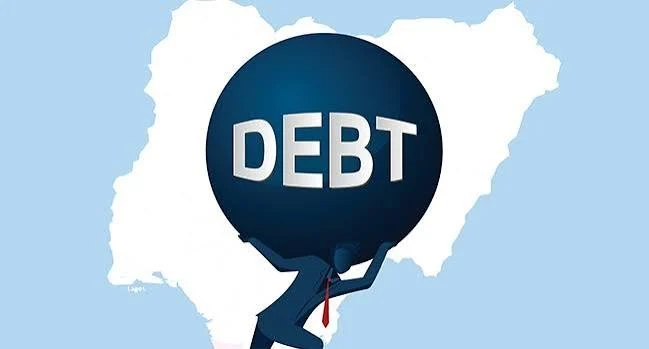
…taking a loan in the understanding that one may kick the repayment can down the road is not just irresponsible. It is one major drawback of our economy. Little wonder, then, that the major credit rating agencies continue to rate Nigeria below “investment grade” as an investment destination.
There is nothing intrinsically wrong with borrowing money. This is without prejudice to whether the would-be debtor or mortgagor is an individual, a corporation, or a government. What matters is that through debt, the borrowing party contracts obligations that are not at the point of sealing the negotiations easily met by their salary, equity/revenues, or tax take. In the run-in to appending the final signatures to the debt instrument, two failings are to be avoided. The first is forgetting that one will have to pay back the loans thus contracted. And the second is not first establishing how the loans will be paid. At the retail and corporation levels, lenders tend to hedge against the possibility of default by conducting a detailed assessment of the borrower’s ability to payback, and then demand a collateral pledge as additional insurance.
Sovereign borrowing is, however, a wee bit more involved. Collaterals won’t work. Just imagine any of Nigeria’s sovereign lenders trying to attach, say the NNPC or any of its assets to the disbursement of a loan to the country. Were Nigeria to default, what would it do with the collateral, and how? Nothing, really. To compensate for this, lenders assess a country’s borrowing capacity by looking at the strength of its economy (its GDP size and GDP per capita, economic growth rate, inflation stability, productivity trends, etc.), how solid its treasury is (its revenue versus spending mix, whether it runs fiscal deficits or surpluses, what the size is of its public debt, what its debt-to-GDP ratio is, etc.), and how healthy its external position is (the size of its foreign exchange reserves, the position of its current account balance, the size of its export earnings, its dependence on foreign borrowing, etc.).