If you've spent any time building with LLMs, you've probably hit the wall: a single prompt only gets you so far. Stuff too much into one prompt and the model loses the plot. Try to do too many things at once and you get inconsistent output.
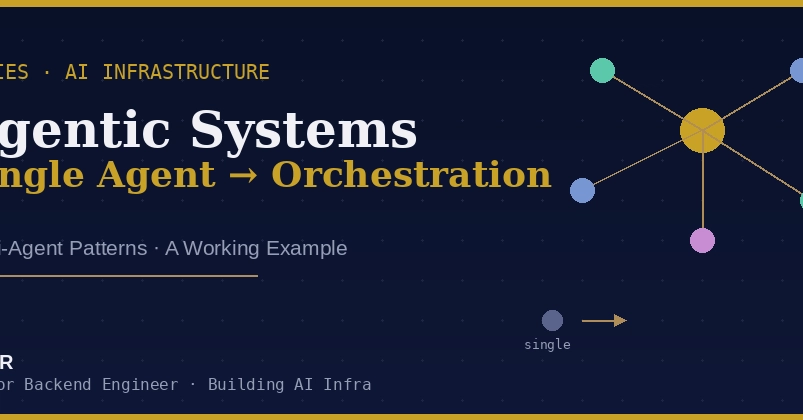
The answer most teams converge on is multi-agent architectures — multiple specialized agents, each with a focused role, coordinated by an orchestrator. This post covers when and why to reach for multi-agent in .NET, what patterns work, and how to build them without losing your mind.
Why multi-agent?
Single-agent systems work great for narrow tasks: summarize this, translate that, classify the other. But when the task has multiple steps with different cognitive loads, single-agent breaks down.
Consider: "Research recent advances in retrieval-augmented generation, write a 500-word summary, and check it for factual accuracy." That's three jobs: