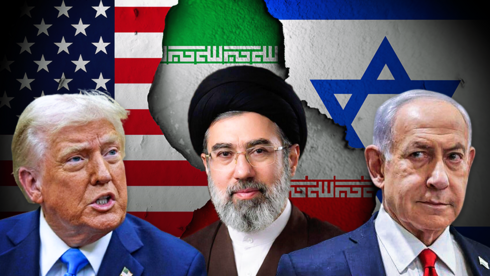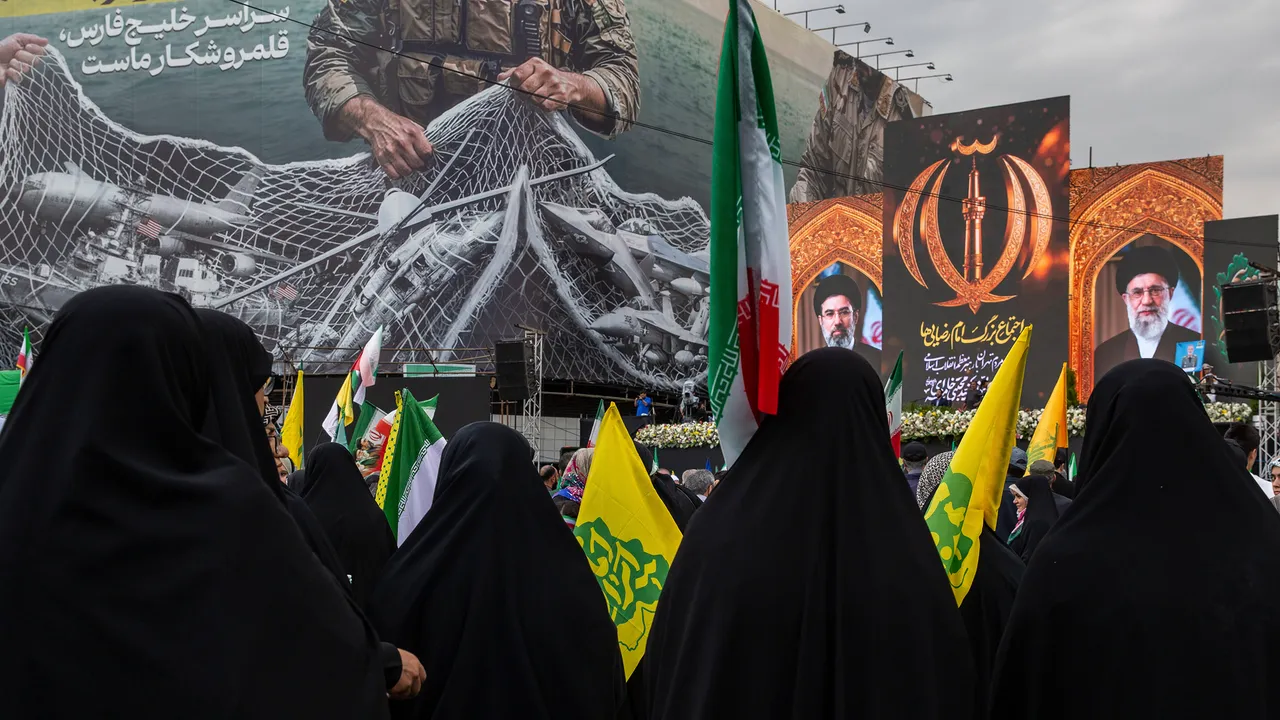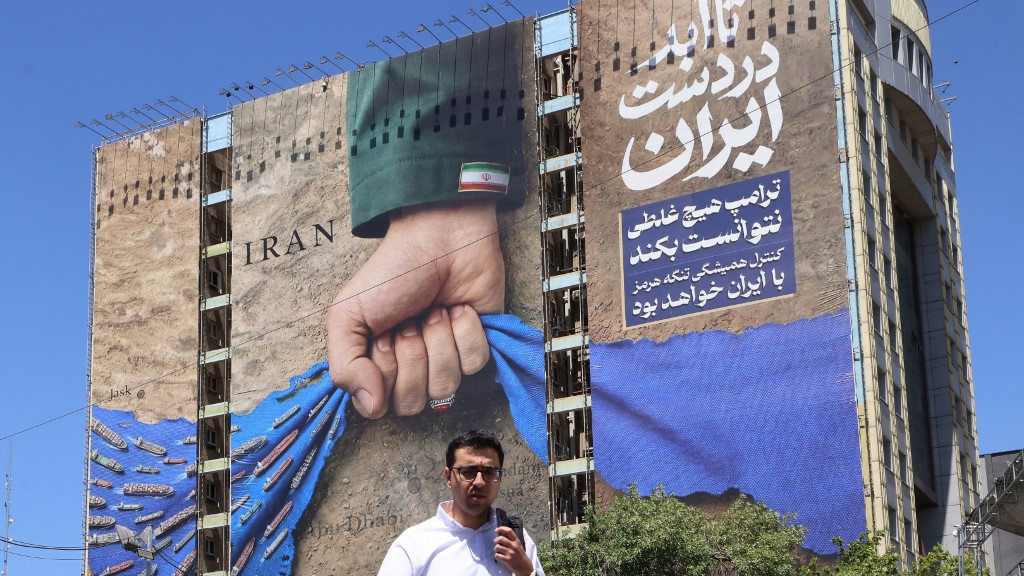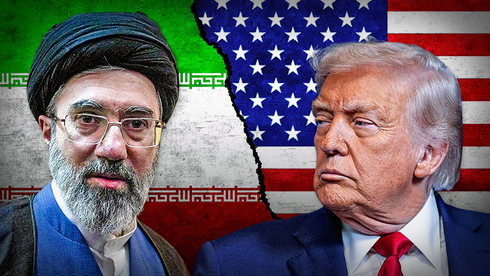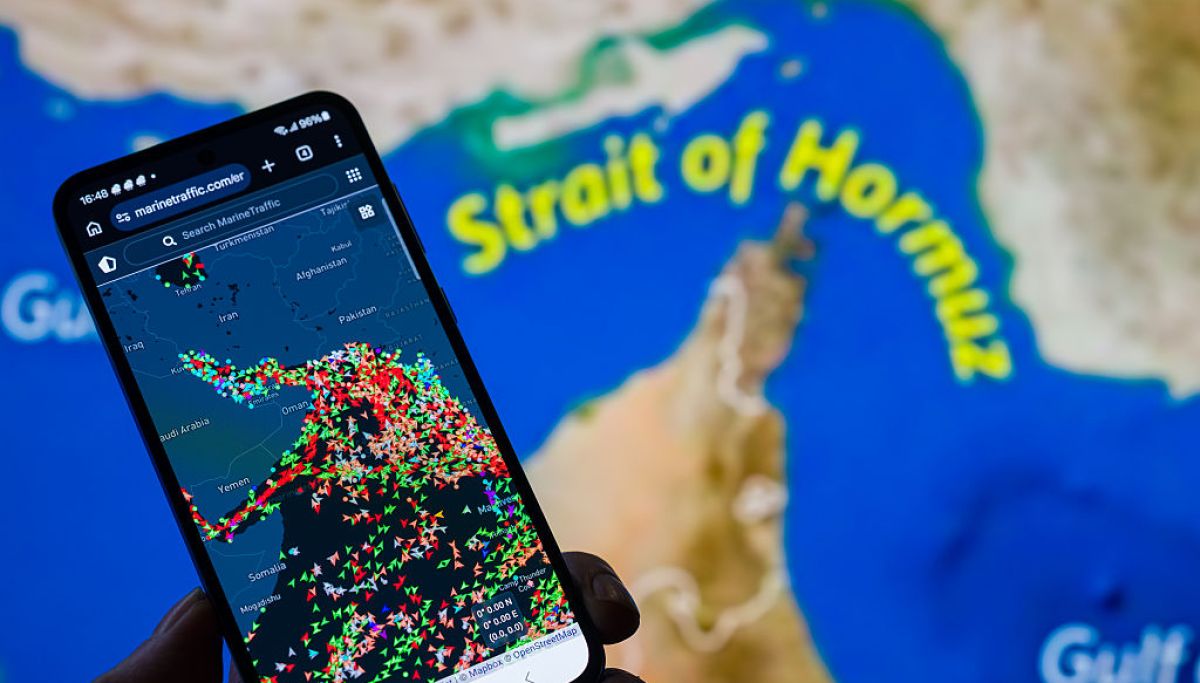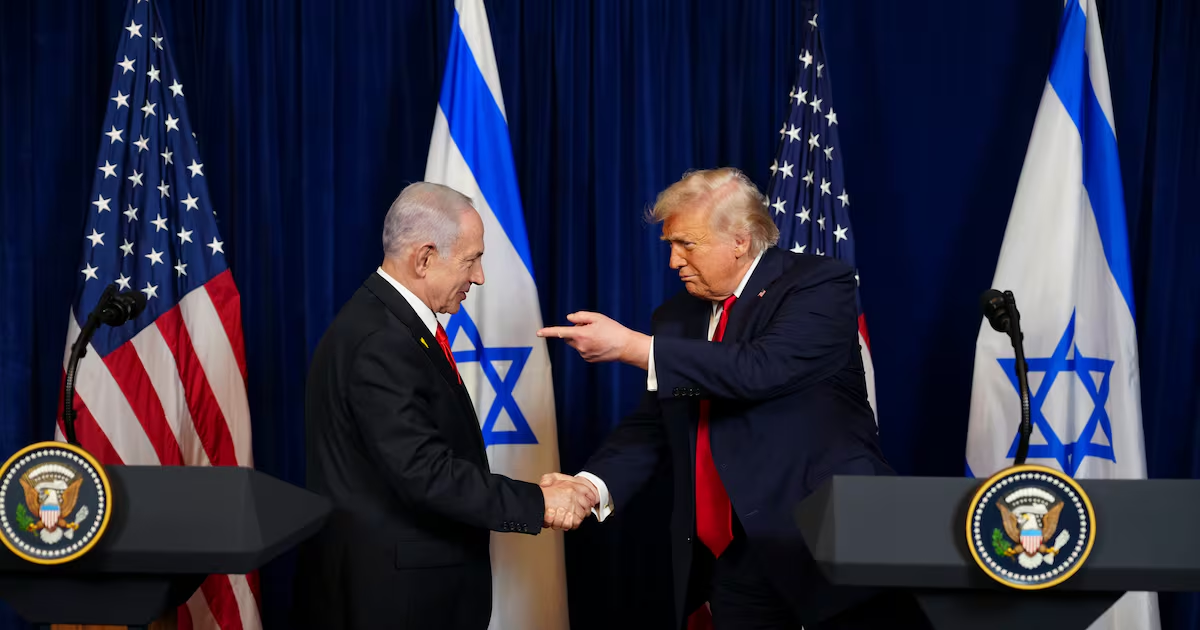
There, in plain sight on the weekend, was the undignified haste with which Donald Trump declared a deal had been done with Iran to end their conflict: a deal that appears to offer US concessions up front for Iranian ones at some point in the future.(It took less than 24 hours for the US president to move from declaring a deal had been "largely negotiated" to saying the US would take its time on negotiating a deal.)It's a long way from his demands two months ago for Iran's "unconditional surrender".This is an American president who just wants — in fact, needs — this whole thing to stop.Amid the confusion of conflicting accounts about what is in, or isn't in "the deal", that is all you really need to know about how events are unfolding.Trump confirmed by his own actions just how little bargaining power he has, and how much power now rests with Iran.Trump's announcement must also make clear that — despite all his waxing and waning — the US will not be relaunching military strikes on Iran.Not only has the cost to the US clearly been found to be too high, and equally unlikely to achieve any breakthrough, but the voices in Donald Trump's ear now are those of the Gulf states, not Israel.The Gulf states can't afford further military conflict — which mostly targets them — and they need the Strait of Hormuz opened.This is part of the fundamental shift in broader geopolitics that has been unleashed by this war.It's not just that the original aims of the US-Israeli attack on Iran have not been met.Israel and the United States have not achieved regime change or dealt with the perceived Iranian nuclear threat.They have instead changed the dynamics of the region in a way that will work in Iran's favour, dramatically reduce the power and security of Israel and leave the United States humiliated.Prior to the Iran war, Benjamin Netanyahu looked to have secured Israeli strategic dominance in the region. (Reuters: Ilia Yefimovich)Analysts over the weekend have been using terms like "strategic fiasco", "catastrophe" and "a true American debacle" to describe where things are up to in late May 2026.Israel has rapidly moved from looking like it was becoming the new hegemon in the region to looking like it is under greater threat than it has been for years.Iran — enjoying the lifting of financial sanctions and unfrozen assets under the terms of this deal — would be in a position to rebuild the power of proxies in Lebanon, Gaza and Iraq.There has been no mention of Iran having to abandon support for its proxies in what has been published so far. Nor of any constraints on its ballistic missile program.Both these developments would be seen as existential threats to Israel.Brookings Institution senior fellow Robert Kagan wrote in The Atlantic a few days ago that the Iran war "may end up as the single most devastating blow to Israel's security in its brief history"."On the present trajectory, Iran will emerge from the conflict many times stronger and more influential than it was before the war," he wrote."It will exercise leverage with dozens of the richest nations in the world, all of which will have an acute interest in keeping Iran happy."They will be unlikely to take Israel's side in any conflict that it has with Tehran or with its proxies in Lebanon and Gaza, because Iran will have the means to punish them if they do."Israel will emerge more isolated than it has been at any time in its history — and not least from its only reliable protector, the United States."When Trump turns his back on Israel, as he must do to implement this policy, MAGA will gladly follow. The bipartisan anti-Israel consensus in the United States will grow and harden."Donald Trump's only option at present is to minimise the appearance of the catastrophic strategic loss he and Israel have suffered as a result of this war and maximise the appearance that things have returned to normal.This will be difficult. The regime has not been toppled.All the indications are that its improved financial prospects and strategic power over the Strait of Hormuz require most of the world to pay it more obeisance than it has in the past.The US is claiming the deal will return the Strait of Hormuz to "normal". It won't.Iran has emerged from the conflict with a strengthened negotiating position. (Reuters: Majid Asgaripour/WANA)The Iranians are continuing to declare that it is now under their control. And both military interventions and the negotiations to date have shown the Americans have no cards to play on this.What the path forward will look like now is an increasingly familiar pattern of US diplomacy that works on the illusion that the wheel is still in spin: like the ceasefire in Gaza that hasn't got past the initial agreements, and which isn't a ceasefire; like the ceasefire in Lebanon that isn't a ceasefire.Outcomes are left perpetually unresolved: something may be about to happen but generally doesn't.The most likely scenario that emerges at this point is of no clear resolution — to the Strait of Hormuz, to Iran's nuclear capabilities, or to conflict in Gaza or Lebanon — any time soon.Traffic might start to move more freely through the strait, but it will be on Iranian terms.Once again, those up-front concessions — and Iran's rejection of US statements on the strait and nuclear power — confirm that it is Iran in the driver's seat.What also becomes clear is that, instead of any outcome being primarily about the Gulf and uranium, it is now equally about Israel and Lebanon.The US has in the past been able to keep Israel at heel. But the public reactions yesterday by Israeli officials to news that a deal may be imminent only made clear how impossible such a deal would be for Netanyahu to accept.That's why Israeli government spokesmen, including Netanyahu, were insisting Lebanon wasn't part of the deal — hardly a surprise given it has continued its attacks on Hezbollah in southern Lebanon in flagrant disregard of Trump's claim to have brokered a ceasefire.Iran has made it clear Lebanon has to be part of the deal.While Netanyahu has clearly not been in the room for these negotiations, it is notable that neither have Jared Kushner, Steve Witkoff or JD Vance.The only significant player on the US side seems to have been Secretary of State Marco Rubio.The significant players that have emerged in the last couple of weeks — on whom the US seems increasingly dependent — are Pakistan, and now Qatar.Trump's consultations with gulf and regional states like the UAE, Saudi Arabia, Egypt and Türkiye come about not just because they are insisting on being heard but because the US president has increasingly used them as a rationale for backing away from continued, or renewed, military actions. They give his negotiations broader credibility.Along the way, though, he has forced countries in the region to reassess their connections with each other — across the Shia–Sunni divide — and swinging around Pakistan: itself a nuclear-armed state.Laura Tingle is the ABC's global affairs editor.
Trump's deal-making leaves Iran in the driver's seat and Israel more vulnerable
Israel goes from looking like the new regional hegemon to looking like it is under greater threat now than it has in years, while Iran now has room to rebuild its proxies.
1,187 words~5 min read