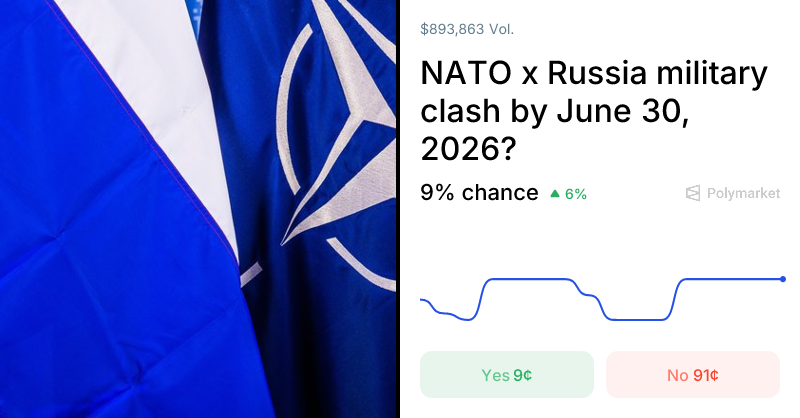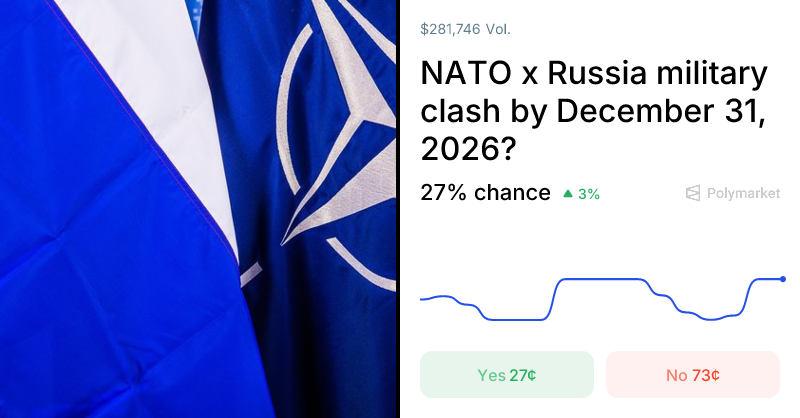
## Market Snapshot The NATO-Russia military clash market currently shows a 4% YES probability for a clash by June 30, 2026, and 22.5% YES by December 31, 2026. The Russia-Ukraine ceasefire market has not shown recent activity.
## Key Takeaways – EU’s Kallas’ condemnation of Russia’s missile strike appears to increase the perceived risk of a NATO-Russia military clash. – The missile deployment suggests further escalation, reducing the likelihood of a Russia-Ukraine ceasefire. – The US-Iran nuclear deal market remains unaffected by this European development.
## Article Body European Union High Representative Kaja Kallas has publicly condemned Russia’s deployment of an RS-26 “Oreshnik” medium-range ballistic missile against the Ukrainian city of Bila Tserkva. Kallas described the attack as a reckless gamble that escalates the risk of nuclear conflict. The strike has drawn international criticism, highlighting concerns about Moscow’s use of nuclear-capable delivery systems in conflict zones. This development adds tension to the ongoing situation between NATO and Russia, as well as between Russia and Ukraine, with potential implications for regional stability.
## Market Interpretation The news of Russia’s missile strike and the EU’s condemnation appear consistent with increased probability for scenarios involving a NATO-Russia military clash. This is reflected by a high impact classification, given the heightened tensions described by Kallas. The likelihood of a Russia-Ukraine ceasefire appears diminished, with a moderate impact classification, as military escalation continues.