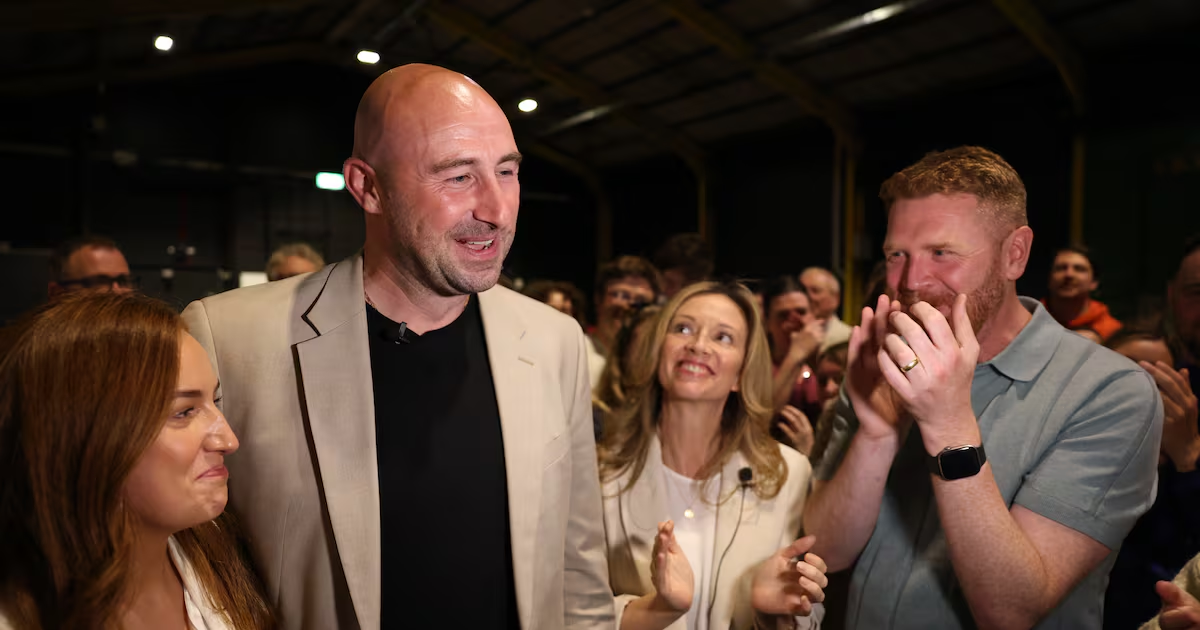
There is no prospect for now of Fianna Fáil, Fine Gael or Sinn Féin acquiring even a shadow of the dominance that was associated with a governing party until a decade ago. This is an age of Lilliputian politics: big issues are too much; reality is too unpleasant and real solutions are either too complex or require more time and determination than we want to give. So instead we focus on symptoms rather than causes. The cost of living, a main concern of voters in the two byelections in Dublin Central and Galway West, was chiefly expressed as a demand for subsidies, not the structural change that would bring lasting benefit. We don’t know what the world will look like when the next general election is held, probably in 2029. But a takeaway from the byelections is that in addition to those who came out to vote against the status quo, there are proportionately more who remained at home and who will be available to vote for what may turn out to be the most complex Dáil in Irish history. The paradox of last Friday’s byelections is that the increasing fragmentation of Irish politics masked a unity so complete it went unmentioned. From the increasing right-wing challenge to the status quo, to the Government parties representing that status quo, to the left opposition that purports to change it, the consensus was that whatever came next would involve ever higher levels of public spending. Among 31 candidates in two constituencies, no one questioned the giving powers of the national magic money tree. Many vigorously shook it for more. The byelections results are a structural and an ideological compendium of where we are now politically. There is little knowledge and less concern that public spending increases of 8.9 per cent so far this year are highly risky in an uncertain world. Fears about the long-term cost of runaway spending may have fed into unspecified angst, but not to the extent of voters demanding answers that make sense. Describing this consensus as ideological would be a stretch. The only item for debate is how much more should be spent and how soon. In that sense, the past few weeks may have been a political Indian summer. What the byelection campaigns demonstrated is a complete lack of preparedness for a move away from a status quo that sees more money but no real change as the answer to every question. Nothing much was at stake last Friday for voters, and decision-making in a general election is invariably more complex. But what is clear, regardless, is that further political fragmentation is in process. [ Dublin Central: Daniel Ennis of the Social Democrats elected after ninth countOpens in new window ]There are ever fewer people casting a vote for the system and more against it. We have arrived at European-style politics with many smaller parties, much more complex coalition-making and a far less direct connection between voter intention and eventual political outcome. Fine Gael had a good day with the performance of Seán Kyne in Galway West, but a good candidate Ray McAdam did less well in Dublin Central, which will be left with no Government TD. For Fianna Fáil, the results were unremitting awfulness. Its new candidate and councillor in the east of the Galway West constituency Cillian Keane is good for another day, however. Dublin Central was a wipeout for the party and its candidate John Stephens. Taoiseach Micheál Martin at the Galway count centre at the Lawn and Tennis Club in Salthill. Photograph: Chris Maddaloni/The Irish Times
Gerard Howlin: Byelections showed increasingly fractured politics with dangerous consensus on one issue
Among 31 candidates in two constituencies, no one questioned the giving powers of the magic money tree
982 words~4 min read