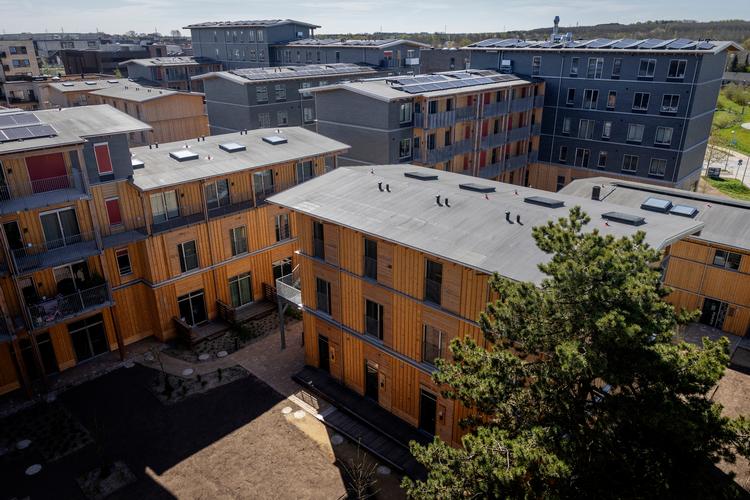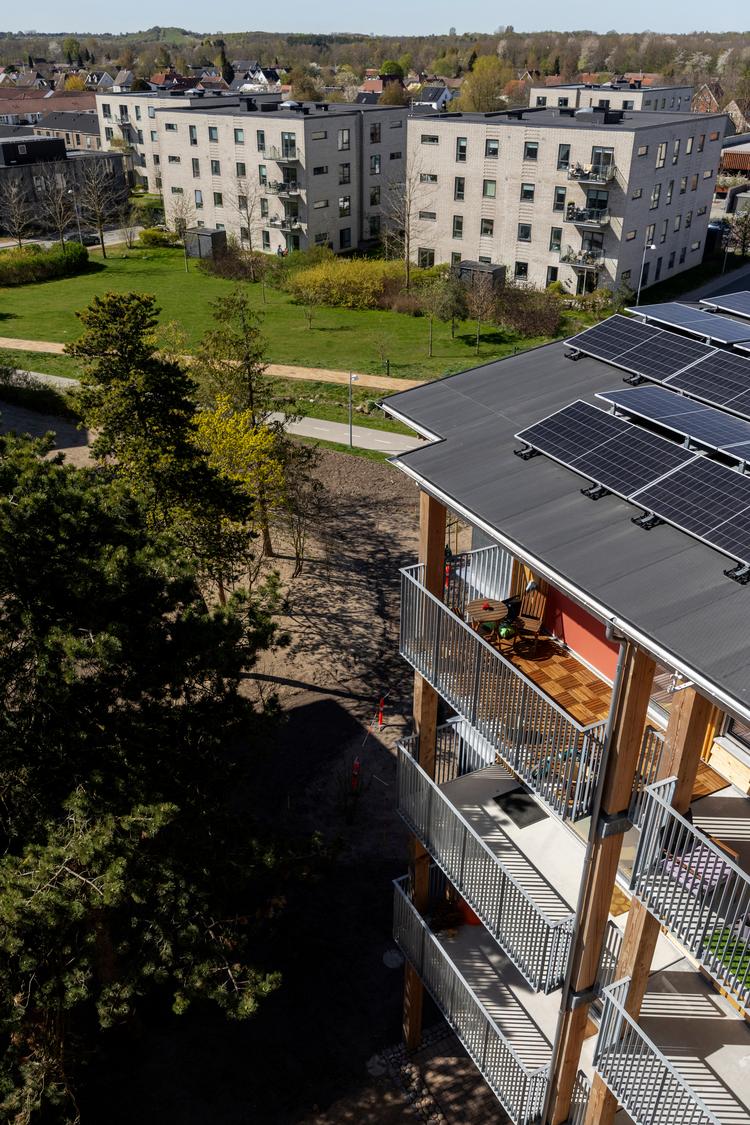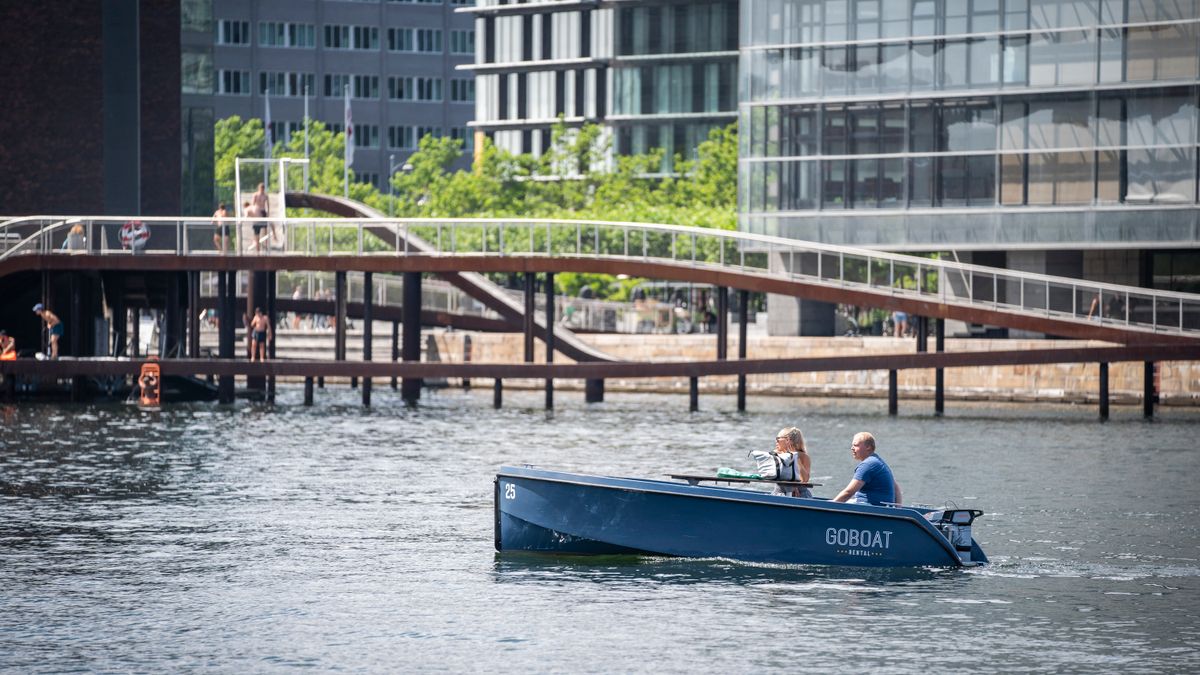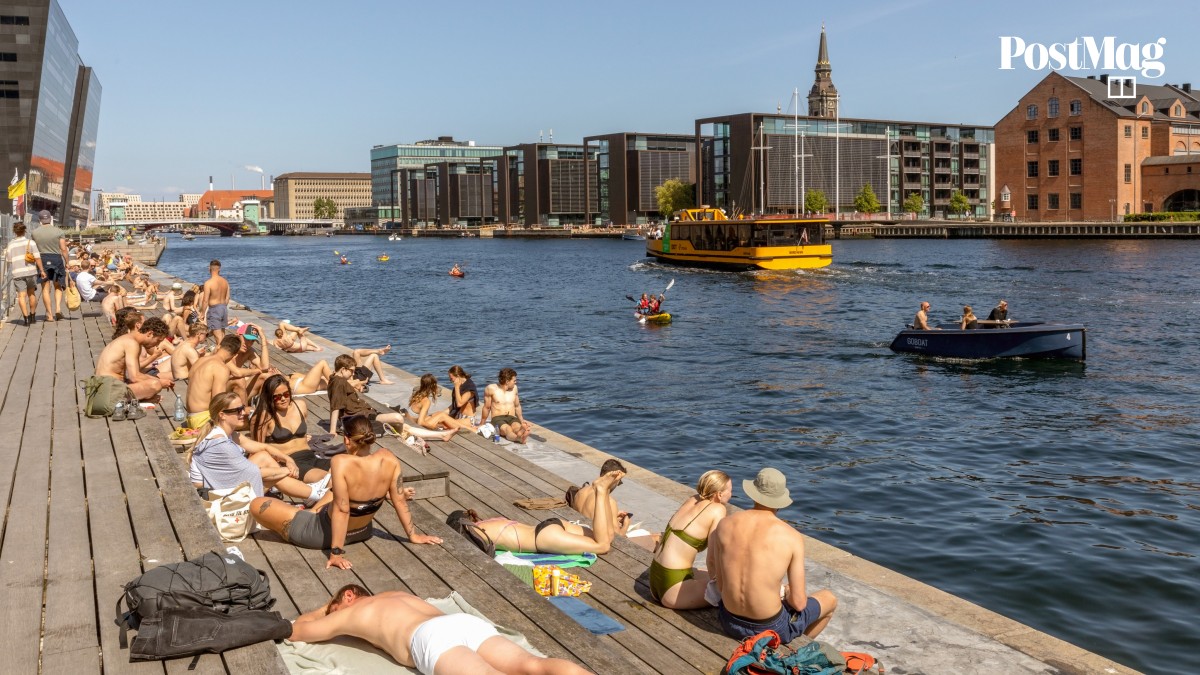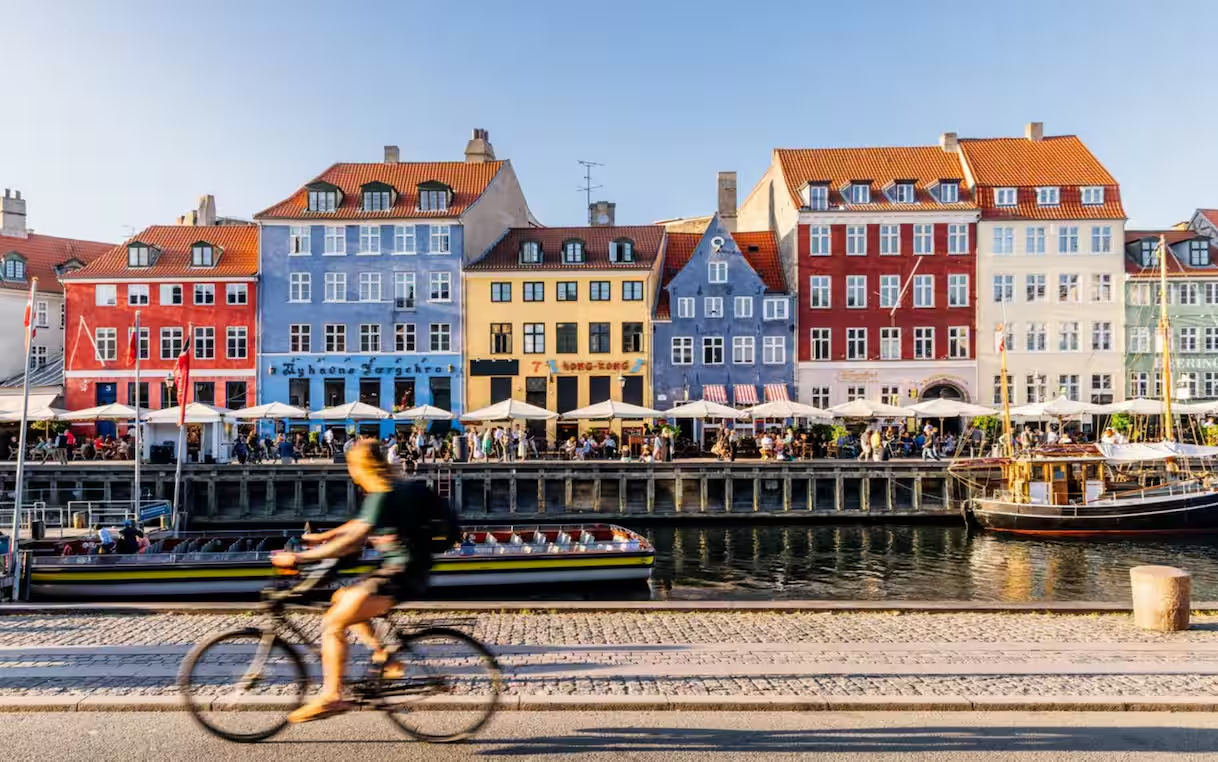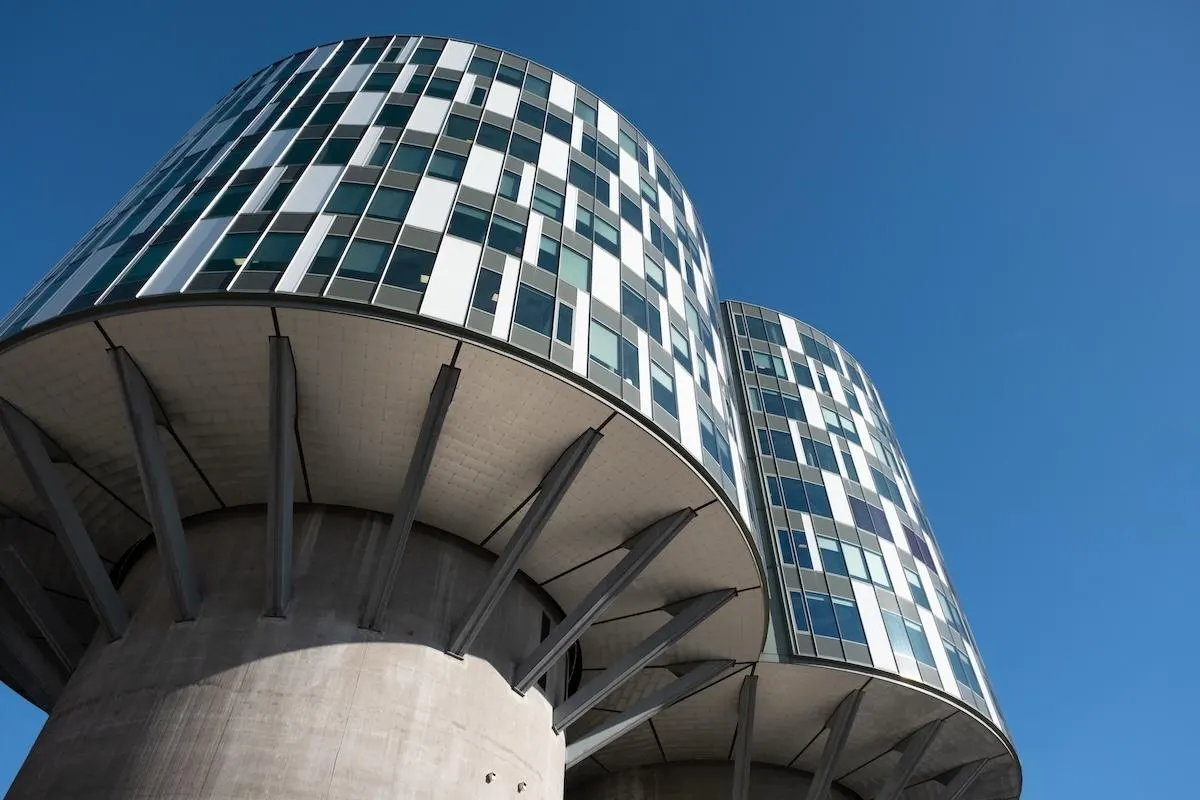
Göteborg Plads is two renovated grain silos turned into office space in Copenhagen.Aren ElliottIf you want to know what makes Copenhagen one of the most sustainable cities in the world — if not the most sustainable — you need to talk to Peter Bur Andersen.He's an architect with BRIQ Architects in Nordhavn, a former port area being transformed into a mixed-use residential district in the Danish capital. Copenhagen is trying to avoid the kind of urban sprawl that consumes valuable resources and land. Andersen's solution is to go in the other direction: create smaller, efficient shared spaces on repurposed land. For example, a refurbished munitions storage area that's a café, a hotel reception and retail space. Do more with less, in other words."It's a crazy idea," he says. "But it works."Anderson is at the vanguard of new thinking when it comes to sustainability and its intersection with tourism. It includes forward-looking hotels that use innovative water recycling systems for their showers, a novel way to create sustainable food in a mushroom farm, urban gardens, and a new way to see architecture. (Related: Here’s what’s happening in nearby Aarhus.)Sustainable hotel showers at Bryggen GuldsmedenThe city's commitment to efficiency extends directly into the hospitality sector. When you check into the Bryggen Guldsmeden hotel, you'll find a futuristic shower in your room. It's hardly the only sustainable thing there. The property is known for its organic food and the extremes to which it goes to eliminate waste.One of the most radical steps toward resource efficiency is the use of the Orbital Systems showers in all 214 rooms. This system uses highly advanced recycling technology originally developed for the Mars mission by NASA. It's a closed-loop system that draws a small amount of water — usually less than a gallon, depending on the length of the shower — cleans it, recycles it and returns it through the showerhead. The system reduces water consumption between 60 and 90 percent.The Orbital showers look like regular showers, except that you regulate the temperature and flow with a Nest-like device at waist level. Other than that, it works exactly like a regular shower, but also monitors the amount of water you use. The system is thoughtfully designed so that you can push the control panel to pause the shower and lather up, then push it again to restart the water.Guldsmeden's properties have always been at the forefront of sustainability, but the Martian showers give this property a big sustainability edge. It's thought to be the only hotel in the world with the technology.Conserving water is a big theme in Copenhagen, which predicts an annual water shortage of 12 billion liters by 2040.Thomas Kyle Cometta, founder of the Funga Farm, inspects an oyster mushroom.Aren ElliottNothing goes to waste at the Funga FarmThe Funga Farm is an urban mycology lab trying to prove that food production can be thousands of times more efficient than traditional agriculture. The farm specializes in gourmet and medicinal fungi, such as oyster, lion's mane, and native Danish coral tooth mushrooms.But it's the farm’s extreme sustainability metrics that are remarkable. The farm achieves annual yields of 50,000 to 75,000 kilos of mushrooms from a small urban warehouse. And it does so while using very little water. The mushrooms consume 2 liters of water per kilo of mushrooms, making it vastly superior to hydroponics and thousands of times more efficient than livestock. Growing mushrooms has other benefits. They're grown on agricultural byproducts that would otherwise be waste, primarily wheat bran from local milling and sawdust from lumber cutting."Almost nothing goes to waste," says Thomas Kyle Cometta, the farm's founder.Indeed, the spent substrate, which still contains nutrient-rich mycelium (the "original and best fertilizer," he says), gets sent to the next-door Øens Have urban garden and used as compost.Funga Farm's crops, meanwhile, end up in some of Copenhagen's best restaurants, including ARK, a famous vegan restaurant that grills and serves Cometta's oyster mushrooms as a tasty entree.Front of the Culture Yard building in Helsingør.Aren ElliottSustainable architecture at the Culture YardThe philosophy of sustainable reuse and resource management extends to public institutions beyond Copenhagen’s central limits.In Helsingør, the Culture Yard (Kulturværftet) is trying to show that industrial structures can be sustainably repurposed. The complex, located near Kronborg Castle, has been converted from a massive former shipyard that closed in 1982. "The project focused on reusing the existing buildings rather than tearing everything down," says spokeswoman Anne Borg.The center, which receives approximately 550,000 visitors annually, operates under rigorous ethical mandates:Green operations. The facility is replacing all conventional lighting with LEDs to reduce its energy costs and carbon footprint.Transportation. The surrounding infrastructure encourages public transport, using electric ferries that recharge with batteries on the roof. Staff are required to use trains or carpool for any professional travel under 10 hours or 1,000 kilometers.Sourcing ethics. The in-house restaurant maintains a policy against air-shipped ingredients, refusing to serve items like kiwis or bananas. It also declines to work with suppliers that can't meet their sustainability criteria, prioritizing environmental policy over price.The Culture Yard, like many Copenhagen sustainability leaders, avoids greenwashing and marketing hyperbole. Instead, "we want to inspire, not lecture" people toward responsible citizenship and slow living, says Borg.Peter Bur Andersen at a construction site in Nordhavn.Aren ElliottSustainable urban planning in NordhavnBack in Nordhavn, Andersen is explaining the architectural philosophy driving the development of the port. His firm is trying to reverse the mid-20th-century trend of pushing residents into the suburbs — a move that was a profoundly unsustainable move.Copenhagen is facing a severe housing shortage, lacking approximately 100,000 apartments. To address this demand sustainably, architects are fighting to drastically reduce the average home sizet from 600 square feet to about 300 square feet.The key to selling residents on smaller living is the "third space" — public squares, cafés, and communal areas — designed to be extensions of homes.This creates an overlap economy that maximizes resource use 24/7. Here's how:Architectural reuse: Instead of demolition, existing industrial buildings like old silos and ammunition storage are reused to preserve the area's "soul and identity," says Andersen. Materials removed during essential transformation, such as bricks, are repurposed elsewhere in the development.Mixed functionality: Retail space, offices, and residential areas are layered. One building, for instance, houses a furniture brand showroom, and the reception for The Audo, a boutique hotel. There are meeting spaces, and occasionally the venue hosts concerts or poetry readings.Utility as community: Repurposing extends even to typically ugly, monofunctional structures. For example, a multistory parking structure is topped with a large recreational area that includes a supermarket, a recycling station, and a CrossFit center on the roof.The concept isn't perfect. Andersen notes that while this level of mixed use is essential for sustainability, it is constantly challenged by outdated legislation that often forbids such mixing. And there are sometimes conflicts between tenants, but Andersen says that's to be expected. "Wherever there are people, there's conflict," he laughs.Copenhagen’s blueprint for sustainable tourismAcross Copenhagen, a consistent blueprint emerges: Sustainability is achieved not through technology alone, but through social engineering that makes collective action the most sensible choice. How does that translate to the visitor experience? If you're a guest at The Audo or the Bryggen Guldsmeden, you'll see it in the shower or the lobby. If you're dining at a restaurant like ARK, you'll taste it. But most of all you get the sense that Copenhagen wants you to feel its sustainability. It's that Nordic sensibility that says yes, you can share a space, you can grow kale in an urban garden, you can get across town in a bus or metro. Whether it is minimizing housing footprints in Nordhavn to cope with a shortage, growing rare native fungi with radical water efficiency, or recycling buildings for a cultural center, the Danish model suggests that when a community chooses sustainability as a core value, it can achieve a lot. You can even become one of the most sustainable destinations in the world.
Copenhagen Sustainable Tourism: A Nordic Take On Green Travel
From spaceflight-ready showers to urban farms, Copenhagen is trying to prove that sustainable tourism requires collective action and a commitment to doing more with less.
1,324 words~6 min read