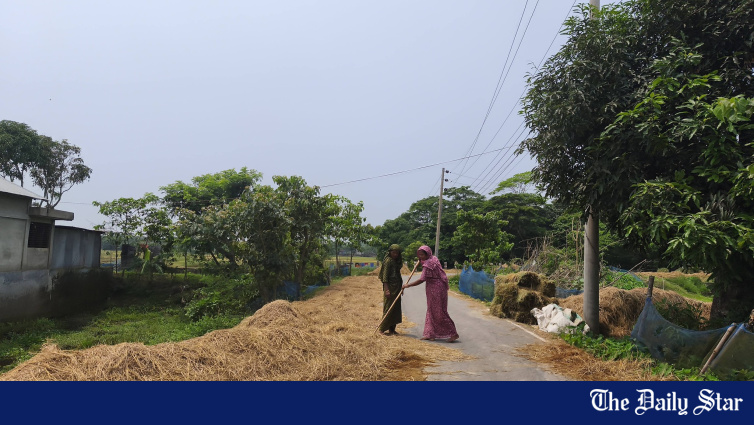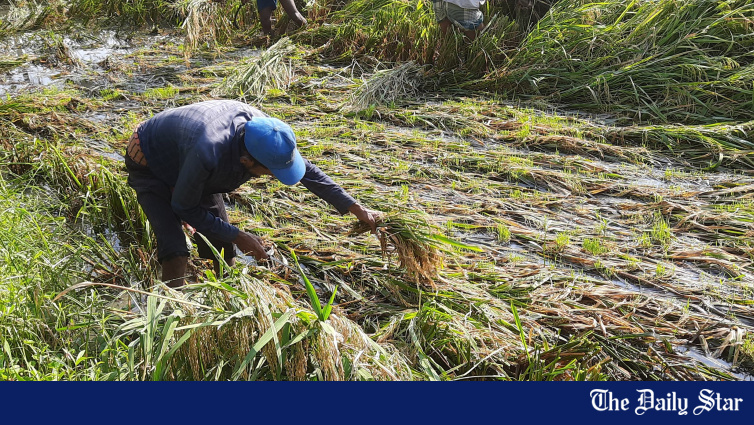
Across waterlogged fields in Bagerhat, ripe paddy has begun sprouting on the stalk as heavy rain and labour shortages push marginal farmers deeper into debt and uncertainty
14 May 2026, 13:48 PM
Partha Chakrabortty
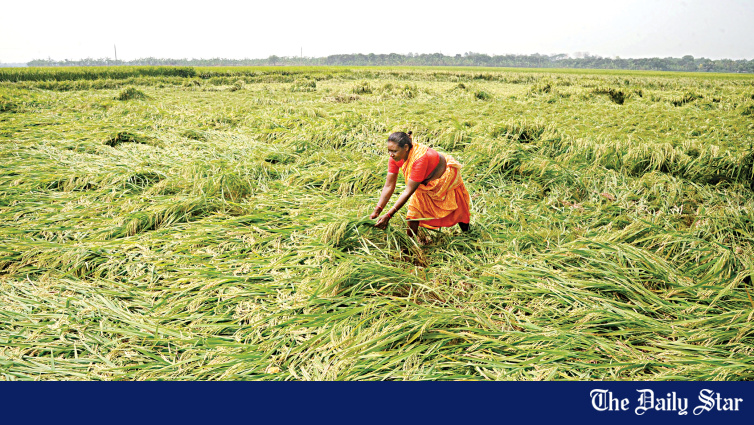
Farmers struggle to collect rain-damaged rice amid flooded agricultural fields. Photo: Star
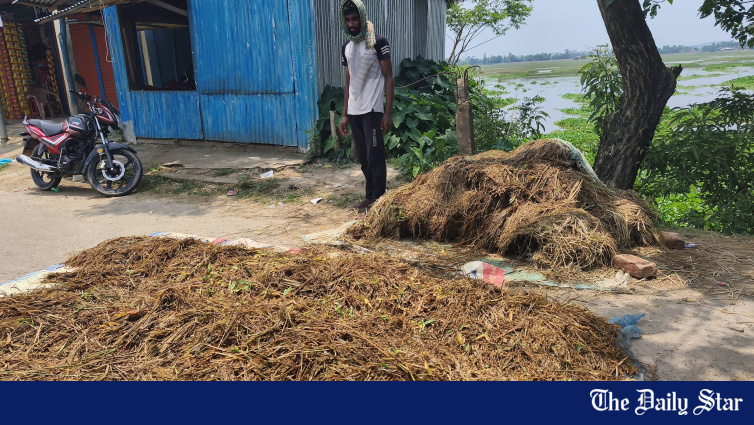
Sheikh Rustam Ali stood at the edge of his field in silence, watching workers wade through knee-deep water to salvage what little remained of his Boro crop.The paddy -- ripe enough for the granary just days ago -- had already sprouted green shoots while still on the stalk. The crop, which he had cultivated through loans and great hardship, is now being destroyed in the field itself.“I spent over Tk 1.20 lakh cultivating this land,” the marginal farmer from Narendra Pur village in Bagerhat's Kachua upazila said. “Under normal conditions, harvesting and threshing would have cost me Tk 20,000 to Tk 30,000. Now I have to spend Tk 80,000 just to bring this ruined crop home.”He paused, then added quietly: “I don't even own this land. I am facing total ruin.”Rustam’s field is not an exception. Across Bagerhat, heavy rain and gusty winds have flattened paddy fields and left stagnant water sitting on ripe grain -- triggering widespread germination that has rendered the crop unfit for sale or consumption. What should have been the season's reward has become a liability.In the same village, Mozaffar Molla was harvesting alongside his son, a madrasa student who had to help in the fields as hired labour had become impossible to find—even at Tk 1,000 a day. Mozaffar had leased one bigha of land for Tk 20,000, but the entire crop had already sprouted in the water.The crisis has taken an uglier turn in Bagerhat Sadar upazila, where the damage has spilled beyond the fields. Humayun Kabir of Utkul village had planted Boro on 1.5 bighas inside his fish enclosure, or gher. Now, not only is the paddy gone -- the rotting stalks are poisoning the water.