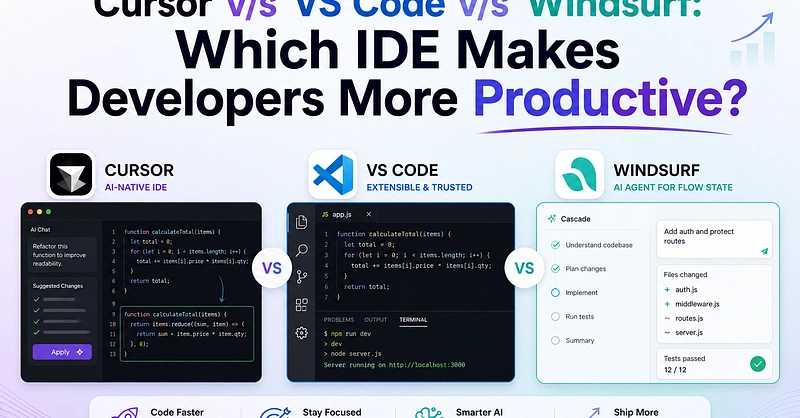
VS Code won the editor wars by becoming the Walmart of IDEs — everything available, nothing optimized. That worked fine until AI coding assistants started making the underlying editor speed matter again. When your workflow involves spinning up Claude Code sessions, running agents in the terminal, and context-switching fast between files and inline edits, the latency VS Code buries in its Electron shell adds up in ways you start noticing.
I switched to Zed about four months ago. Not as an experiment. It stuck.
The Architecture Problem VS Code Has Always Had
VS Code runs on Electron. That means Chromium, Node.js, and a JavaScript UI layer between you and your code. The performance is acceptable until you're doing multiple things at once — a language server running, a terminal process active, an AI suggestion loading, a second file open in a split view. At that point you're paying an overhead tax on every action.
Zed is written in Rust. It uses GPUI, a custom GPU-accelerated UI framework the Zed team built themselves. The editor renders to the GPU directly. That's not a marketing claim — you can feel it in scroll performance, file switching, and cursor response. On the same machine, the same files, the same tasks, Zed is noticeably faster.