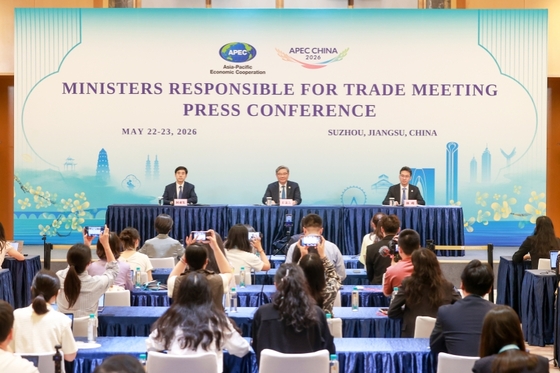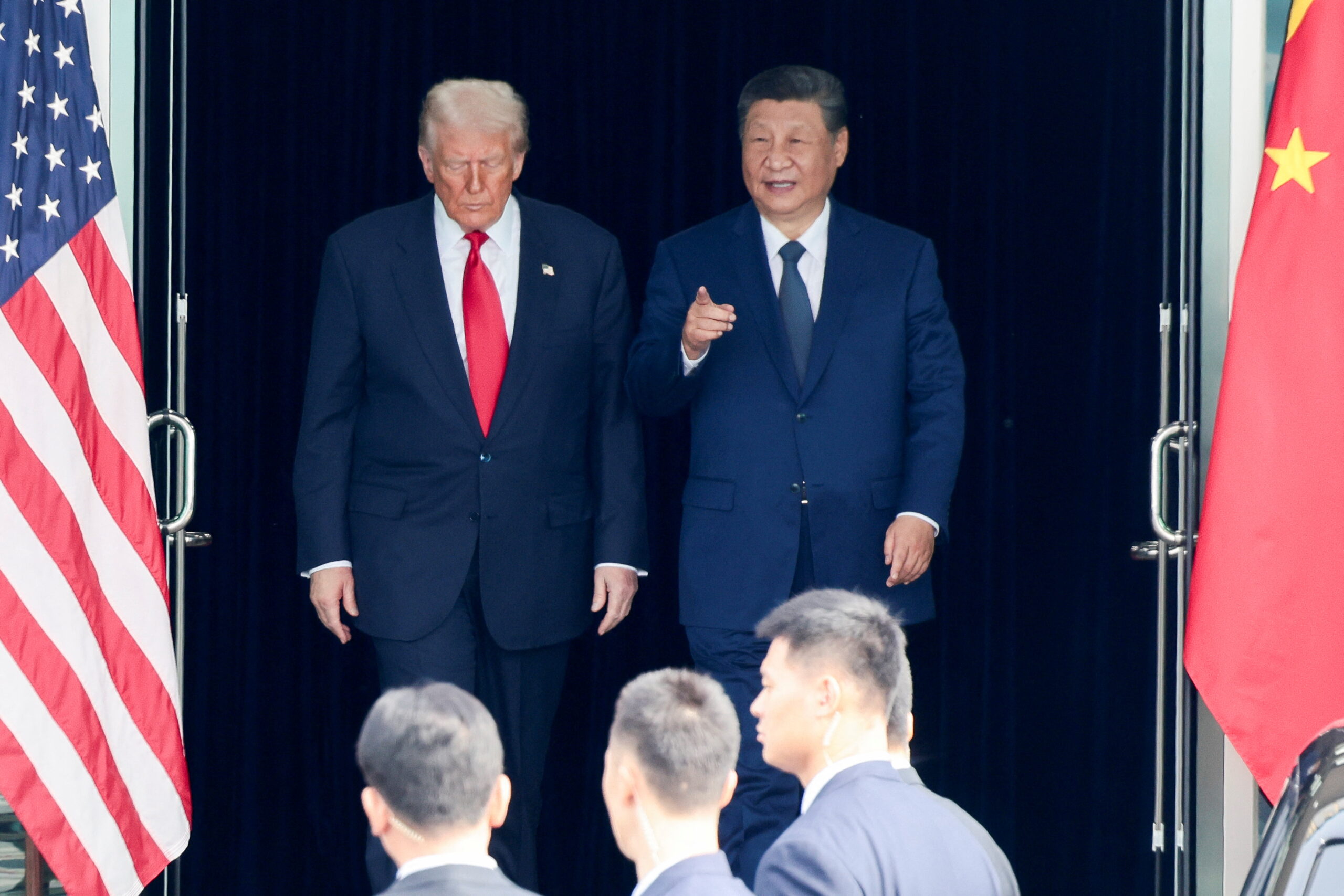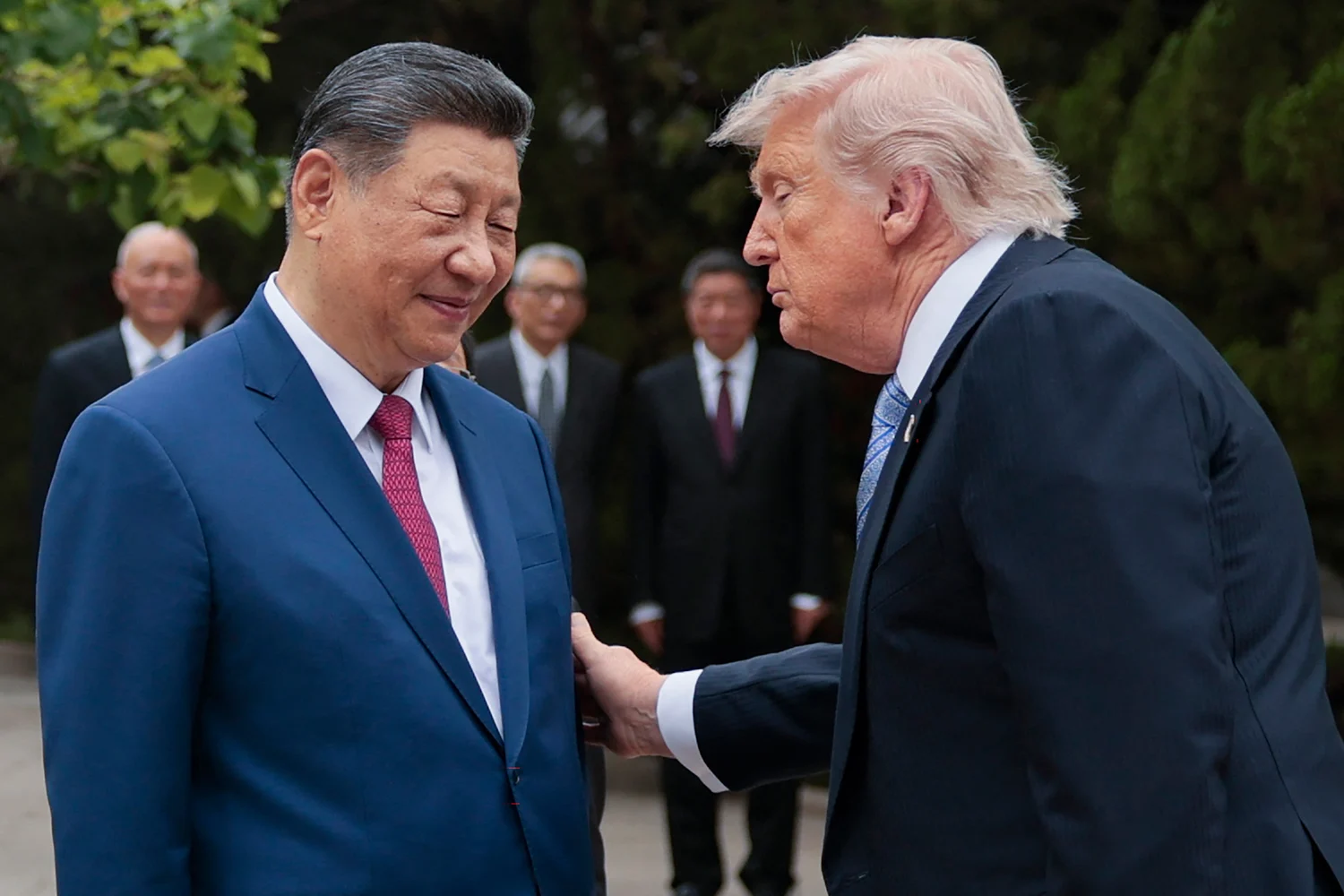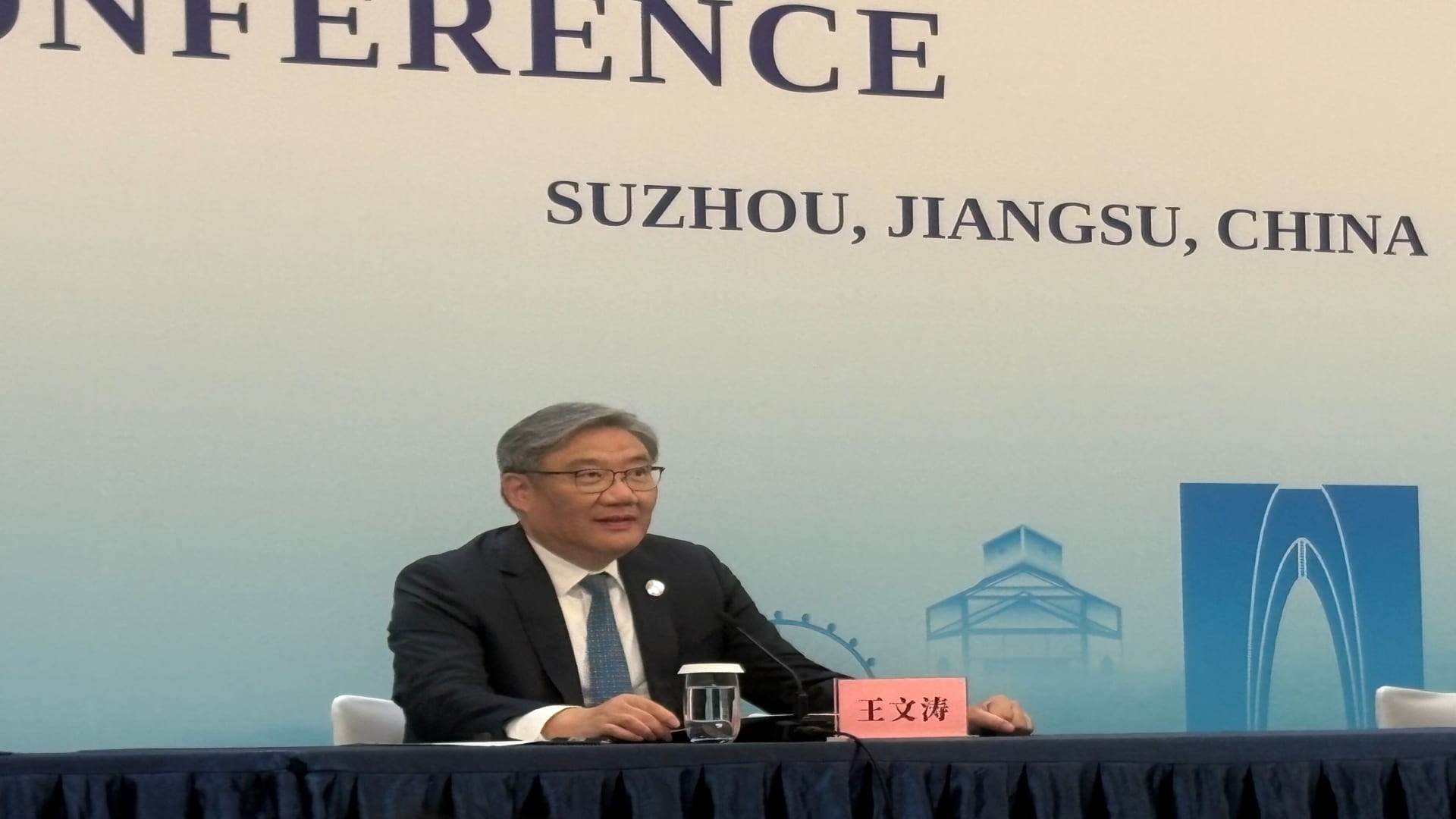
China's Commerce Minister Wang Wentao held a press conference on May 23, 2026, at the end of the APEC trade ministers' meeting in Suzhou, China.CNBC | Evelyn ChengSUZHOU, China — Just over a week after the U.S. and Chinese presidents met in Beijing, the world's two largest economies are sending different messages about their priorities for Asia.First is tariffs.China's economy relies significantly on exports — and the free-flow trade — as it accounts for about 28% of the goods made globally, according to CNBC calculations of World Bank data. Beijing's statements on Chinese President Xi Jinping and U.S. President Donald Trump's summit last week have noted how duties will remain lower for longer, while the U.S. did not mention tariffs.Then on Saturday, China's Commerce Minister Wang Wentao told reporters that affirming the "vision" of a free trade agreement was a key outcome of the just-concluded Asia-Pacific Economic Cooperation trade ministers meeting."In the context of rising uncertain and destabilizing factors in global and regional economic development, members redirected their attention to the FTAAP (Free Trade Area of the Asia Pacific) with commitment to continuing advancing economic integration through the FTAAP agenda," Wang said in Chinese, according to an official English translation. However, when CNBC a day earlier asked a member of the U.S. delegation about FTAAP and free trade, the response focused on balanced trade, part of the Trump administration's rationale for tariffs. "FTAAP, is really, it's more an agenda than it is a kind of destination," said Casey K. Mace, the U.S. Senior Official to the APEC Forum. He noted the U.S. has been "active" in elements of FTAAP such as competitiveness, labor standards and trade facilitation. China is the host for this year's APEC meetings, set to culminate in November with a high-level gathering in Shenzhen. Trump and Xi are also expected to meet alongside that event.watch now'Constructive strategic stability'Second is what's next for the U.S. and China.There's little detail yet on how the two sides will move forward with implementing "constructive strategic stability," beyond China's purchase of 200 Boeing airplanes and $17 billion annually in U.S. agricultural products through 2028.A Chinese readout released early Saturday said Wang met Thursday in Suzhou with Rick Switzer, the U.S. Deputy Trade Representative and head of the U.S. delegation for the APEC trade ministers meeting. The readout said both sides hoped to reach an agreement as soon as possible on the details of economic outcomes from the Trump-Xi meeting — an indication that differences still remain.The U.S. embassy in Beijing and the U.S. State Department did not immediately respond to a request for comment.Read more China newsChina calls for APEC cooperation as commerce minister skips opening over 'urgent official business'Three key takeaways from Putin's Beijing trip — and what they reveal about China-Russia tiesChina confirms order for 200 Boeing planes, calls aviation key area for U.S. cooperationJob training for robots: How China is getting machines ready to join the workforceU.S. indicts four Chinese container manufacturers alleging pandemic-era price-fixing cartelAlibaba reveals more powerful Zhenwu AI chip, new LLMThree major shifts from the Trump-Xi meetingTrump puts Taiwan arms sales, Hong Kong jailed activist Lai on agenda ahead of meeting with XiTrump and Xi face a test over AI controlIran focus at Trump-Xi summit may delay progress on tariffs, rare earthsChina is rewiring the Silicon Valley model — starting in Hong KongChina's self-driving truck leaders say AI breakthroughs won't accelerate rollout — here's why'Draconian development' in Meta-Manus deal draws the line in China's AI race with the U.S.Behind China's 'active efforts' for an Iran ceasefire: Business trumps politicsAlibaba launches data center with 10,000 of its own chips as China ramps up AI push'The thaw is real': Indian delegation visits China to talk EVs and moreWhy AI isn't replacing jobs in China (yet)Meta faces China probe over acquisition of AI agent startup ManusBeijing's surprise intervention on Meta's Manus rattles tech founders, VCs eyeing 'China shedding'Three niche commodity prices are surging. What they show about China's grip on supply chainsThe AI raceThird is a broadening of the U.S. and Chinese tech race into Asia.The APEC trade ministers' meeting reached a "new consensus" on digital trade cooperation, Wang said.When asked to elaborate, Lin Feng, director-general of the Chinese Commerce Ministry's department of international trade and economic relations, noted plans to make it easier for e-commerce companies to do business in the region, and a "commitment to strengthening trade exchanges related to AI."Lin noted efforts to "narrow the digital divide" but did not mention Chinese AI companies in particular. While the U.S. has restricted the ability of Chinese companies to access advanced semiconductors for training AI models, Chinese businesses have tended to release AI models that are cheap – if not free – to use, and with capabilities that increasingly narrow the gap with their U.S. rivals.On the U.S. side, Mace emphasized plans "to continue to position the U.S. tech companies, digital companies, as the leaders in the region." Mace said U.S. tech firms would be giving workshops at an APEC "digital week" in Chengdu in July. While China is the host of the event, "it's an opportunity to engage with all 21 [APEC] economies," he added.The U.S. is one of the 12 founding members of APEC, which was launched in 1989 in Australia as an informal forum for discussions on free trade and economic cooperation. The multilateral trade organization now has 21 members, including mainland China, Hong Kong and "Chinese Taipei," which joined the forum in 1991.Wang did not comment on the "urgent official business" that had prevented him from chairing the opening session on Friday.
Three signs from APEC that the U.S. and China remain far apart on trade
U.S. and Chinese officials have met and spoken publicly about differing priorities since the Trump-Xi summit concluded in Beijing last week.
928 words~4 min read