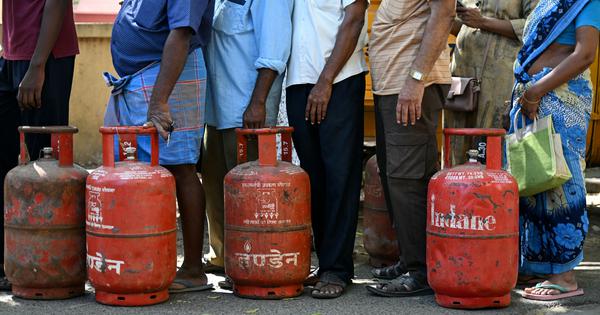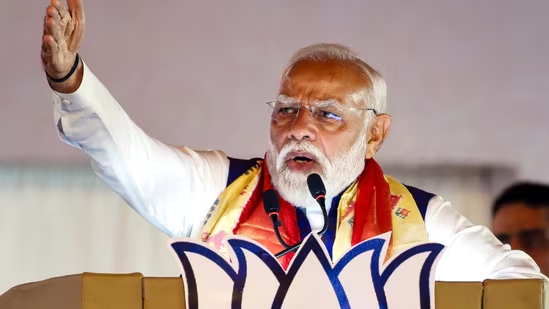
The austerity measures invoked by Prime Minister (PM) Narendra Modi last week have once again raised questions about India’s micro, small and medium enterprises’ (MSMEs) survival. While the tertiary sector could potentially revive its Covid-era business continuity plans, what recourse can the backbone of the Indian economy have? A sector that contributes over 46% of total exports and 30% of GDP is still waiting for practical solutions and institutional support to safeguard its largely informal migrant workforce, which accounts for over 40% of India’s total workforce. MSMEFaisal (name changed), a 23-year-old migrant labourer from Sultanpur, Uttar Pradesh, working at one of Mumbai’s oldest pav manufacturing bakeries in the historic Madanpura, laments the time he spent in his village during the LPG shortage in March. “Gaon mein kuch nahi hai, kaam sirf yahin (Mumbai) par hai” (There are no work opportunities back in the village; this city is the sole source of livelihood for me). While Faisal was comparatively more fortunate to have returned to the city and regained his employment, many other migrant workers find it hard to rejoin the workforce. The increasing economic fragility of Indian MSMEs is closely linked to the pressure of transition to cleaner energy practices. The sector’s dependence on fossil fuels for thermal processes (firing of boilers, furnaces, kilns, ovens and so on) is high, and accounts for a quarter of total industrial energy use. (CSTEP Study, 2024) Under such pressure, enterprises like Mumbai’s bakeries are facing a double whammy due to the shortage of the cleaner fuel they are expected to adopt. India’s net-zero goals and climate-linked trade commitments are imposing further pressure on MSMEs. And yet, limited institutional support, financing gaps, outdated technology and workforce challenges continue to slow this transition and heighten livelihood risks. “It's been over a year, our request for a PNG connection is yet to be fulfilled by the Mahanagar Gas Limited. The pipeline needs a mere 40 meters extension to reach my bakery, but this year-long delay has become quite unbearable now. Although we shifted from wood-fired ovens to LPG cylinders under duress, this has in turn resulted in more problems for us this year,” shares Faisal’s employer and owner of Indian Bakery, Mirza Gayasuddin Baig, who also worries that the imminent monsoons will further delay any structural changes needed for this pipeline extension.Citing the importance of balancing energy transition processes with worker-centric measures in another crucial MSME industry of readymade garment manufacturing, executive director of Centre for Education and Communication (CEC), Lokesh, notes that, “Despite growing pressure from global brands and emerging climate regulations for cleaner manufacturing, the transition must not remain compliance-driven. It must include migrant informal workers in discussions on sustainability, occupational health, heat stress, and the wider social implications of industrial transition.”The brick industry, a proud contributor to India’s global ranking as the second-largest brick producer, finds itself in a similar unsupported scenario. Lack of institutional support has affected the industry’s goal of reducing its black carbon emissions by adopting cleaner technologies, such as the zig-zag tech or cleaner fuels like natural gas. Some of the industry’s unmet demands include government subsidies, skill development, and bridging the last-mile connectivity of social protection schemes for its migrant workforce.While the government also recognises equity and just transitions in its recently announced Nationally Determined Contributions (2031-35), much of the government’s overall focus under the cleaner energy transition has been on coal and energy sectors. Fossil-fuel-adjacent and migrant-heavy MSMEs are yet to make it to the country’s top policy priorities. Wherever non-State actors have developed decarbonisation policies to fill this gap, they also lack effective institutional support and industry-worker engagement, resulting in a slow-paced implementation. Recognising this gap, a grassroots non-state initiative called Buniyaad has been working towards a people-centric transition to low-carbon practices in the rural brick industry since 2022. “Formed with participatory and rights-based design, the collective comprises over 200+ multistakeholders across the brick industry, worker organisations, think tanks, technology experts, media, civil society and arts and culture groups”, says one of its founding members, Ekta Shekhar, The Climate Agenda. As part of this initiative, the collective has also developed a just transitions benchmarking framework in collaboration with IIT Kanpur’s Just Transitions Research Centre. The framework centres industrial energy transition within principles of equitable worker recognition, informed participation in collective bargaining processes, fair distribution of costs and benefits, and ecological accountability. The only way out of this energy crisis is to consider this predicament an opportunity to build back better, a fundamental strategy deployed by any humanitarian response centring climate resilience-building measures for the most impacted communities. A just and equitable approach focused on migrant workers in MSMEs is the most effective, if not the most sustainable way, to revitalise India’s energy ecosystem. (The views expressed are personal)This article is authored by Harpreet Bhullar, doctoral scholar, political ecology, National University of Singapore, New Delhi.
Revitalising India’s energy transition with migrant-first policies
This article is authored by Harpreet Bhullar, doctoral scholar, political ecology, National University of Singapore, New Delhi.
808 words~4 min read