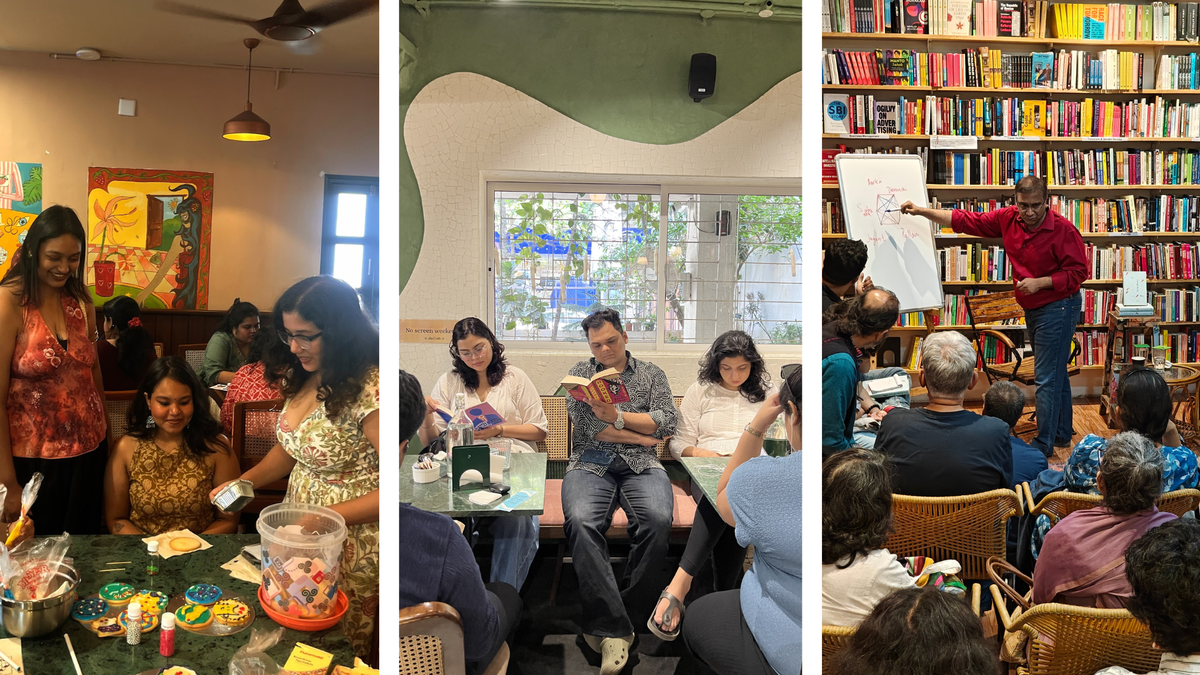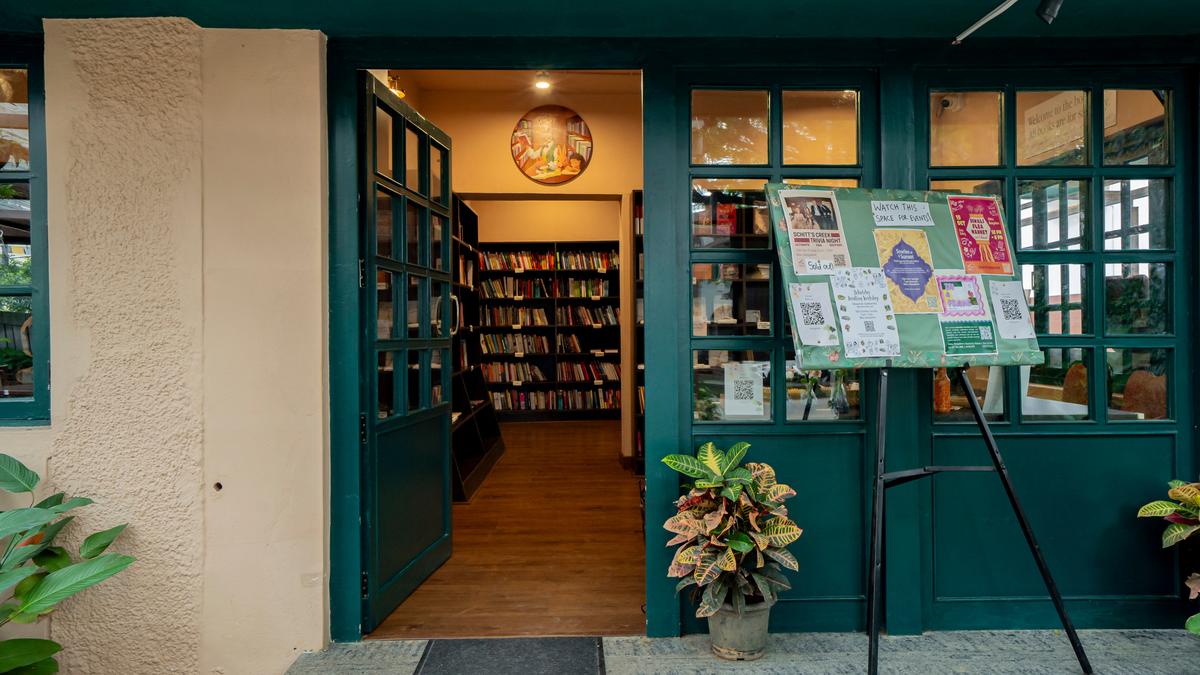
There’s been a sharp rise in the number of independent bookstores across Indian cities. They are visible, talked about, and often beloved. But dig deeper and this ‘revival’ of the physical bookstore reveals complicated layers. In Bengaluru last month, when a sudden and intense hailstorm flooded the iconic Bookworm on Church Street, nearly 5,000 books worth an estimated ₹14 lakh were damaged.Hundreds of the city’s reading community showed up in solidarity, to help clean and dry the water-damaged books. Together with publishers and well-known authors such as historian Ramachandra Guha, they urged their followers on social media to buy the books and help offset losses. It was a vivid reminder that the independent bookstore is not merely a space of retail, but one that has the capacity to gather around it a community.
Books put out to dry after rainwater flooded Bookworm
| Photo Credit:
Allen Egenuse J.
The uplifting moment, however, sits uncomfortably beside another story — that of Fort Kochi’s Printed Matter. Just 10 days after I spoke to founder Gouri Ramkumar, I came across an announcement on their Instagram page. The bookstore, it said, would be closing its physical store on May 10. “The seasonal nature of Fort Kochi [where the tourist season dropped away once summer set in] and the economics of independent bookselling make it hard to keep a physical storefront going,” the post read. This revealed a sobering truth: that a store can become part of the cultural life of a city and still find its physical existence untenable.