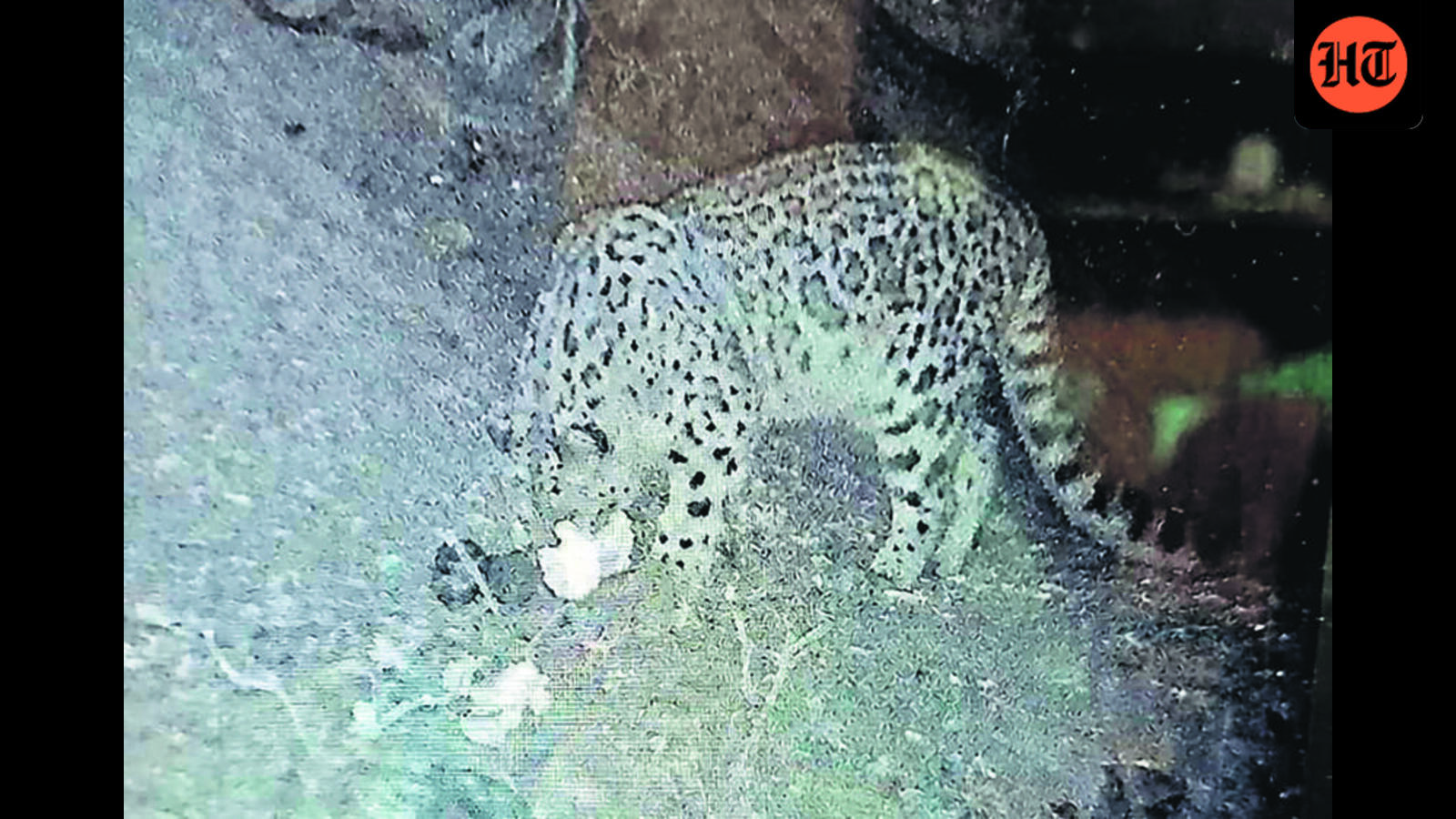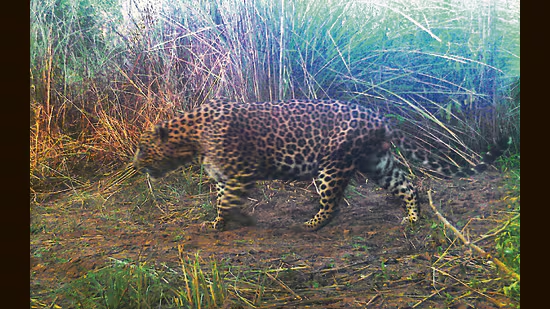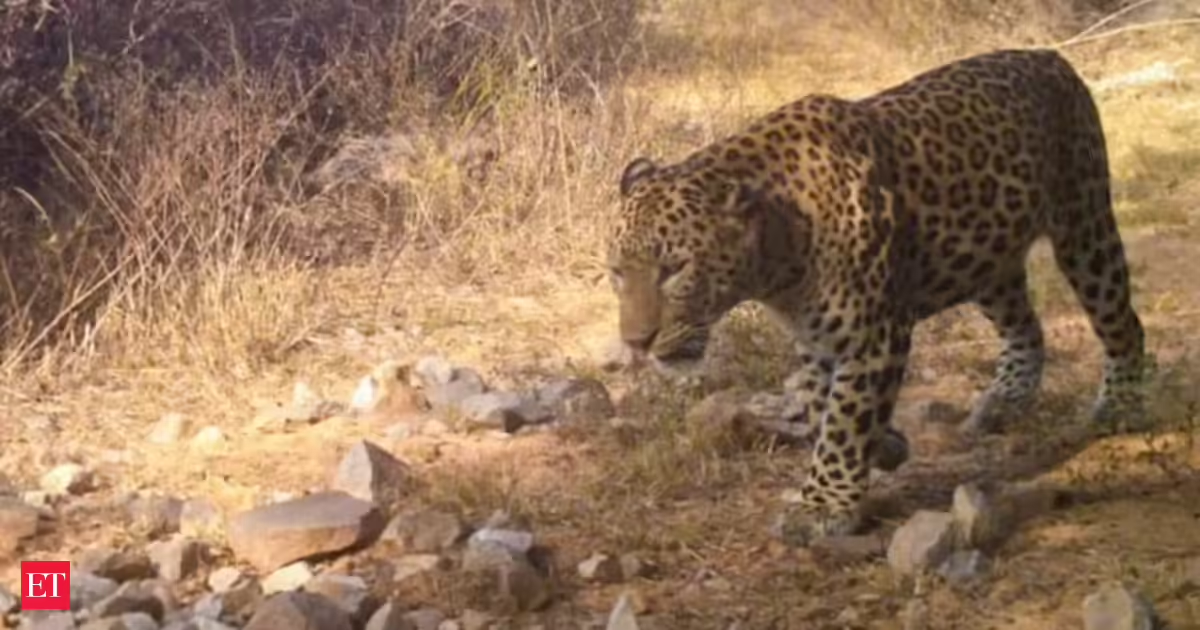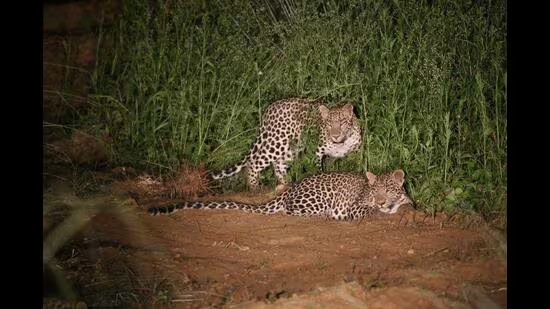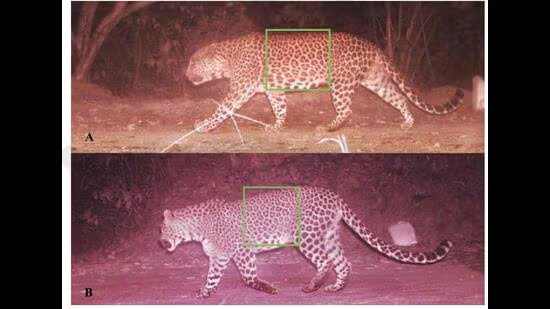
Years after indirect signs hinted at their presence, camera traps have now confirmed leopards inside the Sukhna Wildlife Sanctuary, with a recent survey offering the first systematic, multi-detection evidence of the big cats in Chandigarh’s forests.WILD REVEAL: The images, captured during a week-long biodiversity survey conducted from November 20 to 27, 2025, show two adult male leopards moving through the dense forest patches of Sukhna. (SOURCED)The images, captured during a week-long biodiversity survey conducted from November 20 to 27, 2025, show two adult male leopards moving through dense forest patches, their identities established through distinct rosette patterns on their coats – leopard spots are not actually solid dots; they are complex clusters called rosettes.The survey was carried out by the department of forest & wildlife in collaboration with the Wildlife Institute of India.For years, forest staff had reported indirect signs — pugmarks, scat and occasional sightings — suggesting the possible presence of large carnivores. But the new images provide the first scientific confirmation.In 2021, a leopard was also photographed on a camera trap in the adjoining Kansal forest area, lending weight to these observations. However, until now, such instances remained isolated and lacked systematic documentation.“The camera trap confirmation of leopards in the Sukhna Wildlife Sanctuary is a very positive ecological sign,” said Vikram Jit Singh, a naturalist who previously served on Chandigarh’s State Wildlife Advisory Board. “Leopards are apex predators, and their presence indicates a healthy and well-balanced habitat with sufficient prey base.”Singh added that the animals appear to be operating deep within forested zones, away from the heavily visited areas around Sukhna Lake, reducing the likelihood of conflict with people. “This underlines that the protected area is functioning effectively as a secure wildlife habitat rather than a conflict zone,” he said.The survey deployed 18 camera traps across the sanctuary for 125 trap nights, yielding 466 independent wildlife captures. Alongside leopards, the data revealed predominantly nocturnal activity among species such as the Indian crested porcupine, suggesting an active night-time ecosystem that largely remains unseen.The findings mark a notable shift from a similar exercise conducted in 2021, when no leopard presence was documented. Officials say the change reflects improving habitat conditions and a growing prey base.The study recorded 16 mammalian species, up from 14 four years ago, with herbivores such as sambar, nilgai and wild boar forming the core of the prey population. Researchers estimated the density of sambar deer at about 22 individuals per square kilometre, a level considered sufficient to sustain large predators.The survey also expanded beyond mammals, documenting 132 bird species, 73 butterfly species and 13 species of reptiles and amphibians, making it the most comprehensive biodiversity assessment conducted in Chandigarh to date.
Camera traps find leopard presence in Sukhna Wildlife Sanctuary
The images, captured during a week-long biodiversity survey conducted from November 20 to 27, 2025, show two adult male leopards moving through dense forest patches, their identities established through distinct rosette patterns on their coats – leopard spots are not actually solid dots; they are complex clusters called rosettes.
445 words~2 min read