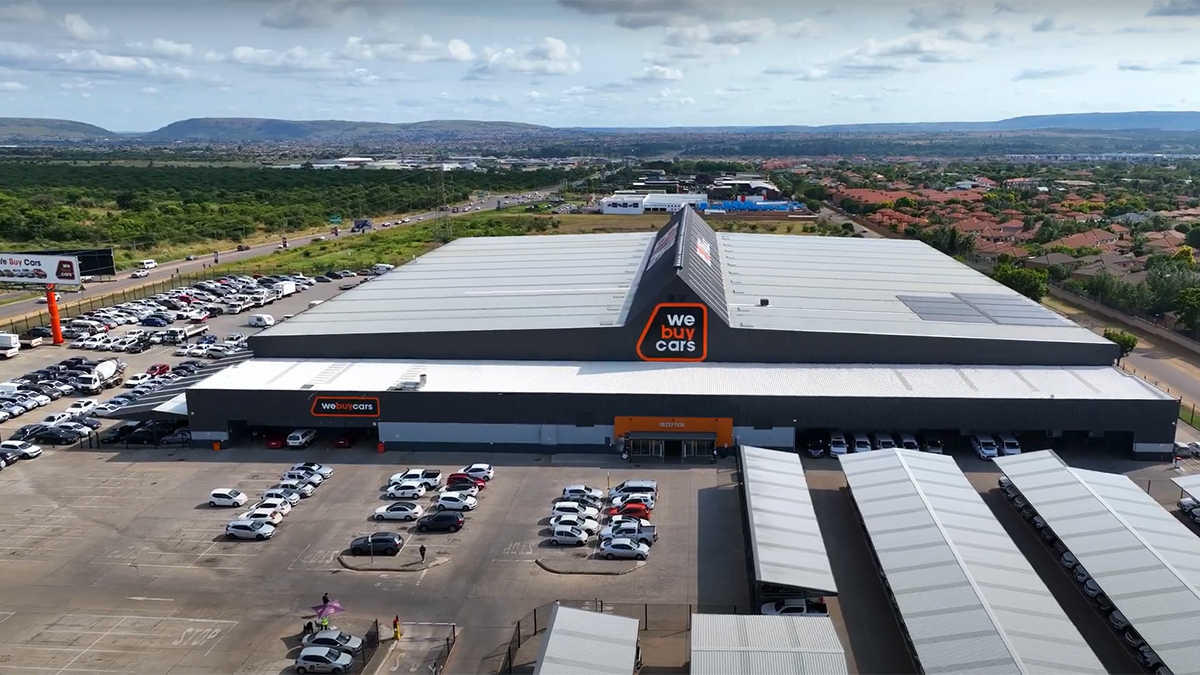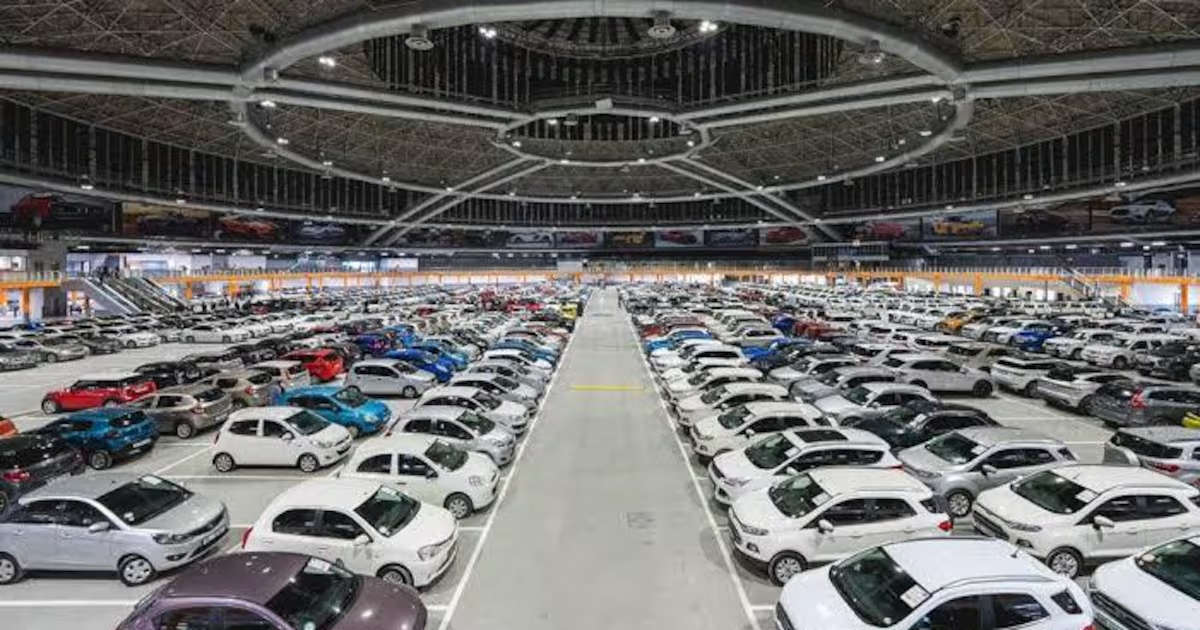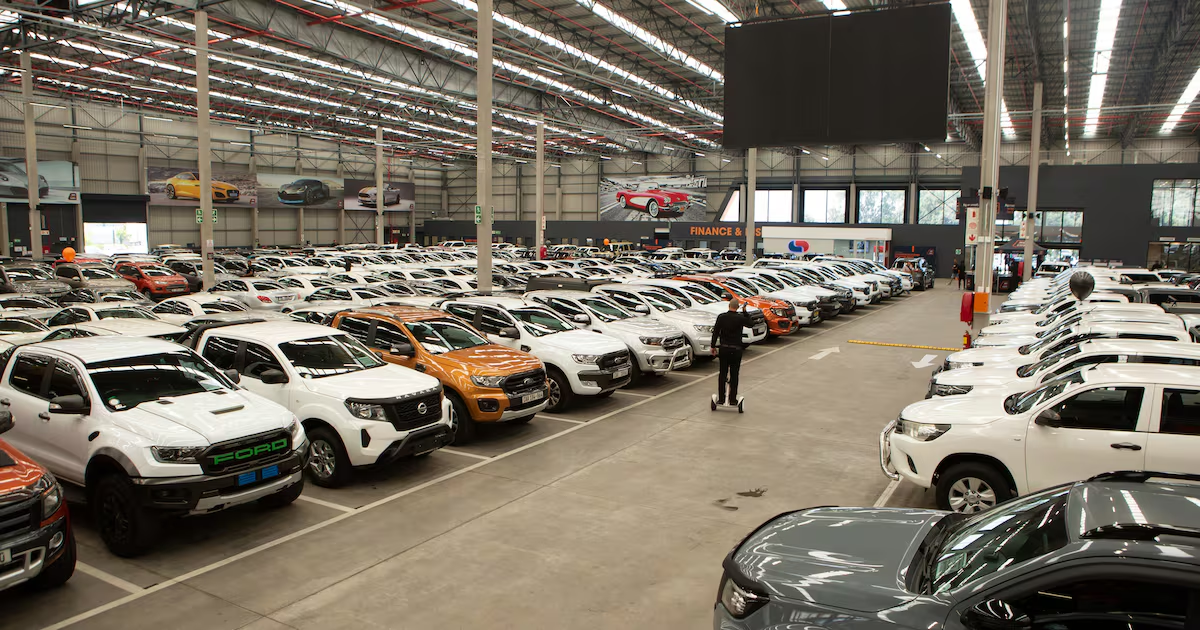
WeBuyCars is looking to steadily integrate vehicles sourced from third parties such as banks, rental fleets and dealerships into its dealership network as the segment becomes an increasingly important contributor to the group’s earnings.The second-hand car dealer has, over the past two years, expanded beyond its traditional buy-and-sell model by assisting banks in disposing of repossessed vehicles, while also working with struggling dealerships and corporates to offload fleet stock.CEO Faan van der Walt said disposals on behalf of third parties were “doing well” and are expected to become more embedded in the core retail model over time. “It’s becoming an increasing part of our income stream, so we have a dedicated team that deals with the banks and other entities.”While the service has not yet been fully rolled out across the group’s dealership network, Van der Walt described this as the “natural expansion” of the business. “There is a need for it out there, but anything in business will be done responsibly,” he said.The company also sees a new revenue stream in its technology car inspection platform Inspectify, which deputy CEO Wynand Beukes said is already delivering measurable benefits.The digital tool, which has been deployed across 19 branches, has completed nearly 95,000 vehicle evaluations and improved condition-scoring accuracy by about 30%.Beukes said the system enhances pricing discipline and reduces losses, while also offering longer-term commercial potential.“We could, in due course, provide this service to the market. The external interest we are seeing signals a potential future revenue line for the group,” he said.At the same time, WeBuyCars is navigating a shifting vehicle market landscape as the influx of competitively priced new Asian vehicles has had knock-on effects on used-car pricing, forcing the company to adjust its pricing models.Beukes said Chinese-branded vehicles account for about 5% of the group’s traded volumes but are increasing rapidly. The company sold just over 3,000 Chinese-origin vehicles in 2024 and just under 4,000 in 2025, while first-half 2026 sales have already nearly matched the full-year 2025 figure.Many of the new Chinese vehicles purchased over the past couple of years are now available for resale in the second-hand market— Stephen Erasmus“We think there’s about a two-three year lag for these vehicles to come into the used market,” he said.Despite the pricing pressure, rising sales of new vehicles — particularly those of newer entrants — is expected to support future supply in the second-hand market, which could boost WeBuyCars.In the six months to March, WeBuyCars grew its dealership network to 20 vehicle supermarkets, up from 17 a year earlier, and 109 buying pods from 93. In the six months to March, it bought 95,328 vehicles and sold 93,519 units, reflecting strong turnover.Revenue rose 7.8% to R14.2bn over the period, with sales volumes reaching record highs in several months. March marked an all-time monthly sales record of 17,209 vehicles. However, headline earnings per share declined 1.7% to 119.7c, reflecting margin pressure, the company said.Anchor Capital analyst Stephen Erasmus said the group’s long-term growth trajectory remained intact despite the near-term earnings impact. “Many of the new Chinese vehicles purchased over the past couple of years are now available for resale in the second-hand market,” he said.While prices for these vehicles tend to be lower, the resulting increase in volumes could ultimately benefit WeBuyCars.“The prices of second-hand Chinese vehicles are certainly lower, but the volumes sold are arguably higher. So, for a business like WeBuyCars, this represents an opportunity for sales,” he said.“The South African new-vehicle market has had a strong past year or two, and inevitably this filters through into the second-hand vehicle parc, where WeBuyCars plies its trade.”Erasmus added that the group’s brand-agnostic model provides flexibility to adapt to shifting consumer preferences and competitive dynamics.Camissa Asset Management portfolio manager Meyrick Barker said the recent decline in EPS should not be interpreted as a structural weakness in the business. “The used-car market is cyclical and recent weaker earnings performance is a function of vehicle pricing dynamics,” he said.WeBuyCars had built inventory before its pricing models fully adjusted to softer market conditions, which weighed on profitability.“This reduced gross profit per vehicle and led to higher losses on some units. While those short-term pricing decisions were clearly not ideal, the business will recalibrate its buying and pricing models over time,” he said.He added that the growing presence of Asian brands has been positive for consumers, increasing vehicle availability and lowering new-car prices, but also contributing to softer used-car pricing.“The knock-on effect, however, has been a moderation in used-car inflation and, in some cases, price deflation,” Barker said.Longer term, however, the expansion of the national vehicle parc is expected to support WeBuyCars’ growth prospects as more vehicles enter the used market over time.“Importantly, WeBuyCars is not tied to specific brands or price points. It has the flexibility to shift vehicle buying patterns in line with consumer demand, including increased demand for Asian brands,” he said.
WeBuyCars eyes third-party vehicle integration as new growth lever
The used-car operation says it is unphased by cheap Asian imports, because one day they’ll be pre-owned vehicles in a WeBuyCars showroom
813 words~4 min read