Show Caption
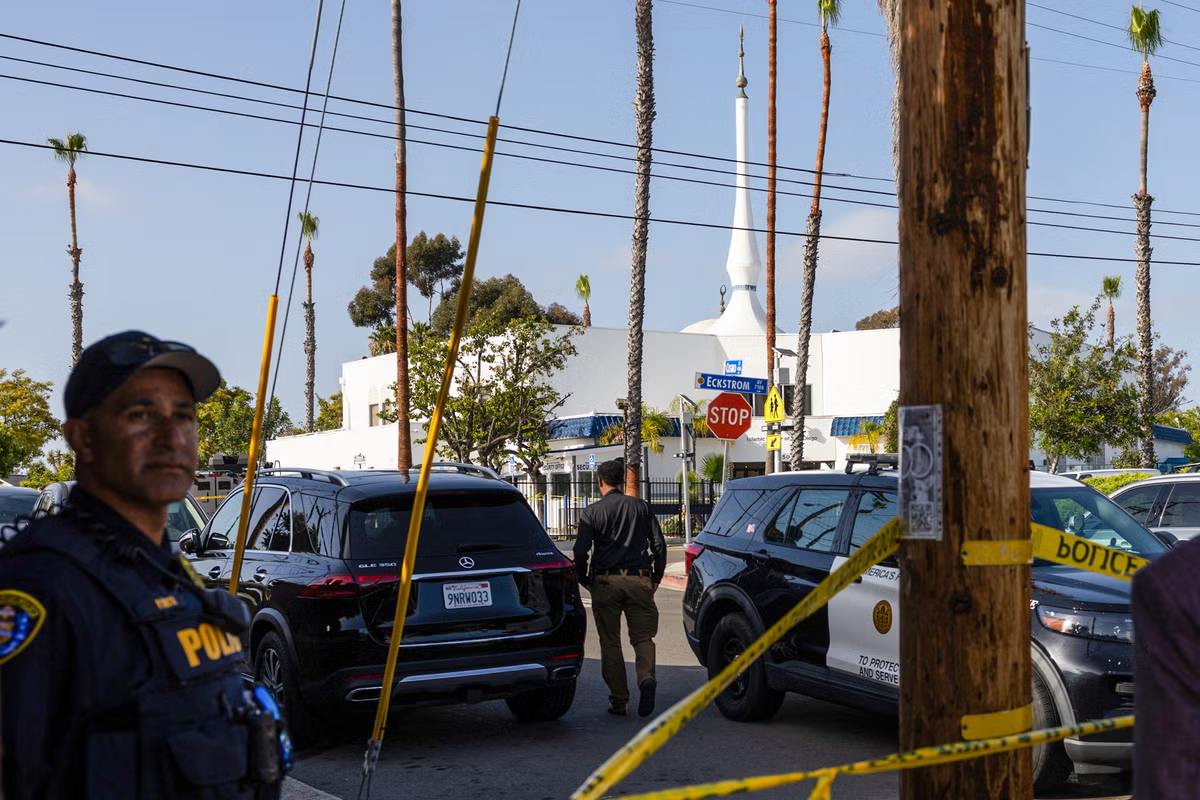
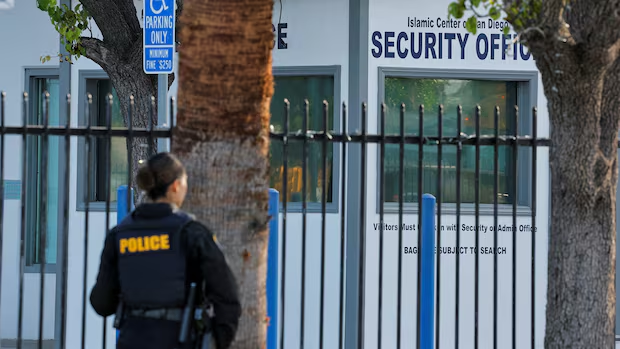
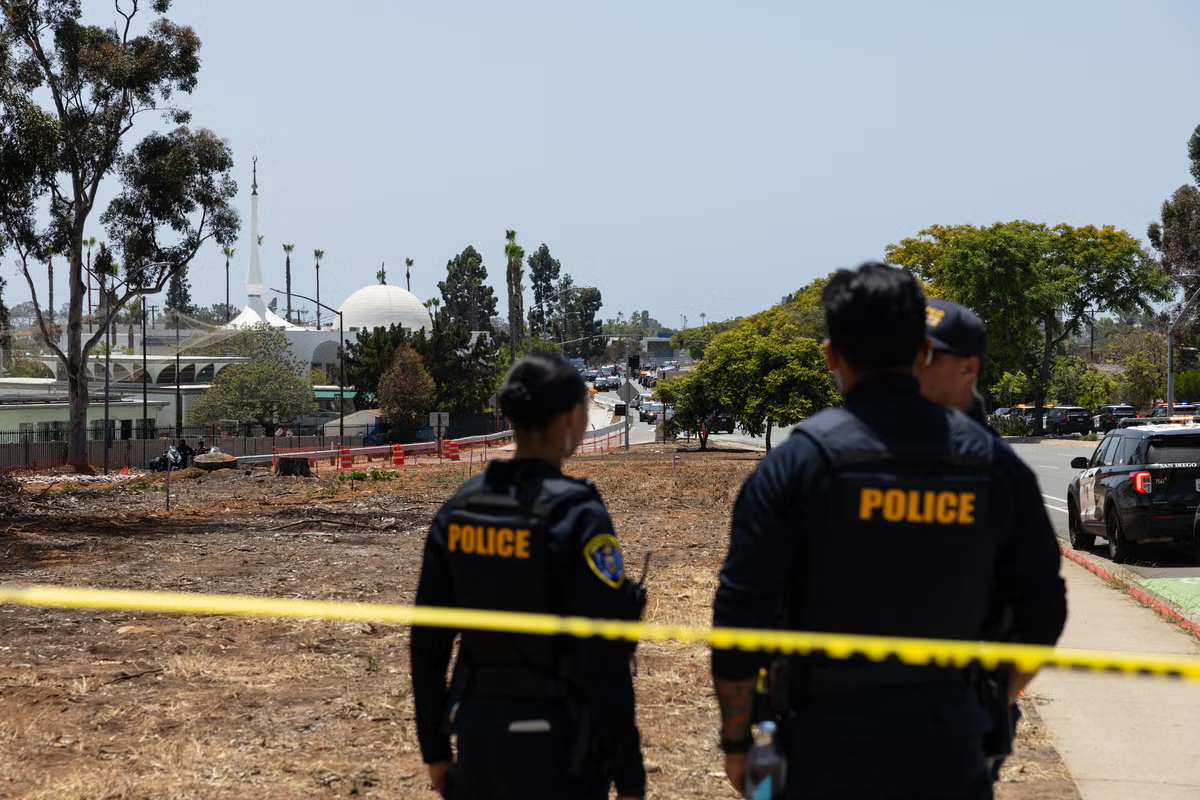
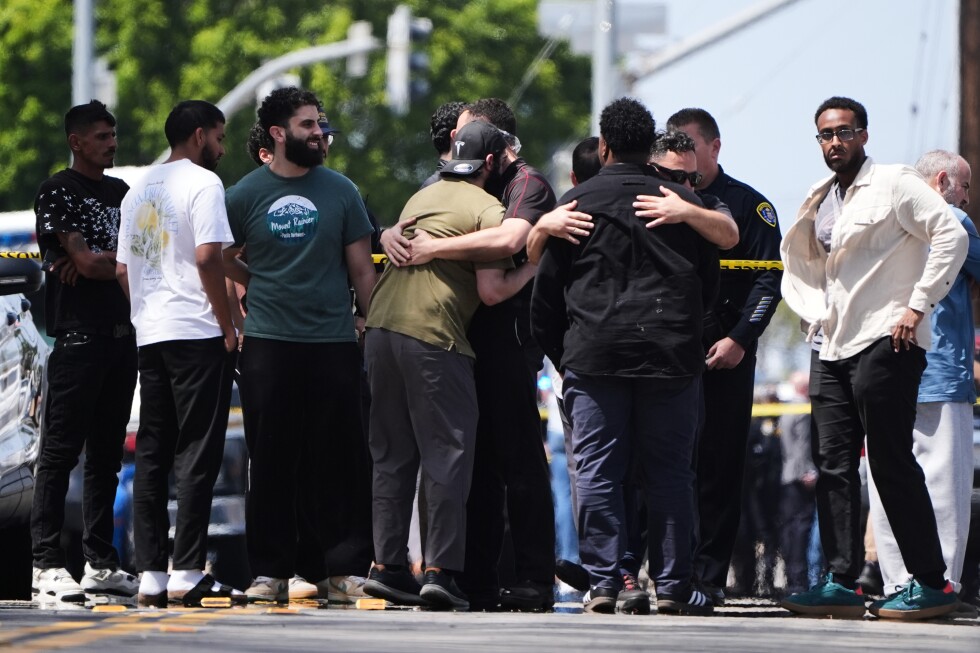
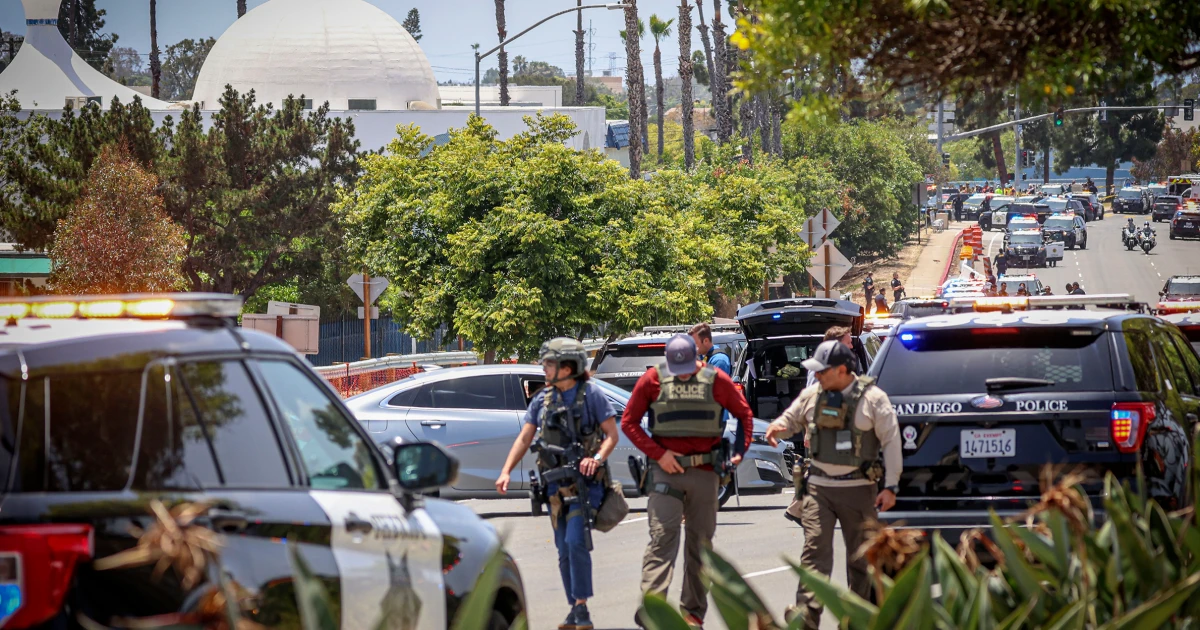
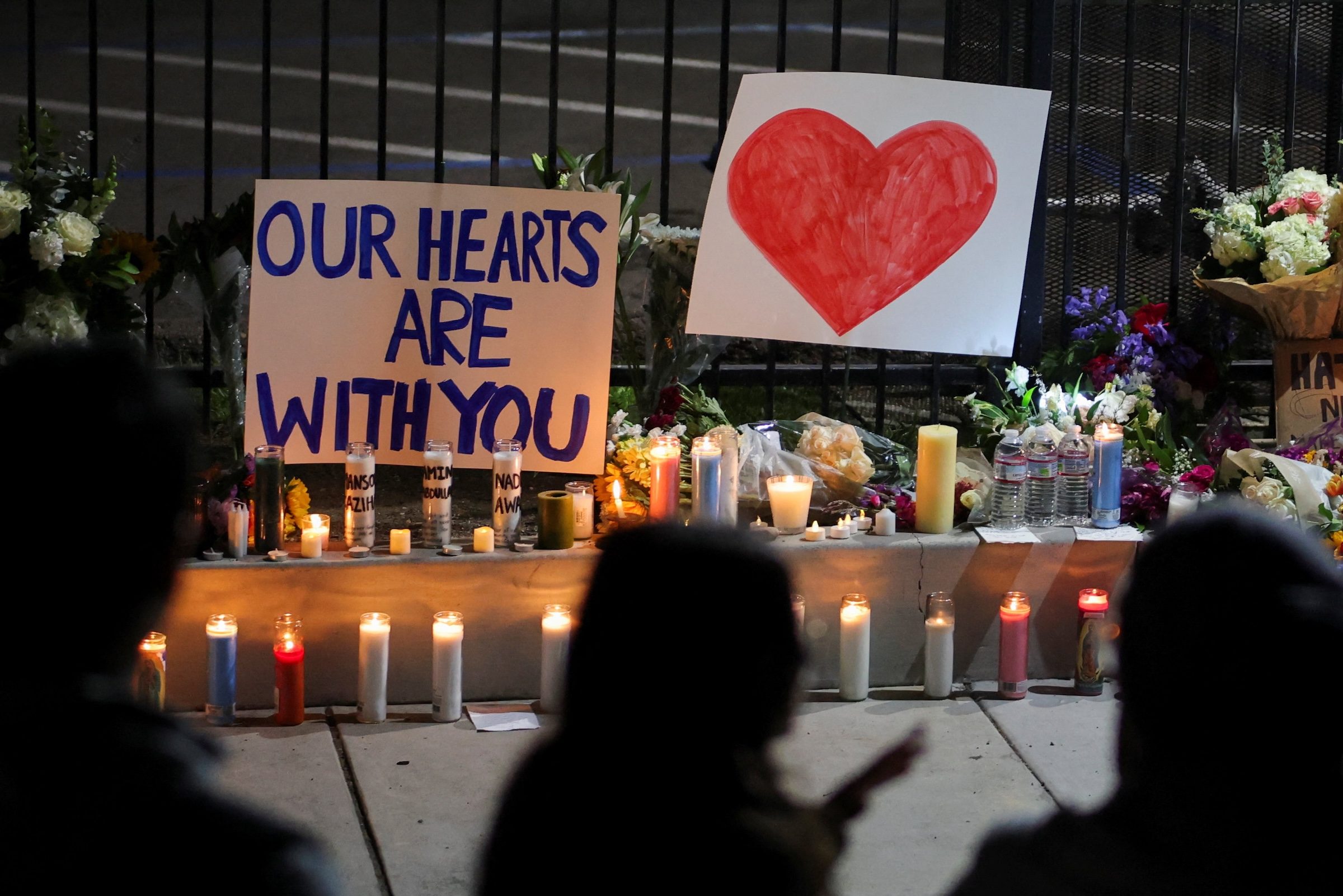
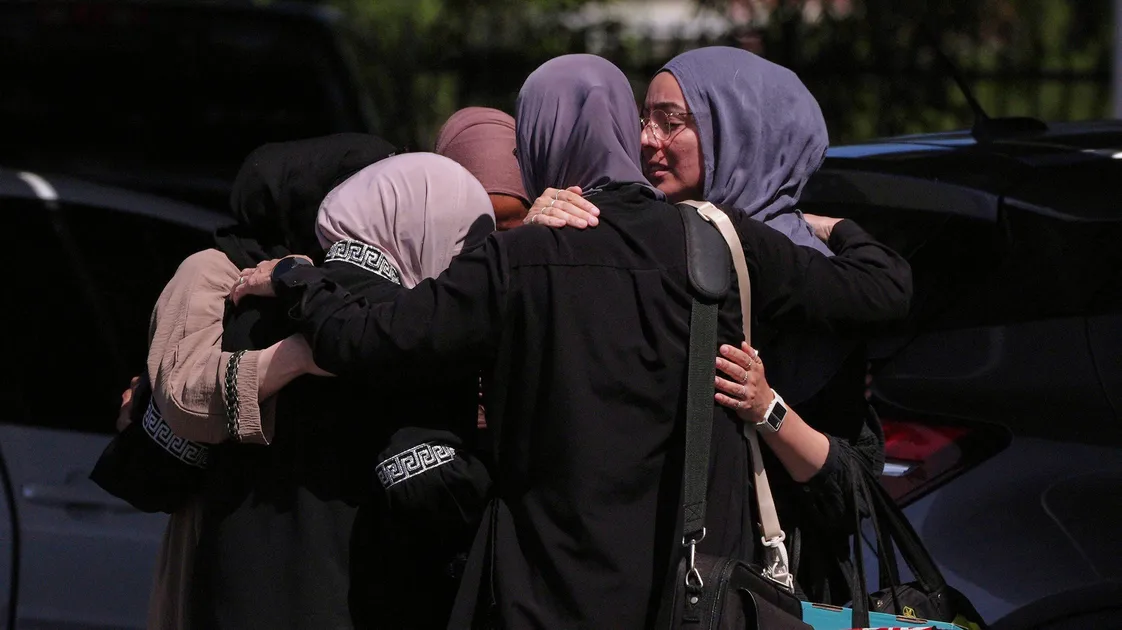
SAN DIEGO – On average, they make $18 an hour. Many are required to provide their own body armor. And when a gunman bursts through the door of a church, Walmart or government office, they’re relied on to confront intruders hellbent on wreaking deadly consequences.That’s the unspoken job description for a private security guard in the United States.The nation’s more than 1.2 million private security personel are nearly twice the country’s estimated 700,000 police officers but often melt into the scenery as people go about their daily lives. As uniformed fixtures at banks, hospitals, schools, retail stores, apartment complexes and municipal buildings, their sometimes vague or questionable presence has made some of them objects of ridicule, as rendered in the 2009 film “Paul Blart: Mall Cop.”Yet, in a culture plagued by mass shootings, security guards work the front lines with little fanfare, charged with tackling what the job can demand in a worst-case scenario. On May 18, a security guard was among three people killed at the Islamic Center of San Diego, praised by police for his actions in preventing what could have been a greater tragedy.“Security officers can be invisible until the moment it matters most,” said Mark Hjelle, CEO of Protos Security, a security firm headquartered in Norwalk, Connecticut. “You’re staying vigilant for the one moment when someone’s coming into a building, and that’s a very difficult thing to do.”Across the U.S., states like Louisiana, Maryland and Pennsylvania are pushing for laws to enhance security guards’ safety, training and legal protections. New York City, where about 60,000 private security officers are employed, this year passed the Aland Etienne Safety and Security Act guaranteeing better wages, benefits and time off for them; the act is named after a security guard killed in July 2025 while guarding the lobby of a Park Avenue office building during a mass shooting.“Security guards are true first-responders,” said Robert C. Smith, CEO of Nightlife Security Consultants, a San Diego-based security training program focused on the hospitality industry. “Who’s on the scene when a stabbing or a shooting takes place? They don’t often get the limelight. But they’re there day in and day out, and their No. 1 priority is to keep you safe.”According to the U.S. Bureau of Labor Statistics, while security guards experience injury rates comparable to other jobs, their fatality rate is more than double that of the average employee. Assaults are most often the reason, with the majority occurring during the evening and early morning hours.Nightclub security guards, for instance, often face volatile situations. On May 10, Dominique Coleman, a 38-year-old security guard at an after-hours club in Fort Worth, Texas, was fatally shot when he confronted club patrons outside, three days after 28-year-old security guard Jordan Jones was fatally shot after breaking up a fight at a bar in Acworth, Georgia.In October, 54-year-old security guard Amos Gary was among four people killed in a shooting outside a bar and grill on St. Helena Island in South Carolina.Manny Marquez, Nightlife Security Consultants' chief operating officer, said the role of security guards is sometimes underappreciated even by the business owners who hire them.“Security operations for a hospitality venue are often at the bottom of the priority list,” he said. “It’s not the sexy part of the business. It’s not the latest cocktail or menu item. Security guards are basically a line-item on a profit-loss statement, and they don’t get the attention they deserve.”For some security guards, pay barely covers needsWith police retention and recruitment perennial issues for law enforcement, businesses and municipalities such as Portland, Oregon, and Santa Fe, New Mexico, are turning to private security to fill the gap, according to a study conducted by researchers at Duke University and the University of Chicago.Reports suggest the presence of security guards in public spaces may deter crime, but most don’t carry weapons and lack a police officer’s ability to issue citations or make arrests. Their average wages are roughly half of police officers, according to the U.S. Bureau of Labor Statistics, often without the accompanying pensions and legal protections.Nearly three-fourths work in investigation and security services, the bureau said, with many others in retailers, hospitals and schools. Security guards also provide a crucial presence at arts and sports venues, casinos, banks, bars and nightclubs.Wages vary widely. An Allied Universal armed officer position in Chicago for veterans and retired law enforcement starts at $28 per hour. Universal is among the biggest of such firms, with some 770,000 employees in 100 countries. An Arrow Security posting at a Connecticut synagogue starts at $55 per hour.In the Bay Area, however, 80% of private security guards don’t earn enough to meet basic living needs, according to a study released in April by the University of California, Berkeley. The state’s private security guards earn $20 an hour on average; some make as little as $14.85 per hour, and nearly half are considered low-wage workers.David Kaye said desperation led him to work for several years as a security guard in San Francisco.In 2020, he lost his tech support job and spent three months in a hospital battling COVID-19. With crippling medical bills piling up, Kaye was forced to give up his home and live in Airbnbs.Several friends had worked as guards and told him jobs were always hiring. Kaye needed a steady paycheck, and after eight hours of training, he began work as an unarmed guard for private Bay Area companies. One role had him monitor a generator outside a hospital previously stripped of its copper wiring.Kaye eventually rose to a supervisory role, but the pay barely covered the Airbnbs he was bouncing between. He made $22 an hour as an entry level guard and $28 as a supervisor.In the world of private security, more pay often comes with more risk. When Kaye’s manager asked if he wanted to become an armed guard for a few more dollars an hour, he immediately declined.“I don’t want to be in a situation where I need a gun,” he said. “My life is not worth an extra $40 a day.”In the line of fireStill, unarmed guards can pay the price anyway. Among the victims in the last two years:February 2026: SunJun July, a 22-year-old working the overnight security shift at an Oklahoma City hotel while saving up for dental school, killed when a pistol was fired between fighting teens he’d escorted out of the lobby.April 2025: Eddie Shed, 39, a deacon and head of security at a church in Gulfport, Mississippi, fatally shot while intervening in a domestic dispute after a church Easter gathering.February 2025: Ivan Diaz Jr., a nightclub security guard in Allentown, Pennsylvania, fatally shot while trying to deescalate an altercation inside the club.January 2025: Jesus Loera, 45, killed while preventing an armed person from entering the Honduran consulate in Doraville, Georgia.In Buffalo, New York, 55-year-old security guard Aaron Salter Jr. was armed when danger arrived at the Tops supermarket where he worked on May 14, 2022.The retired police officer was walking a customer outside when an 18-year-old White supremacist inspired by the perpetrator of the March 2019 massacre of 51 people at two mosques in Christchurch, New Zealand, approached the store with a semiautomatic rifle. Salter engaged the gunman, then ran inside to warn customers of the attack before being fatally shot.At his memorial, Buffalo Police Commissioner Joseph Gramaglia praised Salter for giving staff and customers inside “precious seconds to escape” toward the back of the store.“Because of that,” he said, “people survived.”Motivated to serve as protectorHalf a world away in California, the Christchurch massacre had spurred another person to action: Amin Abdullah. The archery enthusiast and father of eight decided to become a security guard after the incident, taking a job at the Islamic Center of San Diego. A beloved fixture at the center, he was, despite his warm and friendly demeanor, as watchful as a hawk.“Even if it was a quiet day, he was on alert and ready,” said Mayte Gutierrez, a former school administrator at the center.Abdullah was ready on May 18, when two gun-wielding extremist teens also apparently driven by the Christchurch killings rushed past the center’s security checkpoint that day. He opened fire, radioing teachers amid the melee to lock their doors and get the school’s 140 kids into hiding places.Abdullah continued firing, forcing the skirmish outside before being fatally shot. By the time the shooters reentered the building, the classrooms were empty, and the two fled to a nearby neighborhood before taking their own lives.Said San Diego Police Chief Scott Wahl of Abdullah: “His actions were heroic.”Rabbi Jen Lader of Temple Israel, outside Detroit, was in the nation’s capital promoting legislation to boost security funding for religious spaces when she learned of the attack. It revived memories of an another earlier this year at Temple Israel, where a gunman rammed a truck into the synagogue and attempted to ambush the building with 140 students inside; authorities said he died from a self-inflicted gunshot wound amid a firefight with security officers."When you’re hiring someone to sit at the front desk, you don’t think you’re asking them to lay down their life for you but that’s what it is," Lader said. "You’re hiring people who are literally tasked with putting themselves between you and a bad guy."Hjelle, of Connecticut’s Protos Security, said the environment has become increasingly complex in recent years, with more unpredictable behavior driven by mental health issues and radicalization. An industry once focused on physical deterrence now necessitates judgment and situational awareness.“It puts more pressure on security officers,” Hjelle said.Houses of worship relying more on security guardsMeanwhile, the San Diego attack has prompted religious and advocacy groups to call for increased protections at places of worship, which have found that such approaches work.In December 2019, two volunteer security members of the West Freeway Church of Christ in suburban Fort Worth, Texas, drew weapons and fatally shot a man who had entered a crowded church with a shotgun, killing two before the volunteers shut down the attack.In June 2025, armed security guards at CrossPointe Community Church in suburban Detroit shot and disarmed a 31-year-old man in tactical gear who attacked the church during a youth service.In Washington, DC, Shiloh Baptist Church has relied for years on deacons and volunteers to screen people entering the building. But with shootings and attacks on houses of worship on the rise, the church now intends to station armed, plainclothes security guards at entrances and in the parking lot.“We don’t want to look like a police state, but we want to ensure the safety of our congregation,” church security director Rick Coleman said.Bill Ganley, community security director for the Jewish Federation of San Diego, said Jewish institutions rely on security guards and volunteer teams to identify potential threats and make split-second decisions in those critical moments before emergency responders arrive.“The fact that people are willing to attack based on their hate is something that these security officers know they may have to face,” he said.At Faith Chapel, a Christian church in eastern San Diego County, security practices have evolved over time to meet the growing dangers. Leticia Riordan, the church’s security lead, said the ministry has shifted from a reactive approach to a more proactive one.Preparations for the church’s safety team of about 15 volunteers and several armed guards include scenario-based training using real-world cases, with the goal to make rehearsed situations feel realistic and enable team members to remain training-focused under pressure.“When we train and train and train, we kind of are able to take the emotion part out of it,” Riordan said.Mike Harvill, who runs security at a megachurch in Detroit, Michigan, hires outside firms to lead deescalation trainings and active shooter drills. Recent vehicle-ramming attacks have prompted church plans to install bollards near the entrance and large boulders on the lawn, he said.Harvill, 65, who joined the security team after a corporate retail and banking career, said while gunmen present the ultimate crisis, more common issues are domestic situations, mental health crises or medical emergencies. What he seeks in volunteers is what he calls a “sheepdog’s heart.""We want people who are protectors, somebody who wants to step in and intervene if something happens,” he said.'We teach that you can't wait'How guards are required to respond to violent attacks is a gray area, experts said, with most private security hired to observe and report suspicious behavior while letting law enforcement deal with illegal activity. While licensed guards can carry a gun, they often don’t have more authority to use deadly force than an ordinary citizen.“For the most part, the firearm is really only there as a visual deterrent,” said Mike Andrus, founder of Florida-based security firm Day Safe Services.Security guards, Andrus added, are generally trained to deescalate situations and only use firearms as a last resort to protect themselves or others. There's no national standard, he said, so training, standards and orders vary widely depending on the state and company employing the guard.The 1999 mass shootings at Columbine High School in Colorado redefined law enforcement response to such incidents, moving to prevent what the FBI calls “dire eventualities” by recommending first responders work to immediately neutralize an attacker rather establishing a perimeter while awaiting SWAT units or negotiators, which had been standard practice.That’s what can make security guards so pivotal, said Smith and Marquez of San Diego’s Nightlife Security Consultants. The sooner a shooter is engaged by someone with a plan, they said, the more lives will be saved.“Our training teaches them to engage, but not to blindly become a hero and jump in there and take bullets,” Smith said. “With training, you can get the upper hand on getting someone’s gun. We teach that you can’t wait – if you control the weapon, you control the shooter.”While the maxim of “Run, Hide, Fight” has developed in response to rising numbers of mass shootings, “we don’t just talk about the run and hide part,” Smith said. “Guards are there to stop and prevent problems.”That sort of grounding, Marquez said, was evident in Abdullah’s actions during Monday’s mosque attack.“He understood that he was in harm’s way,” Marquez said. “But it goes back to training. He had to engage, and he paid for it with his life.”Contributing: James Powel, USA TODAY.