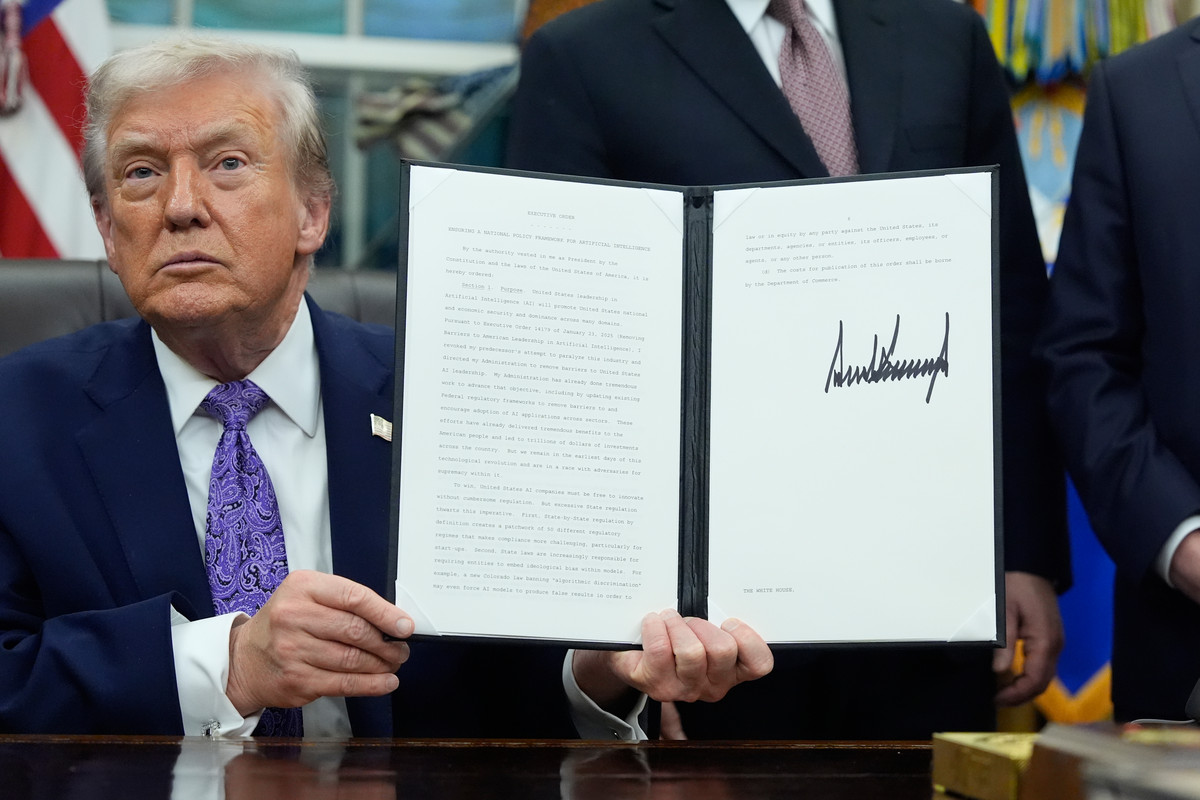
We finally have a look at the actual draft executive order on AI safeguards that President Donald Trump abruptly decided not to sign on Thursday. The executive order would have created a framework for AI companies to voluntarily give the federal government access to frontier AI models up to 90 days before their wider release to “strengthen the cybersecurity of critical infrastructure,” according to a draft of the order sent to Gizmodo from a source with knowledge of the negotiations. It apparently was leaked far and wide, with Politico appearing to be the first to publish it. Leaks in recent days revealed that the whole framework would largely be voluntary, but the actual draft emphasized that point pretty strongly. “Nothing in this section shall be construed to authorize the creation of a mandatory governmental licensing, preclearance, or permitting requirement for the development, publication, release, or distribution of new AI models, including frontier models,” the draft reads. So, it’s a little puzzling why the Trump administration would change its mind about a voluntary program at the last minute.
Some reports claim it was because top AI CEOs weren’t able to make it to the White House for the signing and photo op. Instead, they would have sent lower-level executives, according to Politico. The outlet also reports that the administration’s AI Czar, David Sacks, brought up industry concerns directly to Trump on Wednesday night. Sacks reportedly made the case that AI companies are already cooperating with the government and that any federal review process could slow innovation and give China an edge in the AI arms race. He also brought up fears that any voluntary framework would someday transform into a mandatory government review.