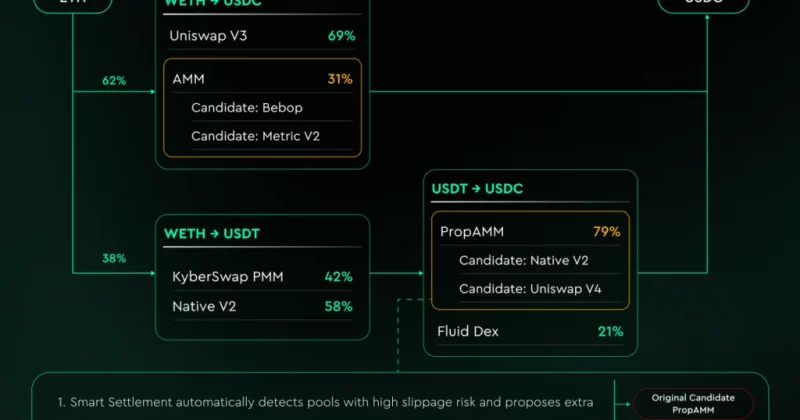
If you’ve ever swapped a token on a DEX aggregator and received noticeably less than the quoted amount, you’ve likely been on the wrong end of overquoting. KyberSwap just shipped a feature designed to make that experience a lot less common.
The protocol launched Smart Settlement on May 14, a new execution-time optimization layer that processes multiple candidate liquidity pools in real-time during transaction settlement. Instead of locking in a route at quote time and hoping it holds, the smart contract evaluates competing pools at the exact moment your trade settles, picking whichever one delivers the most tokens. No extra fees. No additional steps for the user.
What overquoting actually looks like, and why it matters
Here’s the thing about traditional DEX aggregators: they optimize your trade route when you request a quote, not when the transaction actually executes on-chain. The gap between those two moments is where the trouble lives.
In that window, proprietary automated market makers, known as PropAMMs, can manipulate pricing. They offer attractive rates during the quoting phase to win the routing algorithm’s selection, then shift liquidity before execution. The result is that traders receive fewer tokens than expected. This practice is sometimes called spoofing, and it’s been a persistent headache in decentralized trading.